

"Being superstitious is stupid - but not being so is bad luck."
Actor & Director Eduardo de Filippo (*1900 †1984)
Looks like a red chilli. In fact, Naples' traditional good luck charm, the Cornicello a horn. This is supposed to ward off the "evil eye". The lucky charm must be stiff, hollow, crooked and pointed to be effective, so they say.
Important: You have to Cornicello or Curniciello (as it is correctly called in Neapolitan) on being given as a present...

Photo: Edimur/Getty Images via canva.com
The writer Matilde Serão (*1858 †1927) defines the croissant as the "incurable disease of the Neapolitans": before leaving the house, one rubs on the Cornicello in Naples, before a first date, an important doctor's appointment and before important business meetings anyway.
Merchants have it hanging in their shops, others on their rear-view mirrors in their cars. But very few publicly confirm that they believe in the power of their Curniciello (Neapolitan) believe.
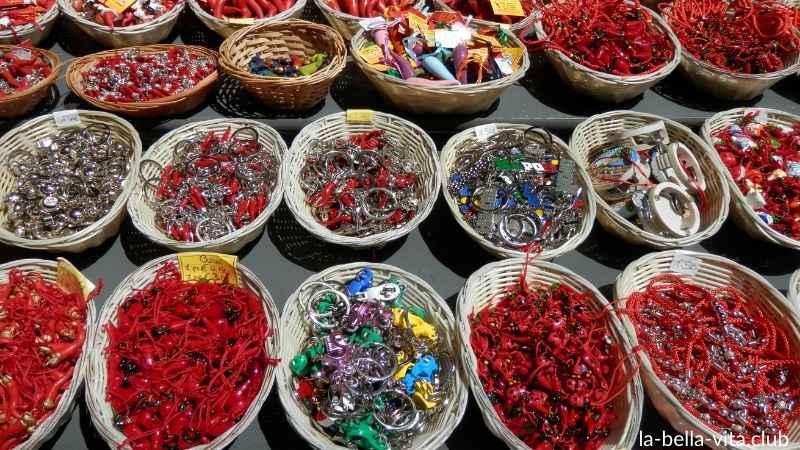
Photo: onairda/Getty Images via canva
The "evil eye" is a superstition that has been widespread for more than 3,000 years: according to it, another person (with the corresponding abilities) can only harm you by looking at you. In Naples, the bearer of the evil eye is called the Jettatore named. (Incidentally, this is why Volkswagen called its "Jetta" model "Golf" in Italy).
To this day, the reputation of being a Jettatore to be destroying careers. Cuddly singer Marco Masini (57, winner Sanremo 2004), who mostly sings melancholic, sad songs, is initially called a "fun" singer. Jettatore is called. The "fun" took on a life of its own and escalated so badly that Masini withdrew from the public eye for a good year.
- Why pizza from Naples tastes different from all the others
- The finger of Milan - and what it has to do with the stock market
At the same time, being a "Jettatore" used to even be a kind of business model in Naples: a professional "bearer of the evil eye" walks through the shop with a sinister expression on his face and stands in front of the shop window until he gets a "donation".
The horn as a sign of strength
The story of the red Cornicello from Naples actually begins a good 4000 years ago. At that time, man evolved from hunter-gatherer to shepherd and farmer. In the Neolithic Age, an (animal) horn was considered a sign of physical strength.
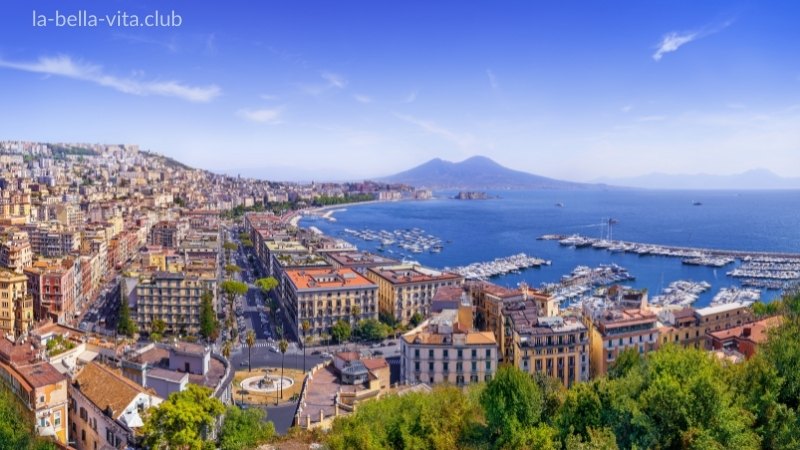
Photo: Frank Peters/Getty Images via canva.com
The Romans, 2000 years later, focus on the certain penis-like resemblance of the Cornicello. In addition to strength, they also attribute masculinity and fertility to the symbol. Prosperity is almost automatic for the wearer.
Hype in the Middle Ages
In the Middle Ages, the Cornicello from Naples is experiencing its first hype. People are superstitious, into amulets and the like. O curnicello is particularly popular - strength, fertility, masculinity and prosperity. What more could you want?
- Short holiday with a hot spring: 7 spas in northern Italy for cold days
- Soak up the sun at the last minute: Italy's insider tips for October
Neapolitan craftsmen begin to make the horn from coral. This is said to have special powers: according to popular belief, a coral can even protect against the evil eye of a pregnant woman - and that is particularly powerful. Coral is also red - a sign of blood and fire, symbols of power and life.
Its success has been virtually unbroken ever since. O Curniciello gives a deep insight into the Neapolitan soul. A little bit of religion, a little bit of popular belief - no contradiction and incredibly fascinating...
- "The Godfather": The best quotes from the Mafia film
- Cult stars "Umarells": How Italy's pensioners became famous
- Sophia Loren: The Story of a Super Diva
Current Stories from Italy
- Why pizza from Naples tastes different from all the others
 Global success made in Napoli.
 - The finger of Milan - and what it has to do with the stock marketMilan is fashion, Milan is money and also middle fingers.
- Dolce Vita in Rimini: If you only see the beach, you're missing outGoodbye coach party tourism.
- Espresso hacks in Italy: fast, strong and without tourist trapsIt's all over in less than two minutes.
- Italy holiday 2026: Why this white village in Apulia is now inspiring everyoneA forest of white cones.
- Spring in Italy: 5 beautiful places to experience the lemon blossomA natural phenomenon that is addictive...



written by Pietro Perroni, first published on 7 July 2022
Cover / Montage - Photo: onairda/Getty Images via canva


