
Photo: Gáspár Ferenc on Pexels.com
Green shutters are considered a hallmark of Italy. The reason for this lies not in personal taste, but in the material: copper.
Verdigris as a universal colour
Right up until the 20th century, verdigris – the green copper salt – was one of the few pigments that did not fade quickly when exposed to the elements. It was also cheaper than many other durable colours and could be made at home from copper and acetic acid.
Protection against woodworm and mould
Copper has fungicidal and insect-repellent properties. Wooden shutters were particularly susceptible to woodworm infestation in damp coastal regions such as Liguria or the Amalfi Coast. The green colour served to protect the wood.
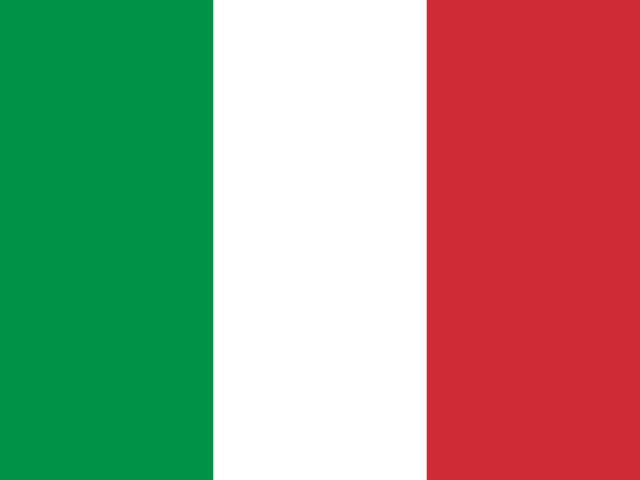
Why is the flag green, white and red?


Not a law of nature
Regulations regarding the colour of shutters are usually local, as in historic town centres. Not all shutters in Italy are green. In Tuscany, a muted reddish-brown („rosso Pompeiano“) predominates in some municipalities, whilst in Liguria shades of blue are sometimes seen.
From Necessity to Convention
Modern paints with UV and rot protection have now made verdigris redundant. Nevertheless, many homeowners and heritage conservation authorities continue to paint their buildings green – for reasons of tradition and because it is part of the local character.
Verdigris in Roman times
Incidentally, even the ancient Romans produced verdigris by soaking copper plates in wine – the same patina that can be seen today on weathered metal roofs, old coins or sculptures. The pigment was used for mosaics, frescoes and stained glass, and later also by medieval monks for book illumination. Verdigris does, however, have poor opacity – making it just right as a hard-wearing exterior paint for wood.