By STEPHANIE KAYSER
More than 60 governments in 74 years - and yet Italy is considered a stable democracy in Europe. To understand this: Politics in Italy, an overview of the system.
The facts: Politics in Italy
- Foundation: Italy is a democratic parliamentary republic founded on 2 June 1946, the "Repubblica Italiana. In a referendum, the Italians had previously decided against the form of state of a constitutional monarchy. It was not until 1861 that the Italian nation state was unified as the Kingdom of Italy.
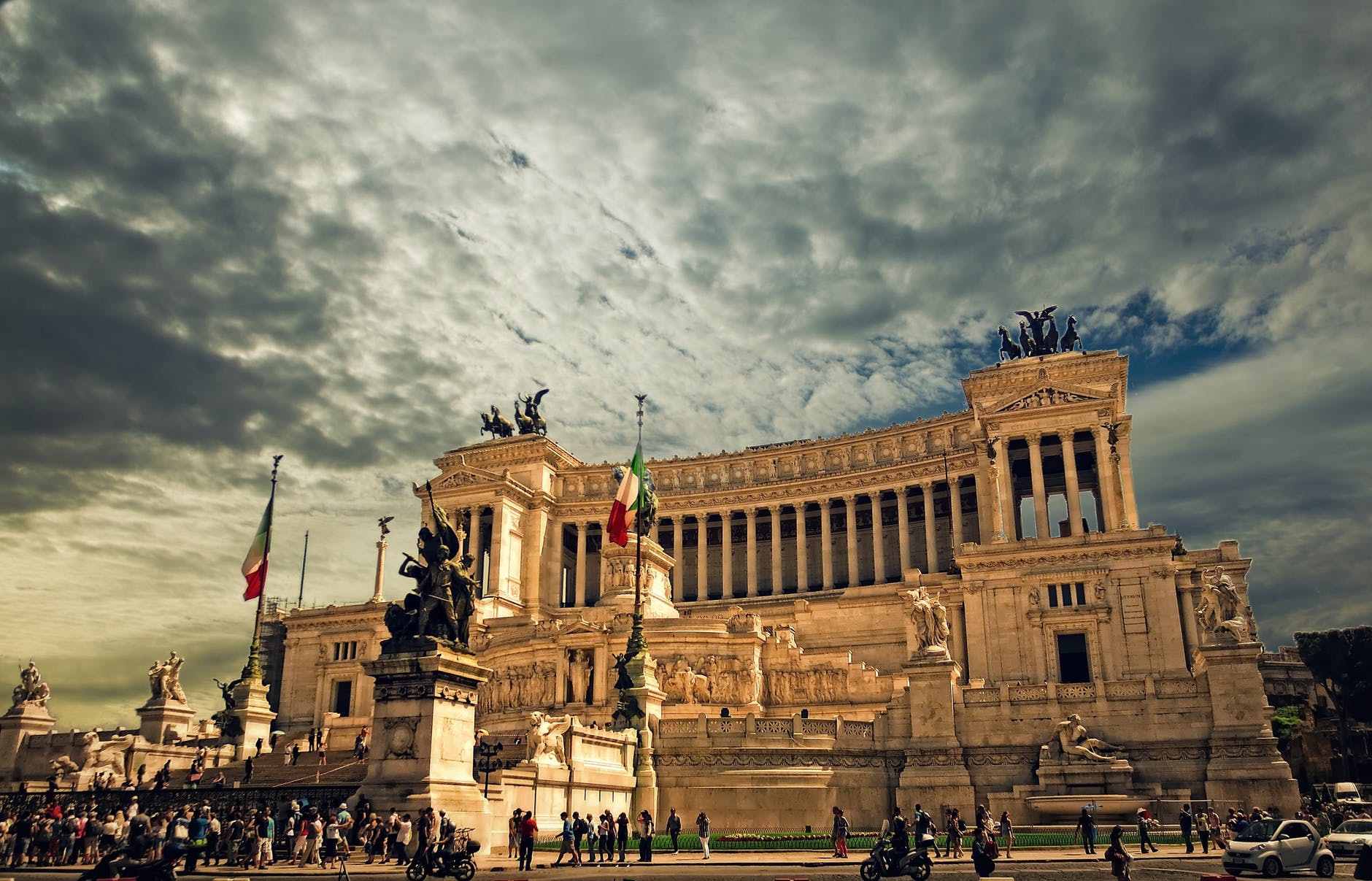
iPhoto by Pixabay on Pexels.com
- Capital: Rome
- Inhabitants: 60.5 million*
- Denomination: 80 per cent Christians (the majority Catholic)
- Structure of the countryItaly is divided into 20 regions. Of these 20 regions, 5 have a so-called Statute of Autonomy with extended powers of self-government: Valle d'Aosta, Friuli Venezia Giulia, Trentino-Alto Adige, Sardinia and Sicily. In concrete terms, this means that, for example, 100 percent of the tax revenues from Sicily remain in Sicily, in Valle d'Aosta it is 90 percent. (more on the organisation of the regions here)
- AlliancesFounding member of the EU; in NATO since 1949, in the United Nations since 1955.
- Official languageThe official language in Italy is Italian. In Trentino-South Tyrol, German and Ladin (an old language from Upper Italy that is only spoken in a few areas) are also spoken, French in the Aosta Valley and Slovenian in Friuli-Venezia Giulia.
- Gross domestic product (GDP)/capita: 31,676 USD (2020)
- Most important economic sectorsMachinery, shipbuilding, automotive, chemical, fashion, food, agricultural products, tourism.
+++ Beautiful accommodation in Rome Ad
The Head of State: President*
*For the sake of readability, the masculine form is used in the following. To date, there has been no woman in this office.
Italy's head of state is the "Presidente della Repubblica". The head of state must be at least 50 years old, have Italian citizenship and also all "civil and political rights".
The President of the Republic* has mainly symbolic duties, such as receiving foreign heads of state or conferring awards and decorations.
His most important task is to ensure the unity of the Republic - and he appoints the Prime Minister*. With the frequent changes of government in Italy, the president thus has a key function.
Politics in Italy is volatile: although there have been 67 changes of government in 74 years, elections have only been held 18 times (by comparison, in Germany there have been 19 elections in the same period, but only nine governments).

Photo: Alessio Panarese/Getty Images via canva.com
The two chambers of parliament and 58 representatives from the regions (a total of 1009 eligible voters) elect the President of the Republic for seven years. The future president needs a two-thirds majority, from the fourth ballot onwards a simple majority is sufficient. In 1971, by the way, it took 23 ballots to agree on a president. That, too, is politics in Italy.

Photo Leonid Andronov/Getty Images via canva.com
Duties of the President of the Republic:
- Appointment of the Prime Minister*Constitutionally, the President of the Republic is not bound by any precepts. Over the decades, a constitutional custom has been established: the president must take into account the majority in parliament when making appointments.
- Appointment of Ministers: on the proposal of the Prime Minister
- Adoption of Oaths and resignations of the Cabinet members
- Dissolution of the Parliament (one or both chambers) and Scheduling of new elections: if the parliament cannot fulfil its constitutional duties or if the formation of a government fails.
- One-time right to veto legislative decisions. The President of the Republic makes the laws passed by Parliament legally binding with his signature. However, he can refuse to sign. However, if Parliament then passes the law it has rejected again, the President of the Republic must sign it.
- Appointment of 5 of the 15 constitutional judges
- Appointment of five senators for life
- He is entitled to the Right of pardon to. This means that he can release convicted people from prison early. A remnant from the times of the monarchy ("mercy before justice").
- Every state president is entitled to a senatorial seat for life.
The most important questions before the election in Italy
The Government: Council of Ministers
The Prime Minister, ministers and ministers form the Council of Ministers.
According to the majority in parliament, the President of the Republic appoints the Prime Minister, who must then be confirmed by both houses of parliament. The President of the Republic also appoints the ministers on the proposal of the Prime Minister.

Photo: TkKurikawa/Getty Images via canva.com
+++ A gondola ride in Venice?! Look here... Ad
Legislation: Bicameral Parliament
The bicameral parliament is responsible for legislation in Italian politics.
- Camera dei deputati: Representation of the people (the Chamber of Deputies), comprises 630 members directly elected for five-year terms. (After the 2020 constitutional referendum, the number will be reduced to 400 at the next election)..
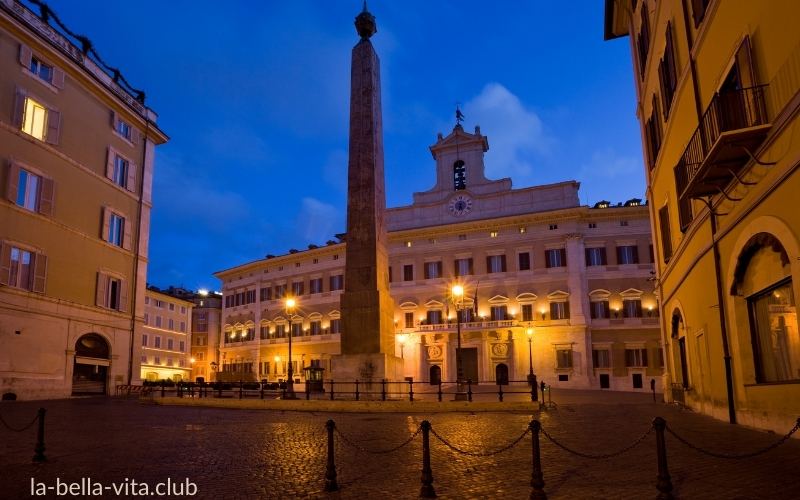
Photo: Benedek/Getty Images Signature via canva.com
- Senato della Repubblica:
- Representation of the regions. 315 directly elected senators for five years, with a certain number of mandates for the regions. (After the 2020 constitutional referendum, the number will be reduced to 400 at the next election)..
- up to five citizens appointed for life by the President of the Republic
- all former presidents

Photo: Claudio Divizia via canva.com
- Short holiday with a hot spring: 7 spas in northern Italy for cold days
- Soak up the sun at the last minute: Italy's insider tips for October
Parties & Politics in Italy
The Italian party landscape is highly fragmented. New formations occur frequently, alliances and parties dissolve, then merge into new groupings. In fact, the oldest party in the government is the far-right "Lega per Salvini", which was only founded in 1989
+++ „The Godfather": The original locations in Sicily Ad
Traditional parties, as they are known in other countries, have not existed in Italy since the beginning of the 1990s. A corruption scandal rocked the country at that time, which the two largest parties, "Democrazia Cristiana" and "Partito Socialista Italiano" did not survive. Politicians from almost all parties had taken bribes.
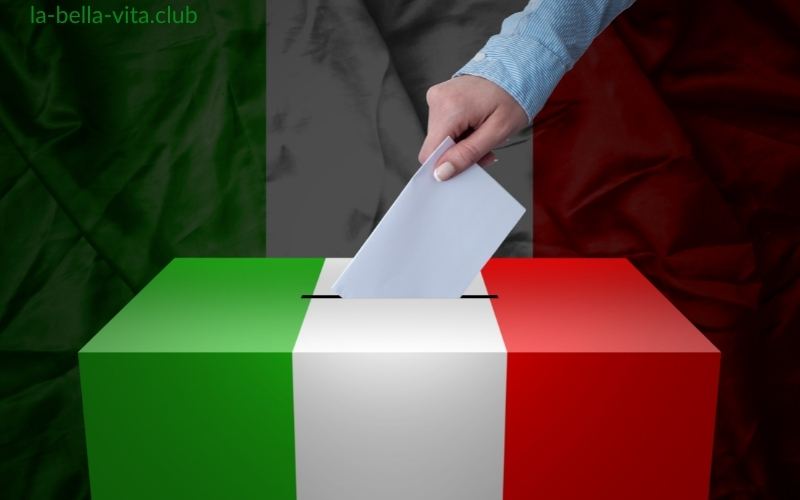
Photo: Martinns/Getty Images Signature via canva.com
The corrupt political system becomes "Tangentopoli". (after the Italian word for bribe) baptised. "Mani puliti", translated as "clean hands", is the name given to the clean-up operation by the judiciary, which leads to more than 2,000 lawsuits nationwide.
Politics in Italy is still influenced by the scandal today. Due to the frequent changes of government and shifting majorities in parliament, smaller parties in Italy therefore have a relatively large influence. In Italy, electoral alliances of several (small) parties are common.
- Italy quiz for connoisseurs: Can you answer all 10 questions?
- The 60-second quiz - How quickly can you recognise Italy?
Politics in Italy: The Election
The new electoral law "Rosatellum 2.0" was passed in 2017. It applies to both chambers of parliament.
- In their constituency, eligible voters can either vote for a direct candidate or for a party (which then allocates the seats via a list). Each eligible voter has only one vote.
- 36 per cent of the seats are allocated to direct candidates according to the majority voting system.
- 64 per cent of the seats are filled by proportional representation through party electoral lists.
- There is a three-percent hurdle for parties to enter parliament.
- Smaller parties can form electoral alliances before the election. In this case, 1 per cent of the votes are enough to win a seat, provided that the electoral alliance together achieves at least 10 per cent of the votes.
- Buongiorno! Why in Italy everyone Dottore is...
- Rome: What you experience at the Spanish Steps...
- "The Godfather": The best quotes from the Mafia film
Current articles without politics from Italy...
- Gallipoli - The beautiful city that dances on the sea
 A feeling like being on a stage.
 - Bari in Apulia: an old town that smells of fresh laundry
 Fresh laundry every day.
 - Easter in Italy. The most beautiful processions and traditions
 Holy Week as an exceptional experience.
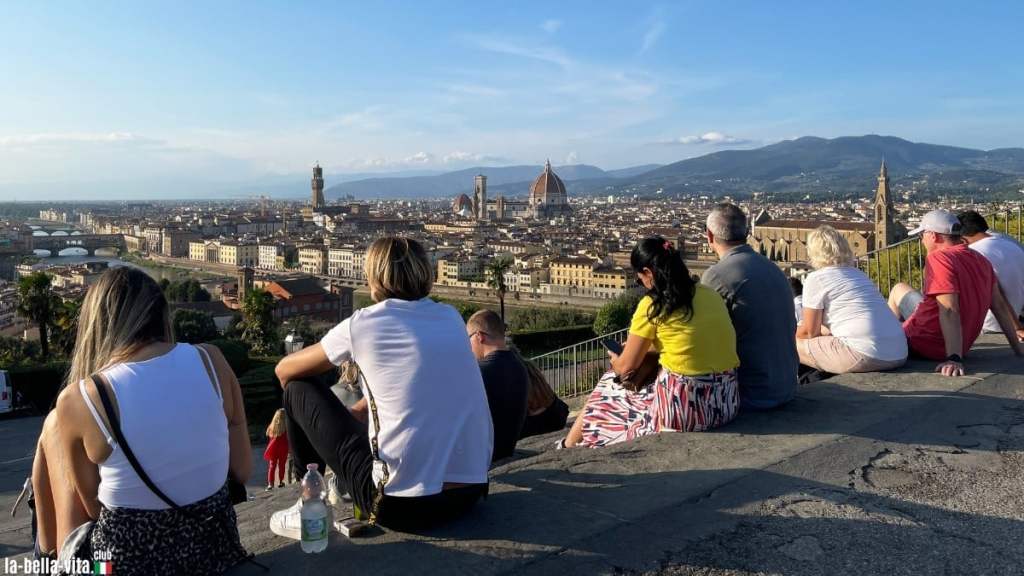
 - The most beautiful view of Florence: why a 20-minute walk is worthwhile
 Masterpiece in the open air.
 - The sacrament standing up: Sixty seconds of Italian eternity
 The short ritual prayer.
 - The finger of Milan - and what it has to do with the stock marketMilan is fashion, Milan is money and also middle fingers.


- Delicious from north to south: This is how Italy eats...
- Gladiators: Superstars to the death
- Social media: trends and stars in Italy
written by Annie Kayser, first published 16 July 2022
Cover / Montage - Photo: Cristoto_lux/Getty Images via canva.com
Sources: own research; Schubert, Klaus/Martina Klein: Das Politiklexikon. (Bonn, 2020/Federal Agency for Civic Education).