
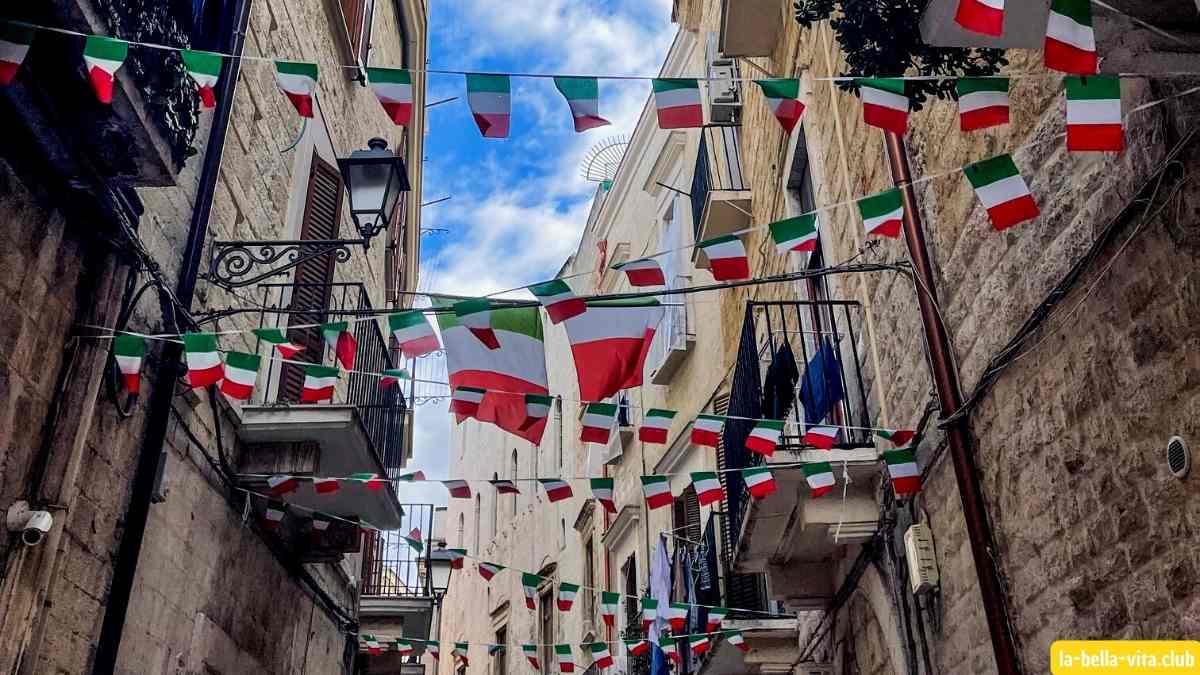
Green like basil, white like mozzarella and red like the sun-ripened tomatoes: Why is the Italian flag actually green-white-red?
These colours represent Italy all over the world: green, white and red. Article 12 of the Constitution of the Italian Republic states: "The flag of the Republic is the Italian tricolour: green, white and red with three vertical stripes of equal size". On 7 January each year, the Italian flag even has its own day of honour, celebrated then as the "Holiday of the Tricolour".



Why is Italy Green, White and Red?
There are various theories for the choice of these three colours:
- The poetic explanationGreen was chosen for hope, red for joy and white for faith.
- The natural explanationGreen stands for fertile nature, white for the Alps and red for the volcanoes, optionally also for the blood that was shed for Italy's independence.
- The French statement: Orientation towards the flag of the Republic of France (blue-white-red), which became the symbol of the French Revolution from 1790, and officially the national flag from 1794.
According to tradition, the combination green-white-red is seen for the first time on 21 August 1789 at a demonstration in Genoa. The demonstrators wanted to import ideas from the French Revolution into northern Italy. Allegedly, however, they accidentally wear green-white-red insignia (instead of the French blue-white-red). According to research, some demonstrators also wore green-white-red badges during a student uprising against the then Papal States in Bologna in the same year.
Vespa Tour through Rome: Book here! Ad
Sea of flags in Rimini
You are currently viewing a placeholder content from YouTube. To access the actual content, click the button below. Please note that doing so will share data with third-party providers.
More Information- Why pizza from Naples tastes different from all the others
- The finger of Milan - and what it has to do with the stock market
The colours of the "Legione Lombarda
The green-white-red becomes official for the first time in 1796. The small municipal militia in Milan then becomes first a "National Guard", later under Napoleon's rule the "Legione Lombarda". Its troop flag was given the colours green-white-red. In addition to the French tricolour, Milan's colours were white and red, and the militia's uniform colour was green. The tricolour is adopted by other daughter republics in Italy, partly also with horizontal alignment of the stripes.
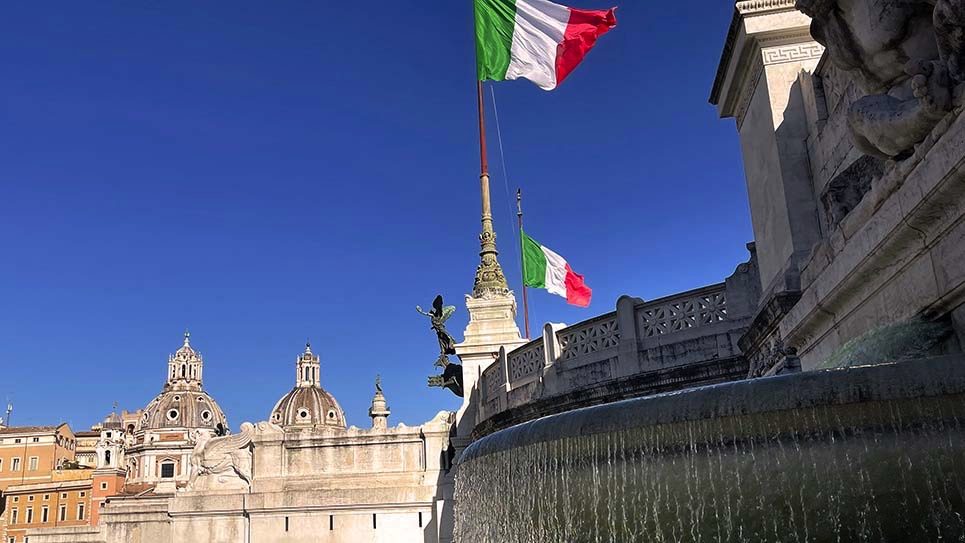

The United Kingdom of Italy
Later, green-white-red become the symbolic colours of the Italian freedom and independence movement, until finally the united Kingdom of Italy is proclaimed in 1861. Green-white-red, in combination with the coat of arms of the Royal House of Savoy, becomes the Italian national flag. After the Second World War, the Kingdom of Italy then becomes a republic. The Italian flag takes on its current appearance - without the coat of arms of the royal house.
P. S. By the way, in 2003 the colour intensity of the flag will be redefined. Since then, the colour codes used are 17-6153TC (green), 11-0601TC (white), 18-1662TC (red).
- Why pizza from Naples tastes different from all the others
- The finger of Milan - and what it has to do with the stock market
- Insider tip: What awaits you in Puglia
- Attention, rip-off! The tourist traps in Rome...
- 8 reasons why Italy is particularly beautiful in winter...
- Why pizza from Naples tastes different from all the others

- The finger of Milan - and what it has to do with the stock market
- Dolce Vita in Rimini: If you only see the beach, you're missing out
- Espresso hacks in Italy: fast, strong and without tourist traps



- Olive oil from Italy: All about the green gold!
- Luxury study: This is what the super-rich spend on holiday in Italy


