
World metropolises and sleepy villages: Italy has many facets
Italy is more than just sunshine and pasta. It is a country of contrasts and stories, divided into twenty regions - each with its own identity, its own cuisine, its own rhythm. A country that cannot be explained, but can be experienced.
From the glaciers of the Aosta Valley to the lemon groves of Sicily, from Alpine tranquillity to the hustle and bustle of southern Italy: Italy's 20 regions are politically comparable to the federal states of Germany, but are generally what we call home emotionally. While regions such as Sicily, Sardinia, Tuscany and Veneto were already independent kingdoms or duchies hundreds of years ago, the Italian nation state was only founded in 1861.
The regions with special status

Five of these regions - SicilySardinia, Friuli-Venezia Giulia, Trentino-Alto Adige and the Aosta Valley - have a special status: more autonomy, more responsibility, more room for diversity. In Trentino-Alto Adige, for example, not only Italian is spoken, but also German, and in Valle d'Aosta, French is spoken alongside Italian. Friulian even lives on in Friuli. Italy has many languages - and many perspectives.

Of giants and minis
The largest region in Italy is Sicily. Almost 26,000 square kilometres full of myths, mountains, beaches, markets and magic. The smallest? The Aosta Valley - Alpine, modest, sometimes a little under the radar, but with spectacular scenery. Molise, often forgotten, also harbours quiet beauties.
In the Emilia-Romagna life simmers between mortadella and Maserati. Lombardy is a thriving region, Tuscany presents itself - rightly - as a picture book of Italy. Calabria, on the other hand, remains raw and undisguised. Campania shines between Vesuvius and Amalfi - baroque, bustling, profound.

Climate: from icy cold to lemon-scented
Italy spans climatic zones. In the north: Glaciers, snowshoes, the warmth of a wood-fired oven. In South Tyrol you can feel the seasons. Summer can be hot - but winter often remains white.
It gets milder further south. Around Florence, Rome or Perugia, life is Mediterranean. And in Apulia or on Sicily? The air is shimmering there. July and August often exceed 40 degrees. Italy breathes heat - and serenity.
Culinary boundaries that are not borders
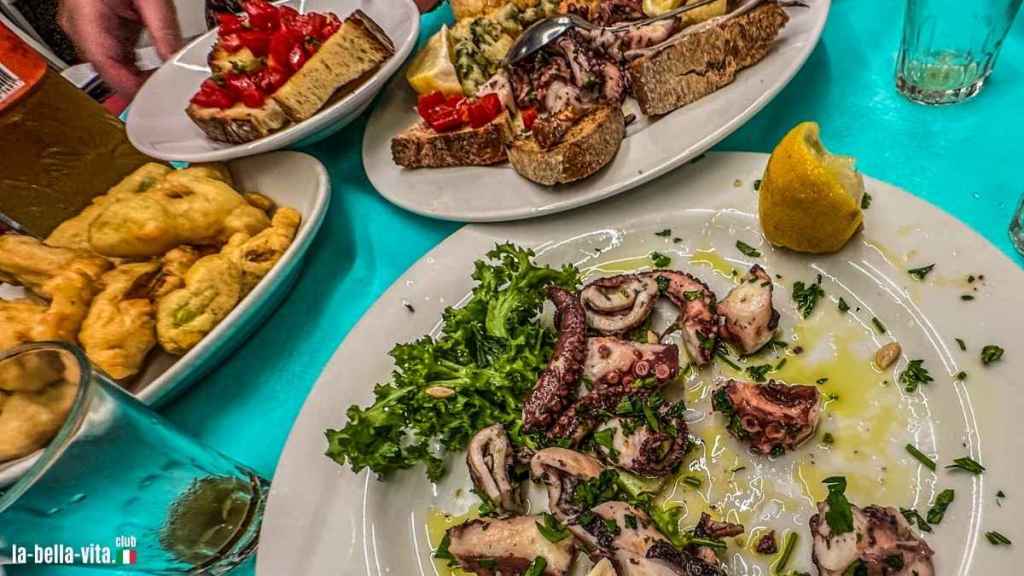
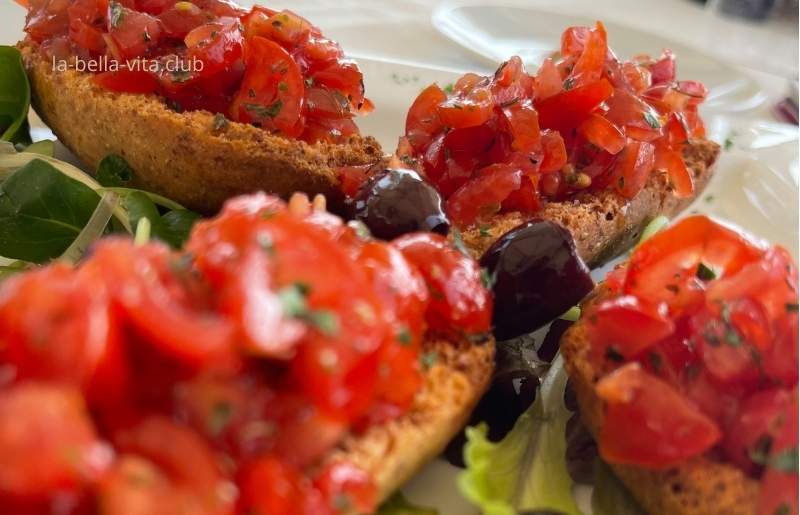
Italian cuisine knows no national borders - but it does recognise regional ones. In the Abruzzo the bruschetta was born, in which Emilia-Romagna the piadina. In Liguria it smells of basil and the sea, in Calabria of chilli and wild herbs. In the north: Butter, meat, cheese. In the south: Olive oilfish, tomatoes. The wealth of flavours reflects the landscape - and the climate. Here, people eat what grows. And what grows shapes the people.

Where is Italy most beautiful? It depends.
Are you looking for art and history? Then Florence, Rome, Naples or Palermo are the right places for you. Longing for nature? Then hike through Le Marche, Valle d'Aosta or Abruzzo. For dolce vita by the water: ApuliaLiguria, Sardinia. Winter sports? In the Alps, in the Apennines. And if you just want to look, taste and marvel, it's best to start somewhere - and let yourself drift. This works surprisingly well in Italy.
Our current reading favourites
- This is Italy: people, mangiare and more!
- Buongiorno! Why in Italy everyone Dottore is...
- That's what they talk about in Italy...
- Italy: Where is what in the Bel Paese?
- Our basic quiz: How well do you recognise Italy?