

"Italy without Sicily makes no picture at all in the soul: here is the key to everything".
Johann Wolfgang von Goethe, when he visited Sicily in 1787
If you don't know the largest island in the Mediterranean yet, you've come to the right place. Sicily has an incredible . Sicily has an incredible diversity. The largest island in the Mediterranean makes (almost) everyone go into raptures. More than 1,200 kilometres of coastline, a bathing season from April to November, kilometres of sandy beaches and national parks...
... as well as romantic fishing and mountain villages, historical testimonies, ancient temples, lively towns with baroque buildings and medieval fortresses, the more than 3,000-metre-high volcano Etna and a unique cuisine, where you can also taste the influence of Africa, a good 100 kilometres away.


Country & People of Sicily
The Greeks gave the island its name because of its triangular shape. The word "Sicily" derives from the triangular shape of ther from the ancient Greek name for Dreikap, three peaks. The island lies off the "boot tip" of Italy. At its narrowest point, the "Strait of Messina", the strait between the island and the mainland, is only about three kilometres wide.
Sicily is the remnant of a land bridge that once connected Europe and Africa. The distance to Malta from the island is only 95 km, that to Tunisia about 145 km. The most geographically distinctive feature of the island is the volcano Etna. Because of its central location in the Mediterranean, Sicily has been repeatedly conquered by other peoples over the past 3,000 years.
First came the Carthaginians (today's Tunisia), then the Greeks, then the Romans, then the Arabs, Berbers and Saracens, then the Normans (Vikings from northern Europe). Under their king Roger, Sicily flourished as a peaceful, multicultural island. Sicily becomes the richest region in Europe. The last conquest from which Sicily benefits.
Sicily under the Conquerors
At the end of the 12th century, Frederick II and the Hohenstaufen dynasty (today's Central Europe) took over, Sicily fell successively under French, Spanish and Austrian rule until the Spanish Bourbons then united the island with Naples in 1734. Sicily only became independent in 1946. Today, the island's heritage looks like a colourful patchwork that reflects the melting pot of cultures.
The largest cities are Palermo (about 660,000 inhabitants), also the capital of the Autonomous Region of Sicily, as well as Catania (312,000 inhabitants), Messina (237,000) and Syracuse (122,000).
Off the north coast of Sicily lies the Tyrrhenian Sea, off the east coast the Ionian Sea and below the southwest coast the "Strait of Sicily".
The landscape of Sicily

Photo: Simone Antonazzo

Photo: Simone Antonazzo

Photo: Paolo Barone
Photo: Simone Antonazzo

Photo: Paolo Barone
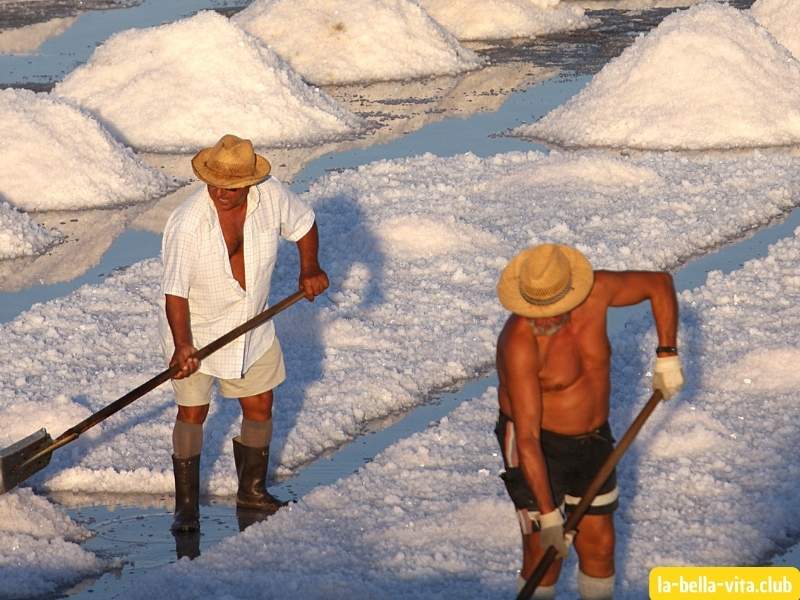
Photo: Paolo Barone
The island landscape is mainly characterised by hills and mountain ranges, only in the south and in the hinterland of Catania are there flat areas.
The fertile plains of the island are used for agriculture: The fruit and vegetables taste incredibly aromatic thanks to the southern Italian sun. In spring, Sicily shows a particularly beautiful side when it is bathed in a sea of blossoms from the almond trees.
An incredible panorama
The highest peak is Etna, Europe's largest volcano, at 3,357 metres, from where there is a unique view of the Mediterranean. There are guided tours to the summit. There is also a unique golf course at 650 metres on the northern slope. In winter, Etna then becomes Europe's largest ski area with ski schools, lifts, alpine and cross-country ski trails.
Wild, beautiful nature
In the hinterland of Sicily there are wonderful opportunities for hiking and trekking holidays, whether by mountain bike or high on horseback. The paths lead through varied landscapes with dense forests, hills, lakes with subtropical vegetation - and again and again ruins and evidence of ancient cultures.
Top 3:Tips for your first visit to Sicily
- Guided tour through the "Valley of the Temples" in south-west Sicily, 31 Euro/person
- Street food tour with guide through historic Palermo, 42 Euro/person
- Boat tour from Syracuse with cave tour on the south coast, 35 Euro /person
Europe's largest volcano: Mount Etna


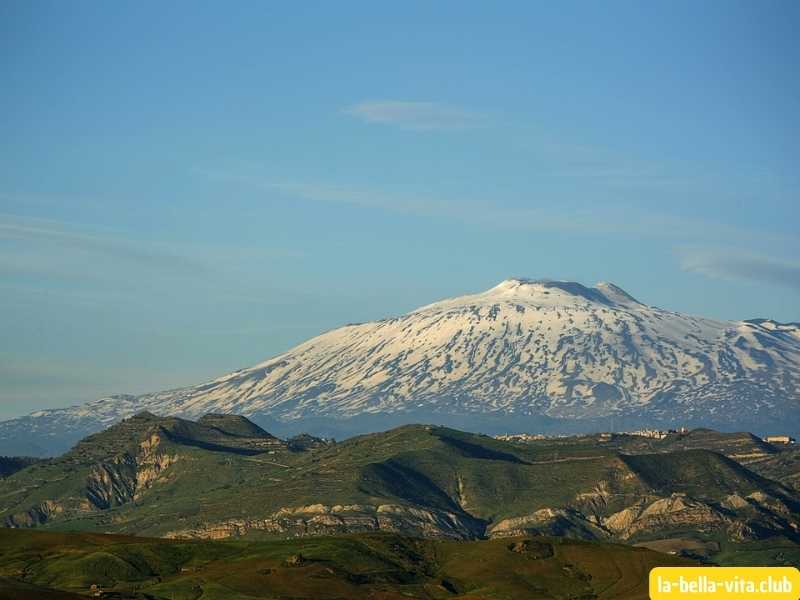

Programme for your Etna visit
- Trekking tour to the crater with volcano experts, 55 Euro/person
- Sunrise Jeep Tour on Mount Etna, 59 Euro/person
- Hike with guide off the beaten track, including a visit to a lava cave 62 Euro/person
Art & Culture in Sicily
40 per cent of all Sicilian holidaymakers travel to Sicily for cultural reasons: 9 per cent of Italy's entire cultural heritage is to be found in Sicily! When it comes to art and culture, the island therefore offers the fullest selection: Museums and art galleries, archaeological sites, churches and monasteries, opera and theatre.
Its central location in the Mediterranean has attracted conquerors for centuries, so that Sicily has been shaped by a wide variety of cultures - Greeks, Arabs, Normans and the Staufers under Frederick II.
Island of the writers
Sicily is also the island of great Italian writers: from the father of "Italian naturalism" Giovanni Verga (†1922) to Nobel Prize winner for literature Luigi Pirandello (†1936) and literary scholar Giuseppe Tomasi di Lampedusa (†1957) to Nobel Prize winner for literature Salvatore Quasimodo (†1968) and the inventor of the "Commissario Montalbano" Andrea Camilleri (2019)...

Photos: Paolo Barone


in Caltagirone


... all come from Sicily. Museums and "literary parks" are dedicated to some writers, allowing visitors to discover the region in the footsteps of a book or an author.
Renowned opera houses and theatres such as the Teatro Massimo in Palermo or the Teatro Massimo Bellini in Catania stage world-class productions. In summer, the international festival at the Teatro Greco in Taormina also features world-famous ensembles and artists.
More culture: our tips
- Guided tour of the Teatro Massimo in Palermo, 10 Euro/person
- From Palermo: Valley of the Temples and Villa Romana, 98 Euro/person
- Private guided tour of the Capuchin Catacombs of Palermo (burial chambers with the mummified bodies) and the Norman Cathedral of Monreale, 130 Euro/person
Sicily's capital Palermo


Almost still an insider tip among Italy's cities, but those who have been there once want to go again and again: Welcome to Palermo, the capital of the Autonomous Region of Sicily! A city with temperament - and incredible street food...
A visit should start in the heart of the old town. Highlights here are the Royal or Norman Palace, built on an Arab castle, the Cathedral and the churches of S. Giovanni degli Eremiti, S.Maria dell'Ammiraglio and S. Cataldo. And don't miss: a stroll through the colourful Vucciria food market, fresh fish and regional specialities galore.
Tips for Palermo
- See everything! Hop-on Hop-off Bus Tour in Palermo, 20 Euro/person
- Yummy! Street Food and Market Tour with Guided Tour of Palermo, 59 Euro/person
- Interesting! Guided tour of the anti-mafia movement in Palermo, 32 Euro/person
Sicilian cuisine
The temperament and warmth of Sicily can also be tasted in the island's unique cuisine. The cuisine is characterised by fishing, agriculture and foreign cultures. Due to its central location in the Mediterranean, Sicily was on every merchant route for centuries. In addition, the island was repeatedly occupied by foreign invaders.
Three times "P
The three "P "s describe the cuisine best: pasta, pesce & pasticceria (pasta, fish and desserts).
In ancient times, the Greeks bring olives, salty ricotta and honey and wine to the island. The Romans produced fruit ice sweetened with honey for the first time with the glacier ice of Mount Etna. From them, the Sicilians also adopted the Maccu, a stew of broad beans, onions and garlic.

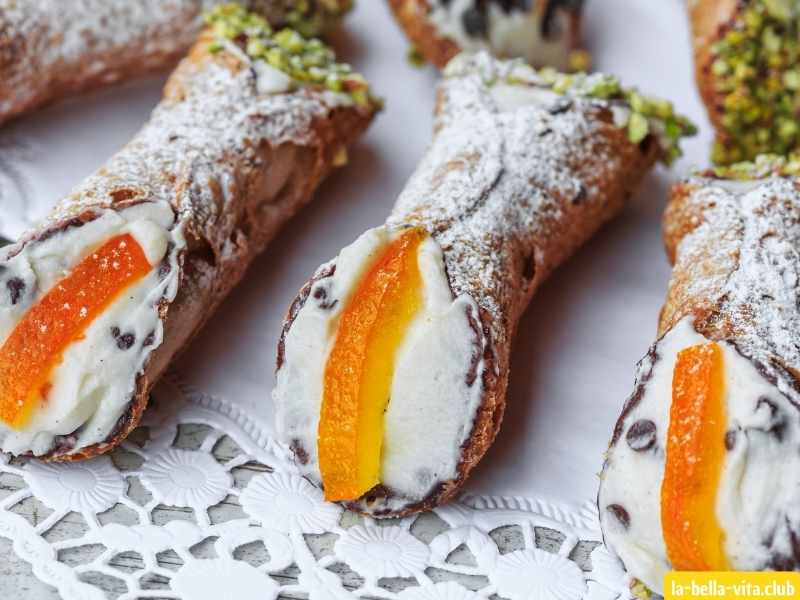


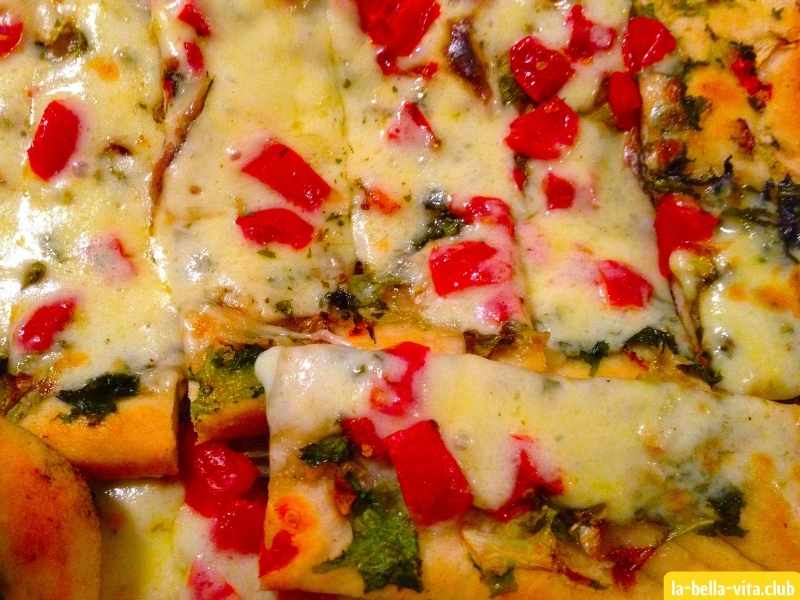

The Arabs brought rice, citrus fruits, new spices, sugar, almonds and marzipan, the Normans stockfish and roulades, the Spanish tomatoes, aubergines and peppers, as well as recipes for making chocolate. The proximity to the African continent is also evident in the northwest of the island, where various types of couscous are cooked. In San Vito Lo Capo, there is an international couscous festival every year with live concerts on the beach, cooking competitions and talk rounds (more info here).
Sweet influence from Arabia
From today's perspective, Sicilian cuisine has been most influenced by the Arabs. The preparation of arancini, the small, stuffed and deep-fried rice balls, begins with rice. Traditional desserts such as cassata develop from Arabic desserts.
Many dishes have aubergines as an ingredient, such as the famous "Pasta alla Norma". Another important ingredient in the cuisine is fish and seafood, whether with spaghetti or grilled. Especially the northwest of Sicily is known for its tuna.
Sicily's beaches
Sicily has more than 1,500 kilometres of coastline, including the small islands. The Sicilian coast consists of long, flat sandy beaches and small beaches of pebbles and cliffs. Each place has its own sand colour, ochre, yellow, grey or white. There are also beaches of black lava colour.
The larger cities have well-developed, beautiful beaches, such as Mondello, the main beach of Palermo, with white sand and green palm trees. Just as pretty is the playa of Catania, the coast of San Leone off Agrigento or Fontane Bianche in Siracusa.

Photo: Simone Antonazzo
Photo: Paolo Barone
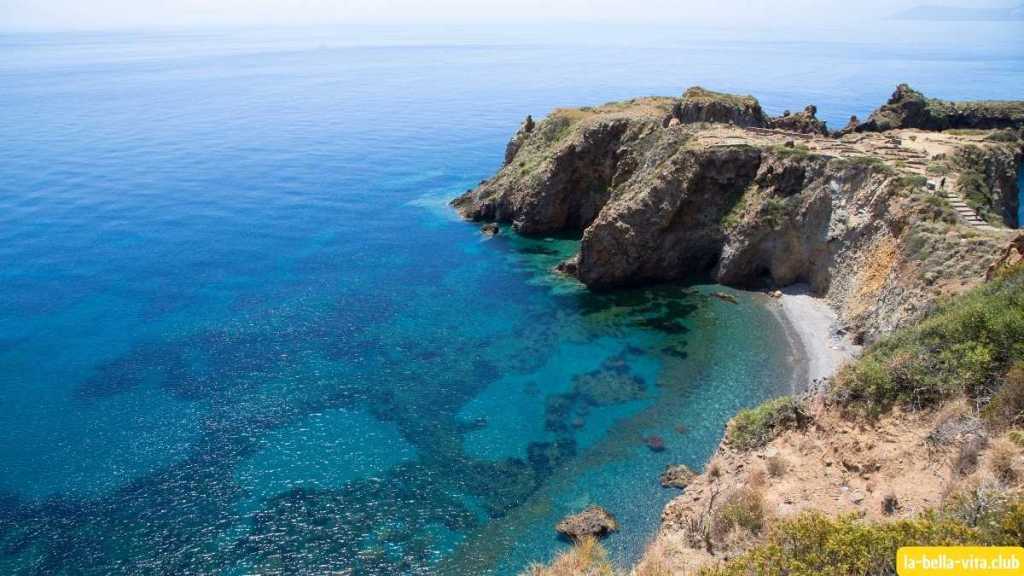
Cala Junco on the island of Panarea
Photo: Simone Antonazzo
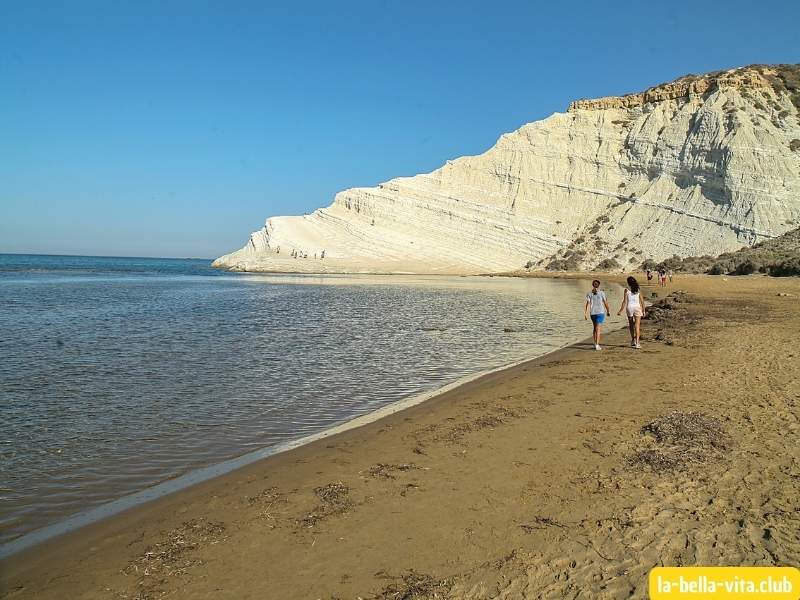
Photo: Paolo Barone
The most famous beaches in Europe
Famous tourist spots or the most beautiful beaches of the smaller islands are quite crowded in high season. Many of these dream beaches are located in nature reserves. To preserve the beauty, please be sure to follow the local environmental protection regulations.
Among the most beautiful beaches in Europe are San Vito Lo Capo in the northwest (an endless sandy beach in front of a spectacular mountain massif), the "Staircase of the Turks", a monumental limestone rock with surreal steps in the west, and the "Rabbit Beach" of Sicily's uninhabited neighbouring island Lampedusa. In season, it is correspondingly crowded here.
Not a classic beach, but beautiful! The Mirror of Venus is a natural swimming pool with shallow, warm sea water on the island of Pantelleria, at the tip of Capo di Milazzo in Sicily. The pool is separated from the sea by a reef.

Photo: Paolo Barone
Festivals in Sicily
Sicily celebrates its festivals as they fall. The first big festival of the year starts on the island with the almond blossom in February. In many places there are parades with decorated floats. In Catania, the patron saint Agata is also honoured with a large procession in February. On the east coast of the island, carnival is also celebrated at this time. Another highlight on the island is the Taormina Arte Festival in summer. Theatre, sov and film performances are then shown against the spectacular backdrop of Mount Etna.
Every village and town celebrates its own patron saint. Often there are also festivals in honour of the local delicacy or harvest phase, then actually always with church services, decorated streets, street party and fireworks. Sicily stages its festivals spectacularly like theatre performances.
Sicily's rubbish problem
For all its beauty and splendour, however, Sicily has an obvious rubbish problem. The tourist hotspots are neatly spruced up, but the more remote the area, the more often you see wild rubbish dumps. Mountains of household rubbish bags, partly torn open, stench. Totally incomprehensible for many out-of-town guests.
As an autonomous region of Italy, Sicily is itself responsible for organising waste collection and disposal - and this has failed so far due to corruption and organised crime. Various investigations are currently underway against the landfill operators. Charges include illegal disposal of toxic waste, improper operation of the facilities, bribery of politicians, officials and the environmental authority Arpa.
Corruption with chaos
The three private dumps on the island are officially full. A public dump has been demanded for years to no avail. There is no waste incineration plant in Sicily. Moreover, only about 10 percent of the waste is separated in Sicily, in cities like Catania even only 5 percent. There is de facto no money for the regional government's proposed solution of shipping the waste.
Arrival & Accommodation
The journey
Train
- There are various direct connections to Palermo from the Italian mainland. It takes about 12 hours by train from Rome, an incredible panoramic journey. Cost: around 50 euros/person
- Train Italia has an extra offer for out-of-town guests: an all-inclusive train ticket for round trips.
- Train travel is becoming more and more trendy in Italy, also part of the Slow Travel movement.
Bus
- There are direct bus connections to Palermo from many major cities, for example from Rome in just over 12 hours, from 32 euros/person.
- It is also easy to get around the island by bus. For example, there are several daily connections from Palermo to Catania (cost: approx. 12 euros/person, duration: 2.30 hours).
Car
- It's a good 1,500 kilometres from Bolzano to Palermo. In Italy, it is essential to keep to the speed limit (read more here). Motorways in Italy are also subject to tolls (just under 100 euros one way). For the last stretch you need a ferry, for example from San Giovanni to Messina.
- If you want to save yourself the long journey, you can also travel by car on the ferry. For example from Genoa (costs for 2 people with a mid-range car approx. 300 euros, it's worth booking early).
- Alternatively, you can also hire a car locally. To avoid later discussions, we strongly recommend fully comprehensive insurance, ideally with no or only a small excess. P. S. Driving is an experience!
Aeroplane
- AeroplaneIn Sicily there are two international airports, the Catania Fontanarossa Airport on the east coast and the Falcone e Borsellino Airport in Palermo on the northwest coast.
- Other airports are Birgi Airport near Trapani and Ragusa Comiso Airport. The smallest airport is on the island of Pantelleria off Sicily.
- It may be cheaper to book a flight to Milan first and then fly on to Sicily nationally. If you want to go to the north of Sicily, you can also fly to Reggio Calabria and then take the ferry from San Giovanni (ferry without car: 8 euros/person).
Ad
Quiz: How well do you know Italy?
Your accommodation
From simple, secluded to full luxury in the hustle and bustle of life: Sicily offers you virtually every form of accommodation in every price range. Whether you prefer a rustic guesthouse, a beach villa or a mountain hut, a luxury and wellness hotel or an organic farm?
Prices are usually highest during the high season in August. Note: Pools are often only filled from April to November. If you are travelling without a car, check how accessible your accommodation is by public transport.
- Perfect starting point for Palermo: Granatelli Rooms City B & B - right in the city centre, put on your comfortable shoes and off you go! Cost: just under 100 euros for 2 people with breakfast
- Politics and Society in Italy
- Gladiators: Superstars to the death
- Social Media in Italy: Stars and Trends
- Luxury study: This is what the super-rich spend on holiday in Italy
- Everyone knows Dolce Vita - but what about Sprezzatura?
 A small style manifesto from the country where nonchalance became an art form.
 - Antipasto, primo, secondo? This is how Italy eats - and how to order correctlyAn Italian menu is not a sprint, but a walk.
- The "beach of lovers" on Elba: the most romantic coast in TuscanyA story of love, pain - and perhaps the most romantic stretch of coastline in Tuscany.
- 7 reasons why Naples is Italy's new trend cityWhat used to be chaos is now character.
- Why chestnuts are now becoming a delicacy in ItalyThe smell of fire and roasted chestnuts fills the air.
- How Italy celebrates Halloween - and where it's very different to oursBetween witch villages and ancient rituals.
- 7 Italian words that instantly put sunshine in your headOne word is enough - and suddenly you're there again.
- Researched! Why Italy speaks with its handsFull physical effort.




- Insider tip: This is what awaits you in Puglia!
- The 10 most popular villages in Italy
- Attention, rip-off! The tourist traps in Rome...
- 8 reasons why Italy is particularly beautiful in winter...
Photo clues:
Cover - collage & the other Sicily photos (except kitchen) by Paolo Barone and Simone Antonazzo (CC BY-SA 4.0)
Food image gallery: mkistryn/Getty Images via canva.com (swordfish); Roberto Gennaro/Getty Images Signature via canva.com (snails); eZee Pics Studio/Getty Images via canva.com (rice); MychkoAlezander/Getty Images via canva.com (caponata); kathrinshine via canva.com (pasta); mkistryn/Getty Images via canva.com (cassata);
Image gallery Palermo: wsfurlan/Getty Images Signature via canva.com; sonnely/Getty Images via canva.com; peeterv/Getty Images Signature via canva.com; bloodma/Getty Images via canva.com; rusm/Getty Images Signature via canva.com


