
Beautiful Emilia-Romagna and its specialities: Tagliatelle al Ragù, Crescentine, Prosciutto crudo and Squacquerone cheese Photo: stock.adobe.com/ ermess; enchanted_fairy, New Africa
From our editorial team
Bologna - Emilia-Romagna is considered the the culinary heart of Italy. Many of the supposedly typical Italian specialities have their roots beneath the boot shaft: from the famous Bolognese sauce and Parmesan to delicate Prosciutto di Parma and Aceto Balsamico, which can be found in almost every German household today.
One reason for the culinary diversity: Emilia-Romagna has historically always been a wealthy region. People here had enough money and time to try things out - and to let them mature. The Via Emilia, which runs through the region from Piacenza to Rimini was an important trade route. Cities such as Bologna, Modena and Parma were already important production centres in the Middle Ages. Wealthy aristocratic families and monasteries were involved in agricultural production and the manufacture of delicacies.

Photo: stock.adobe.com/Madrugada Verde
The climate has also favoured the region's development into a land of milk and honey. The high humidity in Parma ensures perfect maturing conditions for ham. The warm summers and cold winters in Modena allow the vinegar to age properly. Fertile soils also ensure good grazing areas and therefore good milk production. Over the centuries, this has resulted in a remarkably varied menu.
Italy's butter-olive oil border runs through Emilia-Romagna. In Emilia, people still traditionally cook with lard and butter, while in Romagna there are already Olive trees. Here are ten "typically Italian" delicacies that come from Emilia-Romagna:
1. the bolognese sauce for the spaghetti
In Germany Spaghetti Bolognese, the pasta classic in Bologna is known as tagliatelle al ragù. Instead of minced meat, the sauce is made with slowly braised beef and pork ragout, and instead of thin spaghetti, it is served with wider spaghetti. Ribbon noodles - so that the sauce sticks better to the pasta.
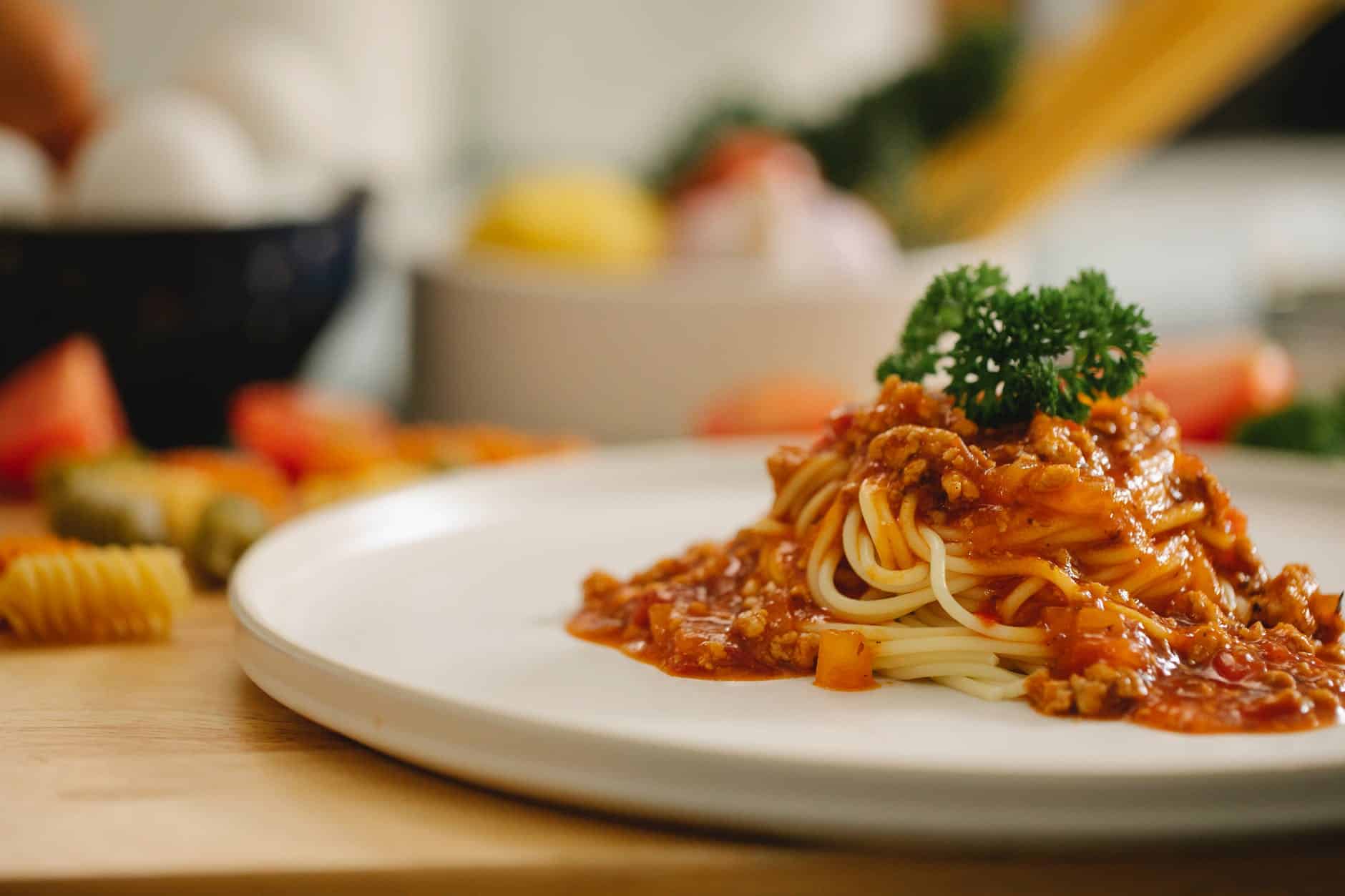
Photo by Klaus Nielsen on Pexels.com
2. parmesan, the king of cheeses
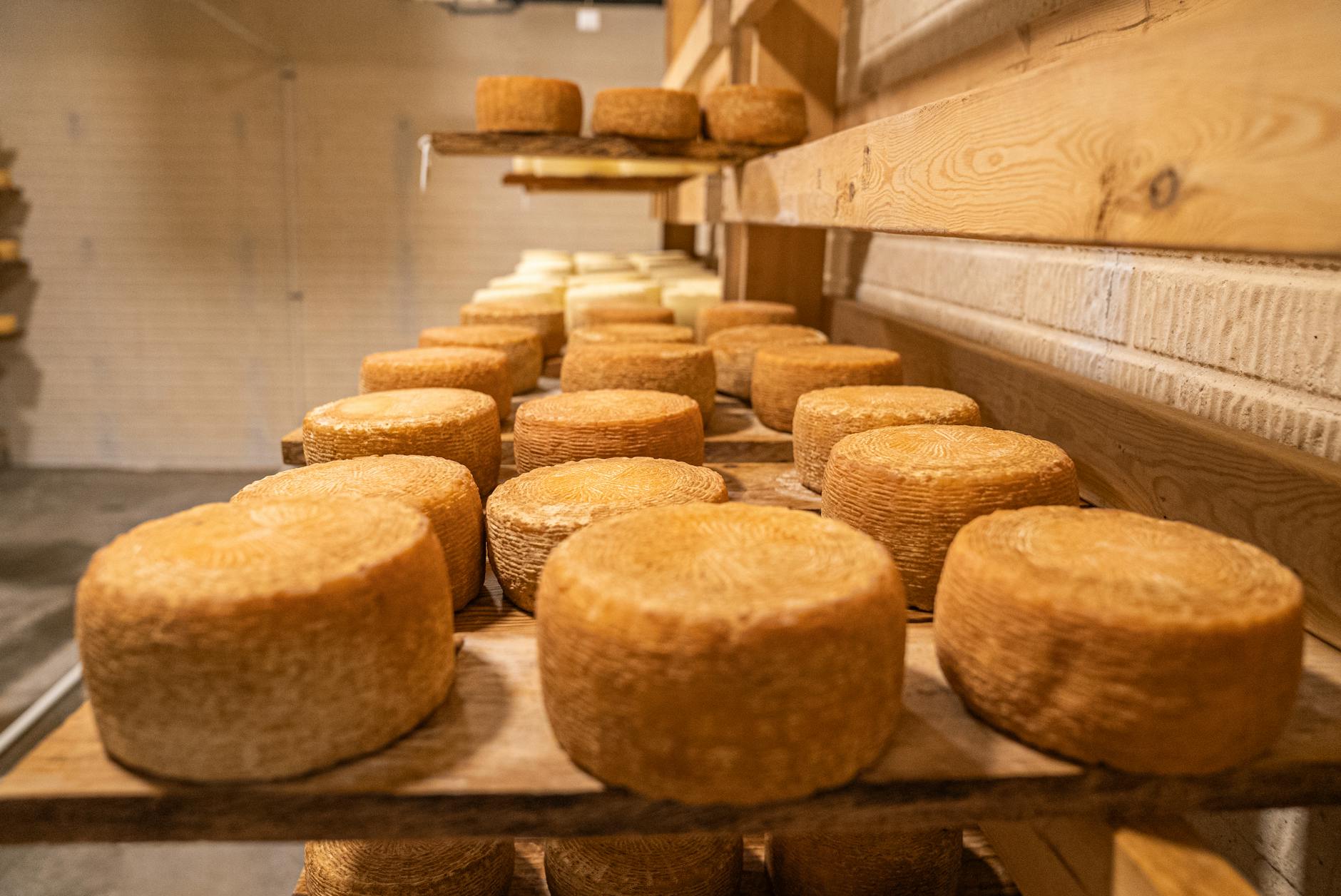
Italian pasta or oven dishes without Parmesan - hard to imagine. Parmigiano Reggiano is a symbol of Italian craftsmanship. The uncrowned king among the Italian cheeses and has been for more than 800 years. It can only consist of three simple ingredients: Milk, rennet and salt. It must be matured for at least 12 months and is often offered with a more intense flavour after 24 or 36 months.
3. the Prosciutto di Parma
One of the best and most famous hams in the world comes from Parma, a city of 200,000 inhabitants in the centre of the country. Prosciutto di Parma is made exclusively from Italian pork and salt and must be matured for at least 12 months. It is free from artificial additives and preservatives.

4. the Aceto Balsamico Tradizionale di Modena
The real Aceto Balsamico Tradizionale di Modena has nothing to do with the cheap balsamic vinegar from the German supermarket. It is made from reduced grape must and matured in wooden barrels for at least 12 years - often even 25 years or longer. The aceto is very intense, aromatic and almost syrupy and also tastes good with strawberries and vanilla ice cream. In fact, even a small bottle can cost several hundred euros.


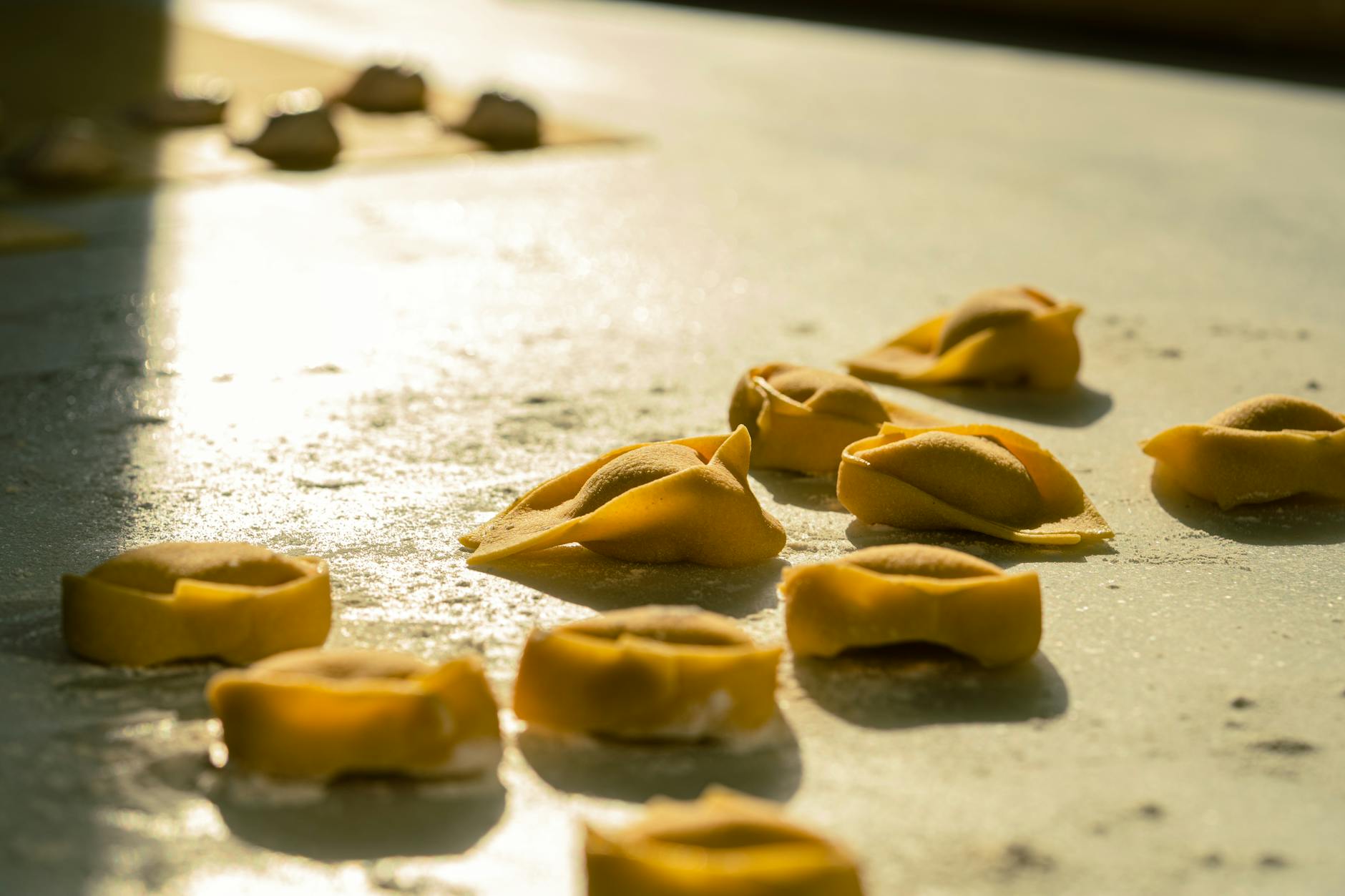
5. tortellini
Tortellini means something like "little cakes". The ring-shaped, filled pasta has a diameter of around two centimetres. The cities of Modena and Bologna have been fighting over the copyrights to the pasta for centuries. Tortellini. Which is definite: Tortellini have existed since the Middle Ages. The historian Cervellati writes that the "Tortellum ad Natale" can already be found on Christmas tables in Bologna in the twelfth century.
The difference between Modenese and Bolognese Tortellini is the meat content, which is higher in Modena. In Bologna, the meat is also added raw. In Modena Tortellini The belly button is closed around the index finger, in Bologna around the little finger. According to legend, their shape was inspired by the navel of the goddess Venus.
6. mortadella
In 1661, Cardinal Farnese issued a decree that regulated the production of mortadella by law. A cooked sausage made from a mixture of pork meat. The original Mortadella Bologna PGI has a cylindrical or oval shape, a pink colour and an intense aroma. The slices should be wafer-thin, the surface velvety and the slice should have white squares of fatty tissue. The sausage is said to have been around since the Etruscans. The name could come from the Latin term "murtatum", which means minced meat in a mortar.

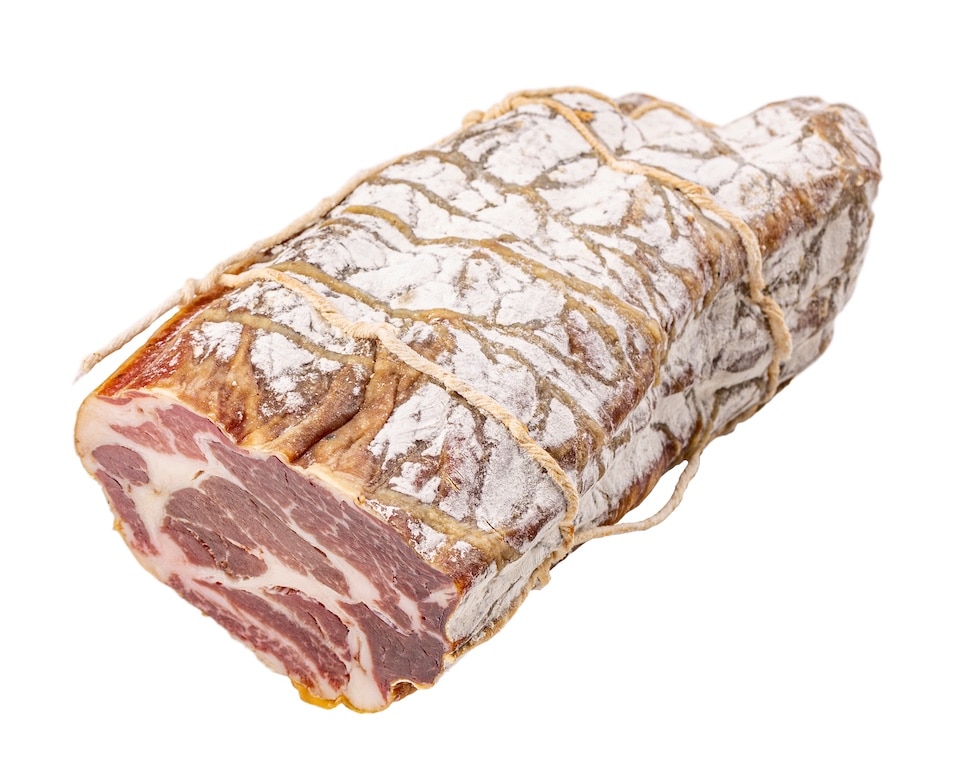
7th Coppa di Parma
This famous ham is made from the fine neck of the pig. Coppa di Parma has a dark red colour with white netting running through it. According to tradition, the meat is stuffed into casings, wrapped in nets, cured by hand and then air-dried for two to three months - all under a protected designation of origin and from Italian pigs. The ham is cylindrical in shape and has a flavour ranging from delicately spicy to nutty and sweet.
8. pancetta Piacentina
The first traces of pig farming in Emilia-Romagna can be traced back to 1,000 BC. Even in the Middle Ages, the sausages from Piacenza had a name and were known as "roba de Piaseinsa". The special thing about Pancetta Piacentina is that it is rolled, as can be seen from the circular layers in the slice. The ham can only be produced in the province of Piacenza in the Emilia-Romagna region, which lies up to 900 metres above sea level. The pigs used for processing must have been born, reared and slaughtered in the regions of Lombardy and Emilia-Romagna. They must be matured for at least four months.

9. piadina
Piadina Romagnola is a simple but incredibly tasty flatbread from Romagna, which is warmed up without fat on a hot plate or in a hot pan. The dough consists of wheat flour, water, salt and a drizzle of olive oil. The flatbreads are filled with cheese, ham, salad or salami and are often eaten on the hand. Piadine with squacquerone, a creamy cheese from the region, are also popular.


10. lambrusco
Lambrusco is a very old type of wine. It was already mentioned by the ancient Romans as "Lambrusca". Lambrusco is a sparkling, fruity red wine that is mainly grown in the Modena, Parma and Reggio nell'Emilia regions. It is available in dry and sweet versions. Lambrusco is an Italian export hit.

Before you book a tour of Venice online or spontaneously on site in Venice, you should check all the details: What exactly is on offer and what is included in the price? There are supposed "bargains" where you have to pay extra on site for extras such as entrance fees to museums. It's worth comparing prices here too.