

The Colosseum is a magnet for millions
From our editorial team
Rome, the Eternal City, fascinates with its unrivalled history and breathtaking beauty. Even though Rome is generally considered safe, there are a few typical tourist traps. With more than 10 million visitors a year, Italy's capital also attracts scammers and rip-off artists: Here are the most common tricks used to make tourists pay.
- The wallet eaters
- Meet & Greet with the Pope
- The strong men of the Colosseum
- Coperto is prohibited
- Delicious & affordable food
- The thing with the "recommendations"
- Gifts from strangers
- Gentleman "in distress"
- The gentlemen with the roses
You can avoid most tourist traps in Rome by keeping your wits about you and staying alert - despite all your enthusiasm for the Eternal City. The biggest problem is pickpockets.
The "wallet eaters"
Visitors to the Vatican travelling on bus routes 40 and 64 are particularly popular with pickpockets in Rome. There is so much pickpocketing here that the buses are also known as "wallet snatchers". The lines are the most frequently used connections in Rome, running between the main railway station and the Vatican.
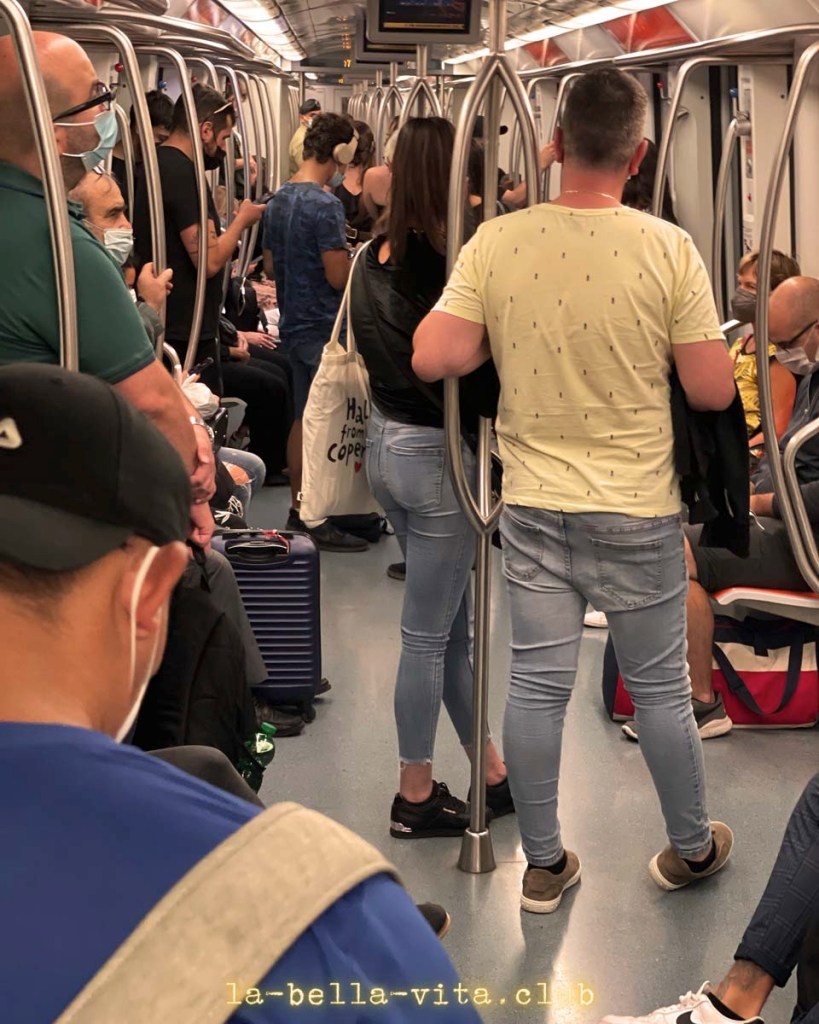
Wherever it gets crowded and crowded in Rome, you should keep your valuables well stowed away on your person (or better not take them with you at all). Even in a restaurant, you shouldn't hang your bag on the back of a chair "to go" - as we all know, opportunity makes the thief.
A meet & greet with the Pope?
You can buy tickets for almost all sights on the official websites. However, many organisers also try to sell "special tours" on site: Reduced to no waiting times, or even a meet & greet with the Pope, with some dubious organisers anything seems possible.
You are on the safe side if you buy your tickets officially online or at the official ticket booths. Even if the queue looks long here, it usually goes very quickly.

The strong men in front of the Colosseum

Well-trained men in tight uniforms with gleaming swords or "Julius Caesar with laurel wreath", the perfect motifs for a souvenir photo in front of the Colosseum. The men expect a financial reward for posing.
To avoid discussions later on, the price should be clarified BEFORE the photo is taken. In the past, the photo gladiators of the modern era posed directly in front of the arena; today they have to stand at a greater distance in the streets around it (especially at Villa Borghese).
In Rome, "Coperto" is banned in restaurants
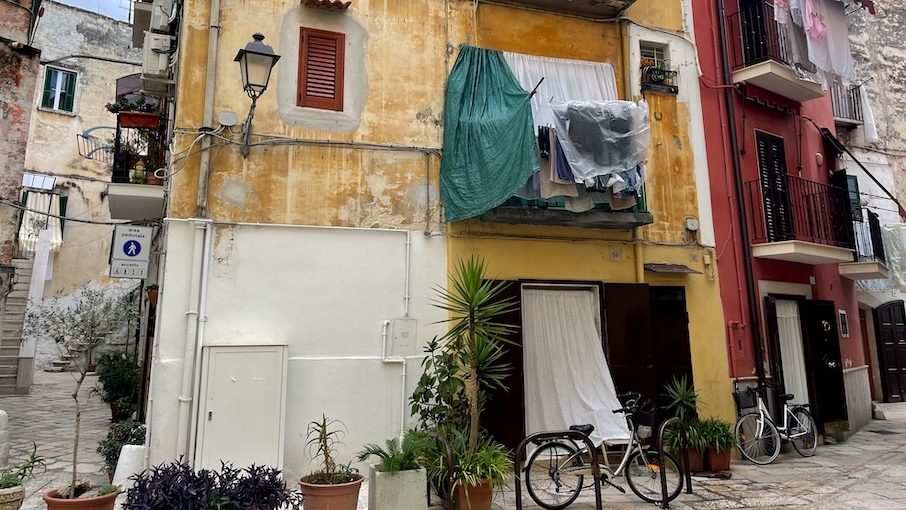
The "coperto", the standard charge in most regions of Italy, is prohibited by law in Rome and Lazio. In rare cases, however, you will find in the small print of menus - illegally - the charging of a "service fee" or a note that the unsolicited bread basket will cost X amount of euros.
- Short holiday with a hot spring: 7 spas in northern Italy for cold days
- Soak up the sun at the last minute: Italy's insider tips for October
Delicious and affordable Italian food

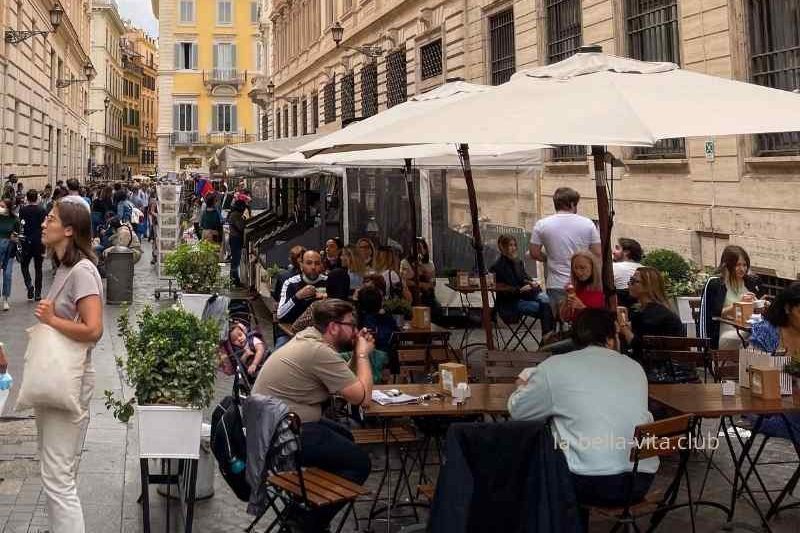
If you want to eat original Italian food in Rome, you should take a close look at the restaurants, especially around the tourist hotspots. Are there Italians at the table, or can you hear every language on earth but Italian? You can also eat excellently with a view of the Colosseum - with a small price premium for the ambience.
The more translations of the menu there are and the greater the selection of international bestsellers (from burgers to doner kebabs to schnitzel), the more likely you are to fall into a "tourist trap".
You should also be careful with restaurants that offer extreme dumping prices, a pizza with Parma ham for 4.50 euros or a salad with prawns for 9 euros? Such prices are usually only feasible with inferior products (and possibly with exploitation of the employees), alternatively you will be ripped off elsewhere and then pay almost 20 euros for a bottle of water, for example.

The thing with recommendations
The more touristy the city, the higher the probability that a commission will be paid to the taxi driver or hotel receptionist for a restaurant or hotel recommendation. This is especially true in Rome. In principle, there is nothing wrong with this as long as a recommendation is "worth recommending".
But if the taxi driver only takes you to the to a hotel in Rome, the receptionist just this recommends a restaurant (without even asking what you want to eat), it's better to find something yourself.
The "gifts" from the friendly strangers
Many tourists are annoyed by the "friendly strangers" who approach you from time to time on your way around Rome and want to give you a "gift", sometimes a friendship bracelet, sometimes a lucky charm or something else.
In return for the "gift", you are supposed to give a "small donation" at the end - no surprise there. If you don't want to give money, you should simply walk on and not get involved in a conversation.
The "gentleman in distress"
If you are approached on the street by an expensively dressed gentleman in front of his relatively expensive car - be careful. If the seemingly wealthy gentleman then also mentions his employer, either a well-known Italian designer or a major car brand, during the really nice conversation - be even more careful!
In a moment, the supposed gentleman will give his new friends from the street a "very rare designer piece from prototype production" and in return ask for a bit of petrol or phone money because he has just broken down and has no wallet or mobile phone with him. The high-end version of the tourist trap.
The gentlemen with the roses
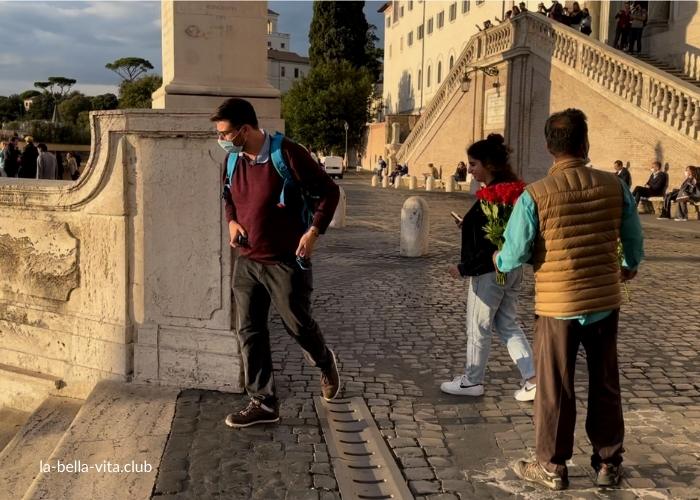
The Spanish Steps and the red roses. On what is probably the most famous staircase in the world, men "give away" roses, especially to foreign visitors. Initially a "gift", but as soon as the recipient walks on with the flower, the questions about money start: just a "small donation" or "a thank you" for the "gift".
In the end, an overpriced price often has to be paid for a single flower. Even if you return the rose straight away, the sales pitch is not over. If you don't want to buy an (overpriced) rose, it's best not to pick up the flower at all.
Even more tips for Rome
With a current Italian newspaper under your arm, you look a lot less like a tourist. As in any other holiday destination, you should not wave large wads of money around in public or wear conspicuous valuables in Rome.
You should ask for a receipt every time you make a purchase (vendors are obliged to do this by law) and check the change. If the taximeter in the taxi is officially "broken" or the fares are not clearly displayed - time to get out again (ideally, ask at reception beforehand how much your journey will cost).
The pickpocket tricks from home also apply in Rome: be careful if you are asked to change money or borrow your mobile phone for an "emergency".