
A plate of pasta tastes even better in company Photo: stock.adobe.com/Davide Angelini
From our editorial team
The most popular pasta in the world. Whether in tomato sauce, all vongole or simply with butter and parsley, a round of spaghetti always works. And if you splash some sauce on your chin, that's a good time to distract yourself with a load of spaghetti knowledge. Our TOP 4 about spaghetti:
Top 1: The McDonald's flop - the McSpaghetti
If you can sell burgers and fries worldwide, spaghetti shouldn't be a problem either. Mistake! In the 1970s, McDonald's introduced pasta. Pasta in cardboard, not appetising for many.

Photo: https://www.mcdonalds.com.ph/
Ad Lightweight trekking rucksack € 35.99 / Amazon

Top 2: The best string in the world
The name Spaghetti comes from the Italian word spago. It means string or twine. Spaghetti is the diminutive (plural) form of it. So we eat strings, delicious little strings.
A delicious lunch in Florence
You are currently viewing a placeholder content from YouTube. To access the actual content, click the button below. Please note that doing so will share data with third-party providers.
More InformationThe big pasta quiz: How well do you know Italy's pasta?
Top 3: Export hits since the Middle Ages
Spaghetti was first reported in the 12th century. The cartographer, geographer and botanist Muhammed al-Idrisi lived at the court of the Norman King Roger II in Sicily at that time. Al-Idrisi also travelled through Sicily at this time.
In 1154, his book "Libro di Ruggero", "Roger's Book" (original title "The Joy of Those Who Love to Roam the World") is published. In it, al-Idrisi reports that in Trabia (a small town east of Palermo) long dried threads are made from wheat, which are exported throughout the Mediterranean.
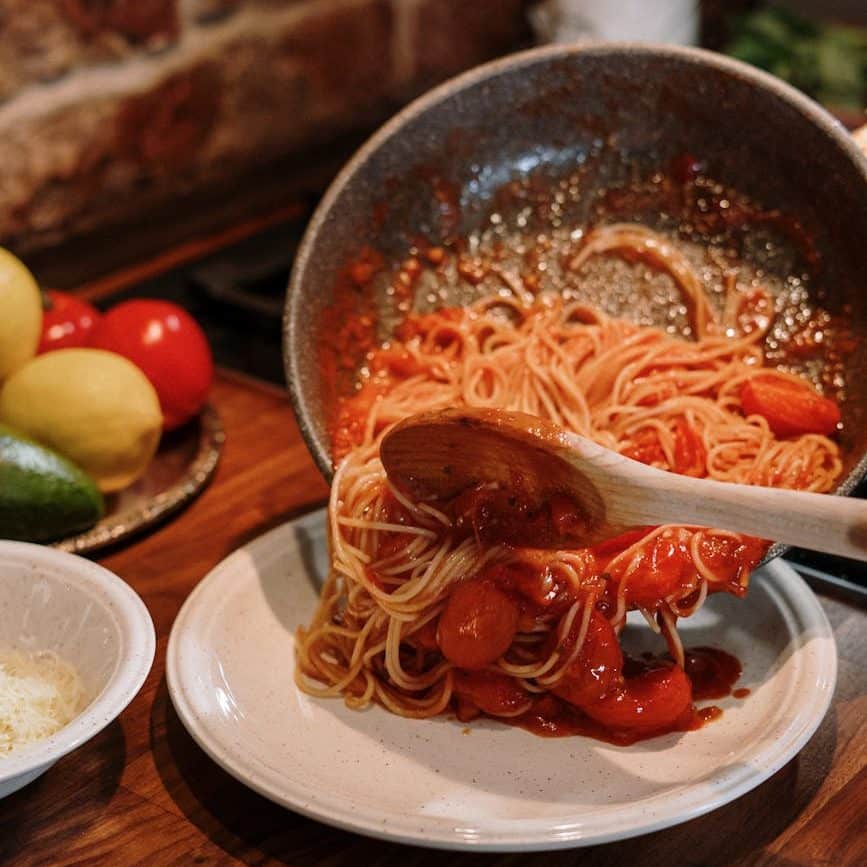
Photo by cottonbro studio on Pexels.com
Pasta, basta! The 10 most famous pastas from Italy
Top 4: Nobel laureates and the noodle
The US Nobel Prize winner and physicist Richard Feynmann (*1918-†1988) also wondered why spaghetti always falls apart into more than two pieces. According to classical strength theory, the noodles should fall apart into two parts - but in fact there are at least three. For decades, research found no answer to the "pasta problem". Until 2004.
*Advertisement12 vacuum bags for suitcases € 7.99 / Amazon
The French researchers Basile Audoly and Sebastien Neukirch published their research results in 2004. Their explanation: spaghetti are infinitely elastic rods. According to the Kirchhoff equations of elasticity theory, the mechanical tension in a stretched spaghetto keeps increasing.
When the noodle breaks at one point, the stress energy is converted into vibration energy. Bending waves race through the spaghetto. Where the vibrations overlap, breakage can also occur.
- People, regions, mangiare: This is Italy...
- Bella Venezia: The Curse of Beauty!
- How to recognise a "good Italian": Restaurant tips!
Ad