
Italy is facing a shift to the right: in current polls for the election, Giorgia Meloni (45) is ahead with her far-right "Fratelli d'Italia". Who is running in the election on 25 September and how does it all work, an overview.
More than 40 per cent of Italians eligible to vote are currently said to be undecided.
- The favourite from the right
- The centre-left favourite
- Who else is currently playing a role?
- Italy's new electoral system & government formation
Woman from the right wing: Giorgia Meloni (45)
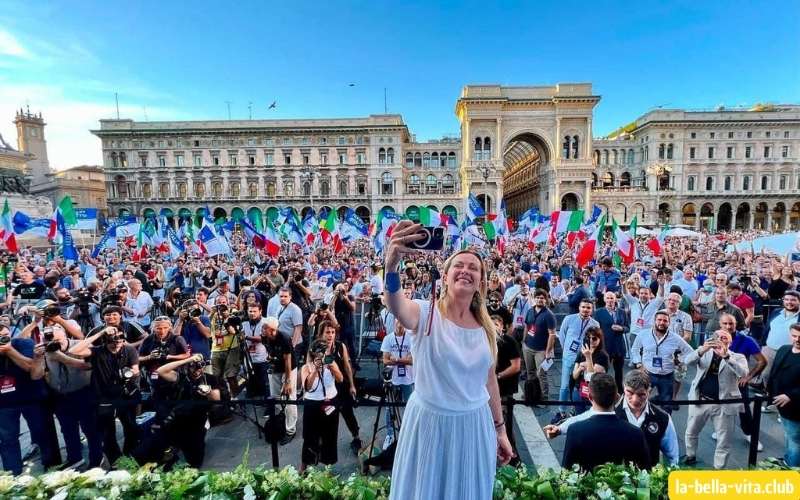
Photos: Twitter/@GiorgiaMeloni
The far-right party "Fratelli d'Italia" with Giorgia Meloni (45) leads the current polls for the election in Italy - outside the country the politician is an unknown quantity.
In the last Italian elections four years ago, her party only won a good 4 percent of the vote - now it could be more than 25 percent! According to current polls, the post-fascist party would have a majority in both chambers of parliament in Italy, supported by the "Forza Italia" and "Lega" parties.
That's why Mario Draghi quit...
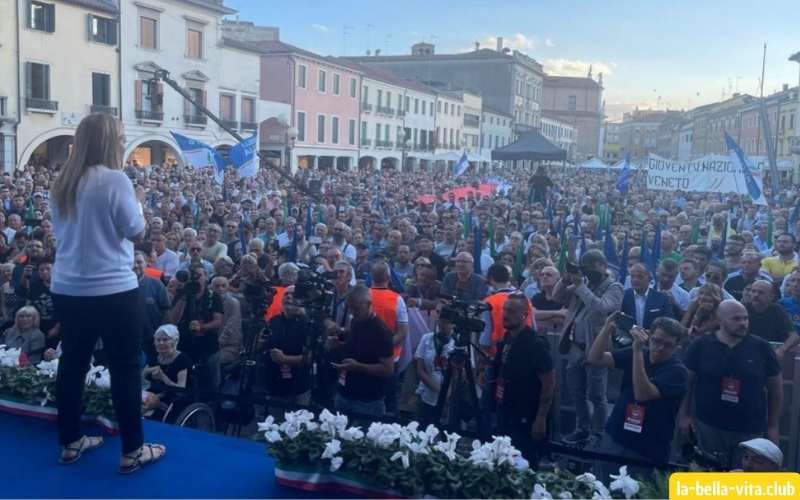
Silvio Berlusconi of "Forza Italia" knows Meloni well. In 2008, at 31, Meloni became Italy's youngest minister - under Berlusconi. After a dispute with Berlusconi over the nationalist direction of her policies, she founded the "Fratelli d'Italia" in 2012.
From pupil to boss
Already as a teenager, Meloni joins the youth of Italy's neo-fascist movement, founded by supporters of the dead dictator Benito Mussolini. In her book "I am Giorgia" (2021) she says she is not a fascist, but identifies with Mussolini's heirs.
>>> our current stories from Italy
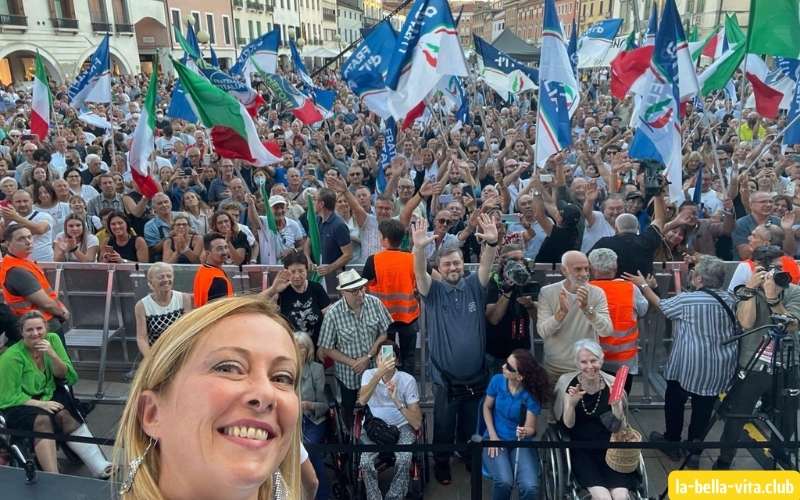
In contrast to "Forza Italia" and "Lega", it says it is friendly towards the USA and Nato. Meloni also wants the head of Italy to be directly elected by the people in future. In order to change the constitution, Italy needs a two-thirds majority in parliament.
Meloni calls for a naval blockade against Libya and has also repeatedly warned against Muslim migrants. She also seeks a "different attitude" towards the EU: Her alliance, she says, wants to renegotiate Italy's EU stimulus programme. But: "This does not mean that we want to destroy Europe, that we want to leave Europe, that we want to do crazy things..."
This is how the political system of power works in Italy
Repeatedly, the post-fascist has criticised LGBTQ rights. Meloni is in favour of relationships in the spirit of the Catholic Church. However, she herself is not married and has an illegitimate daughter with her partner (a journalist).
+++ Once through Rome in a golf cart?! More here... Ad
Ego show on Twitter
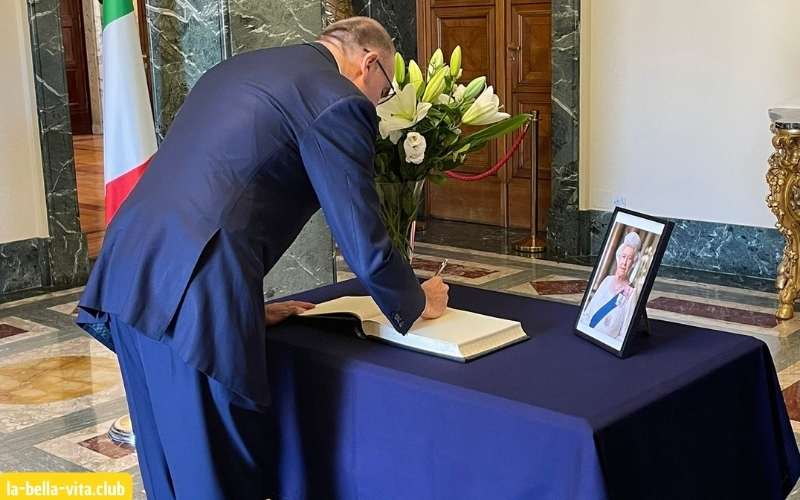

Man of the centre-left: Enrico Letta (56)

Photos: Twitter/@EnricoLetta
Giorgia Meloni's toughest competitor comes from the centre-left alliance: Enrico Letta (56) of the "Partito Democratico". He is only just behind Meloni in the current polls, but has difficulty finding parties for a sufficiently strong counter-alliance.

Letta already has ten months of experience in government as Italy's prime minister, in coalition with "Forza Italia" - until he is then ousted within the party by Matteo Renzi (47) in February 2014.

Letta is supported in this Italian election by the new party "Impegno Civico" from the political centre, which was founded by Italy's former foreign minister Luigi di Maio (40). He belonged to the "Impegno Civico" until the fall of the Draghi government nor to the leadership circle of the populist Five Star Movement.

Photo: Twitter/@luigidimaio
The Italian Left and the Greens Europe reject an alliance with Letta. Also the pro-European party "Azione" from Italy's political centre is affiliated to the centre-left alliance left again after initial agreement.
The main goal of the centre-left leader is to prevent the hard right from taking power in Italy. The alliance wants to invest in renewable energies and reform education. The PD wants to make citizenship easier for the children of immigrants, fight discrimination against homosexuals and legalise gay marriage.
+++ With the hop-on hop-off bus through Rome?! Here we go... Ad
Who else plays a role?
The Conservative Right: Forza Italia & Lega
Giorgia Meloni's party has no experience in governing and therefore needs the full support of ex-premier Silvio Berlusconi and Matteo Salvini, who both served in the Draghi government.

Photo: Twitter/@SilvioUfficiale
Berlusconi (85, was prime minister four times) is running for the Senate for the first time in this Italian election. In 2013 he was convicted of tax fraud and banned from all public office for six years. His centre-right party "Forza Italia" is considered the weakest of the three right-wing parties.
From North to South: This is how delicious Italy eats
Matteo Salvini's "Lega "is a quasi-natural partner for Meloni. As interior minister, Salvini closed migrant camps and prevented NGO boats with refugees rescued from the Mediterranean from entering the port. In fact, however, the current number of illegal immigrants in Italy is higher than any interior minister before.

Photo: Twitter/@matteosalvinimi
Both politicians conspicuously often emphasise their loyalty to Meloni. Meloni is the most inexperienced politician in the trio, and a former pupil of Berlusconi. Meloni also probably cost Salvini the election: Without the "Fratelli", the "Lega" would probably have the most votes. In contrast to Meloni, Salvini and Berlusconi also cultivate a close relationship with Russia and Putin.
The promises of the right
- This is what the right-wing electoral alliance promises: a reduction in VAT on energy and essential goods, a flat tax for the self-employed, reintroduction of nuclear power plants, higher subsidies for families to increase birth rates and the prevention of illegal immigration.
+++ Once like the gladiators! Colosseum with arena access... Ad
The Five Star Movement

Photo: Twitter/@GiuseppeConteIT
In the 2018 Italian election, Giuseppe Conte's anti-establishment party "Il Movimento 5 Stelle" won almost a third of the vote. Today, around 11, 12 per cent of that is left. The party is not currently in an electoral alliance.
After winning the 2018 election, the "5 stars" initially share power with the far-right "Lega", then switch to the Democratic Party before becoming part of the broader Draghi government. Dozens of members leave the party when Conte speaks out against supplying weapons to Ukraine.
From left to right
Under Conte's leadership, the populist party's policies have swung to the left. He wants to introduce a minimum wage of 9 euros, abolish the regional business tax and make it easier for the children of immigrant families to gain citizenship.
The ideas of "5 stars" are not really different from Letta's centre-left alliance. Instead of allying against the right, however, the other centre parties warn against a reconciliation between Conte and Letta. Conte is blamed by many for the end of the relatively successful Draghi government.
+++ Beautiful accommodation in Rome: whether for short or for longer... Ad
The Centre
Matteo Renzi (47, Prime Minister from 2014 to 2016) of "Italia Viva" and Carlo Calenda (49) of "Azione" are running with a third alliance: They want to represent Italy's political centre.

Photo: Twitter/@matteorenzi
Pro-European policy
Carlo Calenda and Matteo Renzi want to continue the pro-European policies of the previous government and even persuade Mario Draghi to return as head of the government. Draghi himself, however, sounds less than enthusiastic on the subject.

Photo: Twitter/@CarloCalenda
Like the right-wing alliance, the Renzi-Candela alliance wants to allow nuclear power in Italy again. Like the centre-left alliance, it wants liquefied natural gas terminals built in Italy.
The centre-election alliance includes two former "Forza Italia" ministers, Mariastella Gelmini and Mara Carfagna. The two politicians left the Berlusconi party because of its role in bringing down the Draghi government.
+++ Take off, please: Cheap flights are available here... Ad
Italy's new electoral system
To win, an electoral alliance needs a majority in both chambers of the Italian parliament - the House of Representatives and the Senate. Italians will vote for both chambers on 25 September.
Photo: Martinns/Getty Images Signature via canva.com
You can vote in Italy from the age of 18. You cast one vote for the Chamber of Deputies and one vote for the Senate. You can vote either directly for a candidate or for a candidate from your constituency. or one votes for an electoral alliance or a party.
The power! How the Italian political system works
As a result of the electoral reform, one third of the seats in parliament have been eliminated: in the Chamber of Deputies there are now only 400 instead of 630 deputies and in the Senate only 200 instead of 315 senators.
Mixed electoral system
Italy has a mixed electoral system: one-third of MPs are elected in single-member constituencies on a first-past-the-post basis as direct candidates. Two-thirds of MPs are elected by proportional representation on the basis of party lists.
Parties need at least 3 per cent of the votes to enter parliament. If parties are members of an electoral alliance with other parties that reaches a total of 10 per cent of the votes, then 1 per cent is also sufficient to enter.
President of the Republic Sergio Mattarella appoints Italy's next prime minister following the majority in parliament.
+++ Italy criss-crossed: Here are good train tickets... Ad
Current Stories from Italy
- Dolce Vita away from the crowds: 5 unknown regions for a spring holiday
 Also quite beautiful!
 - Gallipoli - The beautiful city that dances on the sea
 A feeling like being on a stage.
 - Bari in Apulia: an old town that smells of fresh laundry
 Fresh laundry every day.
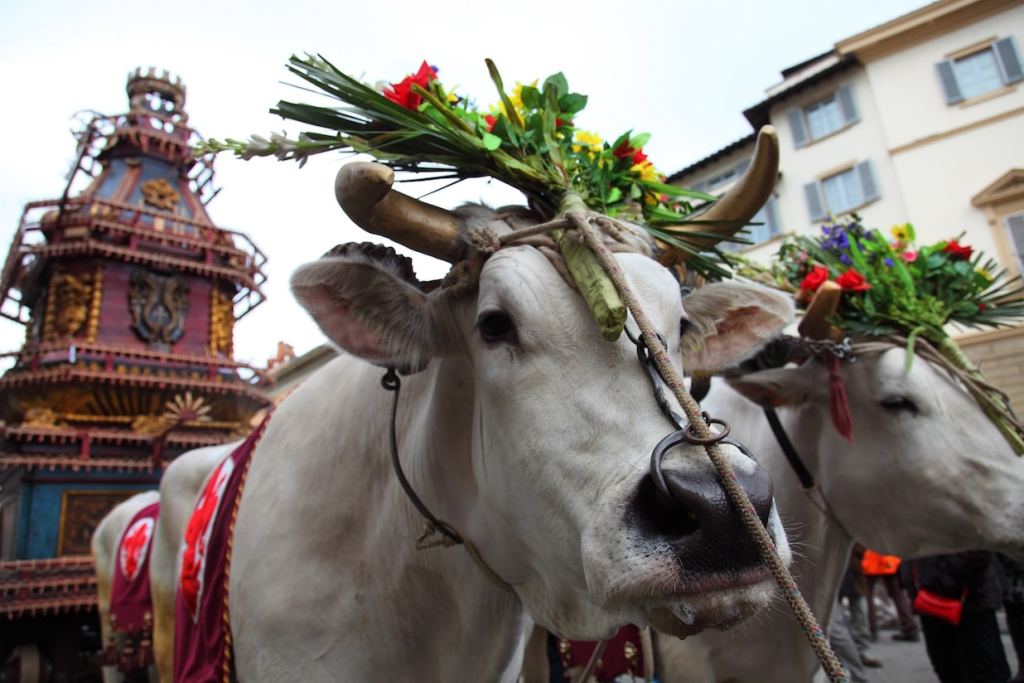
 - Easter in Italy. The most beautiful processions and traditions
 Holy Week as an exceptional experience.
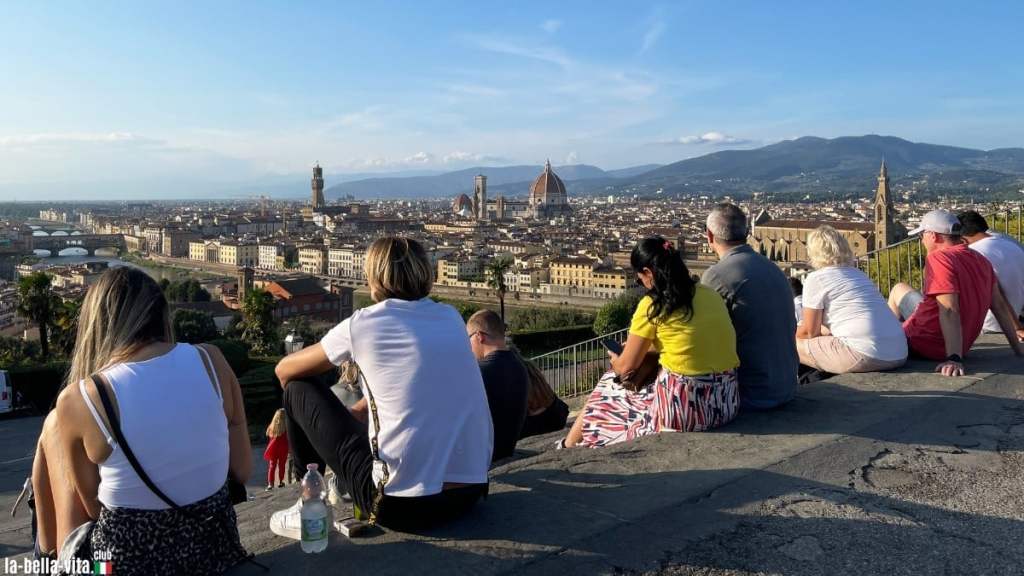
 - The most beautiful view of Florence: why a 20-minute walk is worthwhile
 Masterpiece in the open air.
 - The sacrament standing up: Sixty seconds of Italian eternity
 The short ritual prayer.

written by Annie Kayser, first online 14 September 2022
Sources: Italian, English and German daily newspapers, social media of the parties and politicians respectively