
Polignano a Mare in Apulia Photo by Kelly on Pexels.com
Anyone who thinks that Polignano a Mare is just another pretty coastal village in Apuliawho has probably never stood on these cliffs. Actually too perfect to be real - and yet quite real.
Spectacular cliffs with sea caves, a song that went around the world and a bay that everyone has seen somewhere in a photo. A place where houses hover above the sea, poetry grows on the walls of houses and the caves tell stories of the past. And Polignano a Mare has a lot to tell:
- Antiquity in the foundation
- Strategic location: city on cliffs
- The caves of the underworld
- The most famous pebble beach in the country
- The kitchen in Polignano a Mare
- The white old town
- TIP: What you should see
The most important facts at a glance
- 🏡 Population: Polignano a Mare has around 17,500 inhabitants:inside (as of 2024). The municipality belongs to the metropolitan city of Bari in the Apulia region.
- 🧳 Tourism: The city records annual over 500,000 touristsand the trend is rising - especially since Polignano has been regularly featured in travel blogs as an "insider tip". The number of visitors rises sharply in summer.
- 🎶 Famous sons: Domenico Modugno (1928-1994), the singer of "Volare", was born here - and is regarded as the city's unofficial ambassador.
- 🌍 Location: Polignano is located about 35 kilometres south of Baridirectly on the Adriatic coast. The nearest airport is Bari Palese (Karol Wojtyła), about 40 minutes away by car.
- 📸 Social media factor: The bay of Lama Monachile is one of the most most photographed and filmed beach motifs in Italy - shared millions of times on social media.
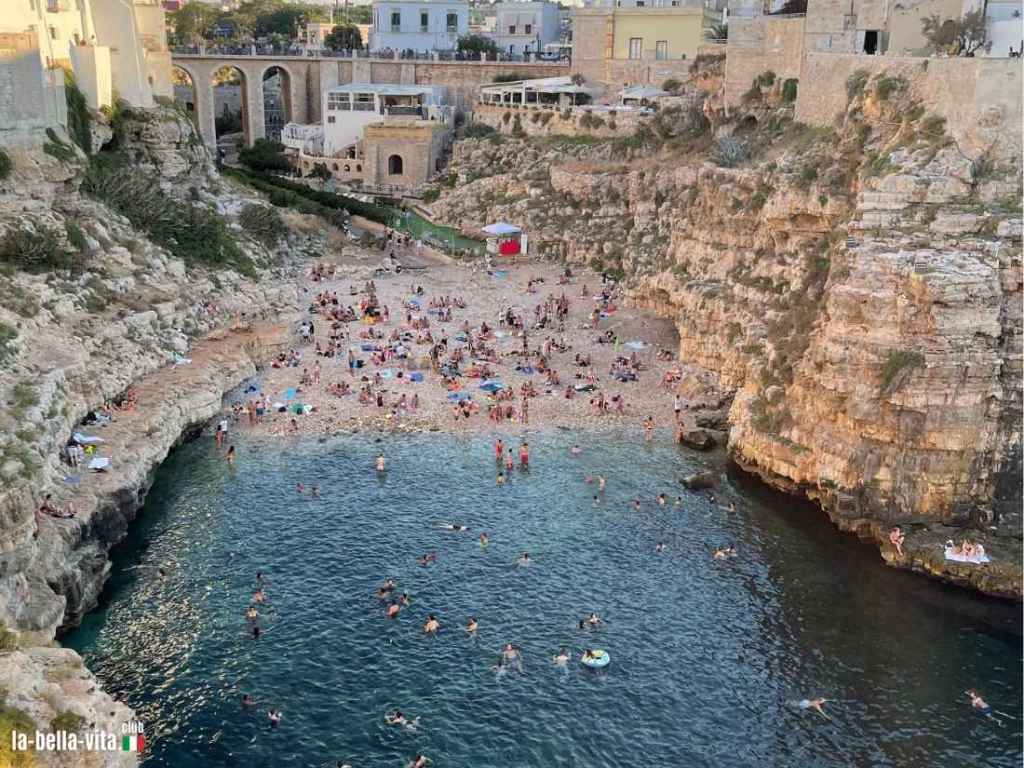
At first glance, Polignano a Mare looks like an Italian superlative - and at second glance like a very real place with history, character and surprisingly few airs and graces. The town lies just under 35 kilometres south of Bari on bare limestone, between cliffs, caves and legends. In summer, more than half a million tourists wander through the streets of the old town.
Antiquity in the foundation
The history of the town is long and began in the Bronze Age. Later came the Greeks, then the Romans, who created a kind of Roman motorway with the Via Traiana - directly through Polignano. The stone bridge on the town's beach is not a decorative element, but a real piece of world history. Traders, pilgrims and soldiers used to cross it - today it is used by walkers with ice-cream cones.
- Welcome to rafting paradise: This is how wild it gets in the Aosta Valley
- The fascination of Cinque Terre: How five fishing villages became world-famous
Polignano a Mare to click through



Ad
🎒🔐 Safe travelling - with the anti-theft backpack from travelite! Zip fastening on the back, hidden compartments and a padded laptop compartment! ➔ [Discover here at Amazon]
City on rock
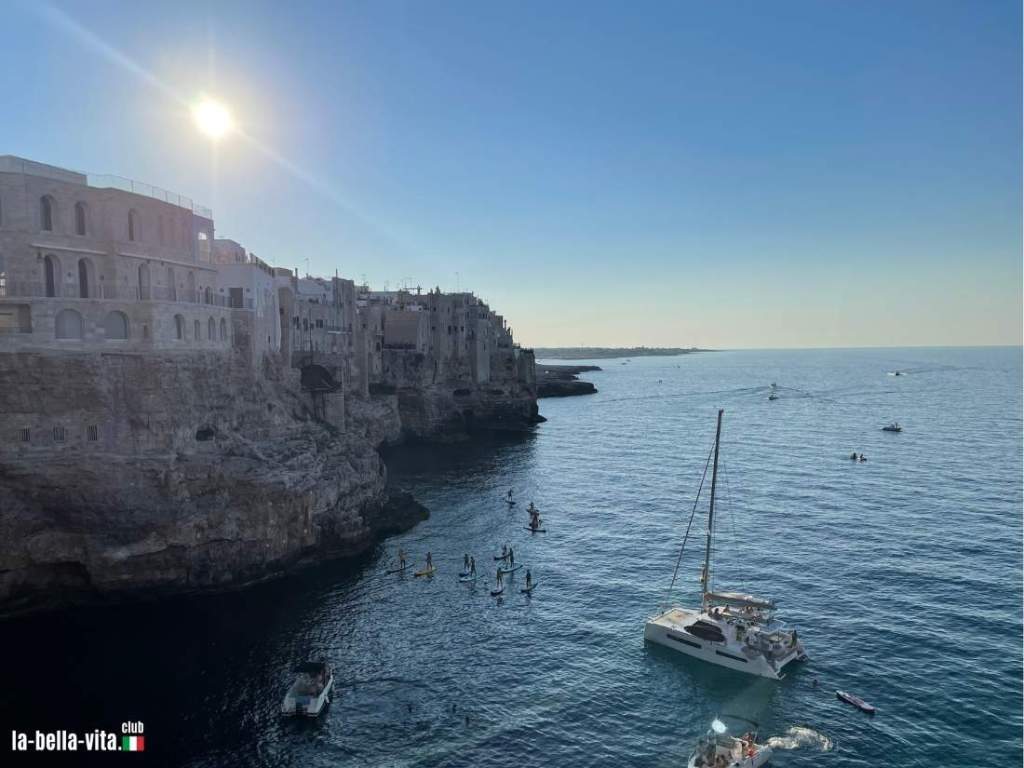
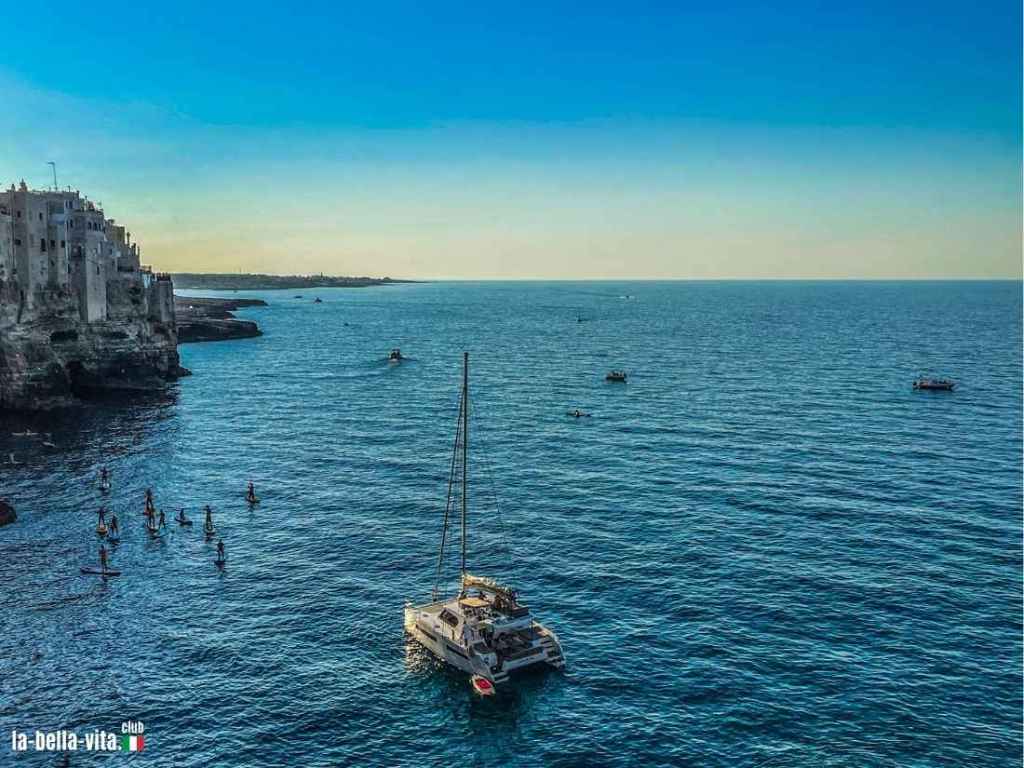
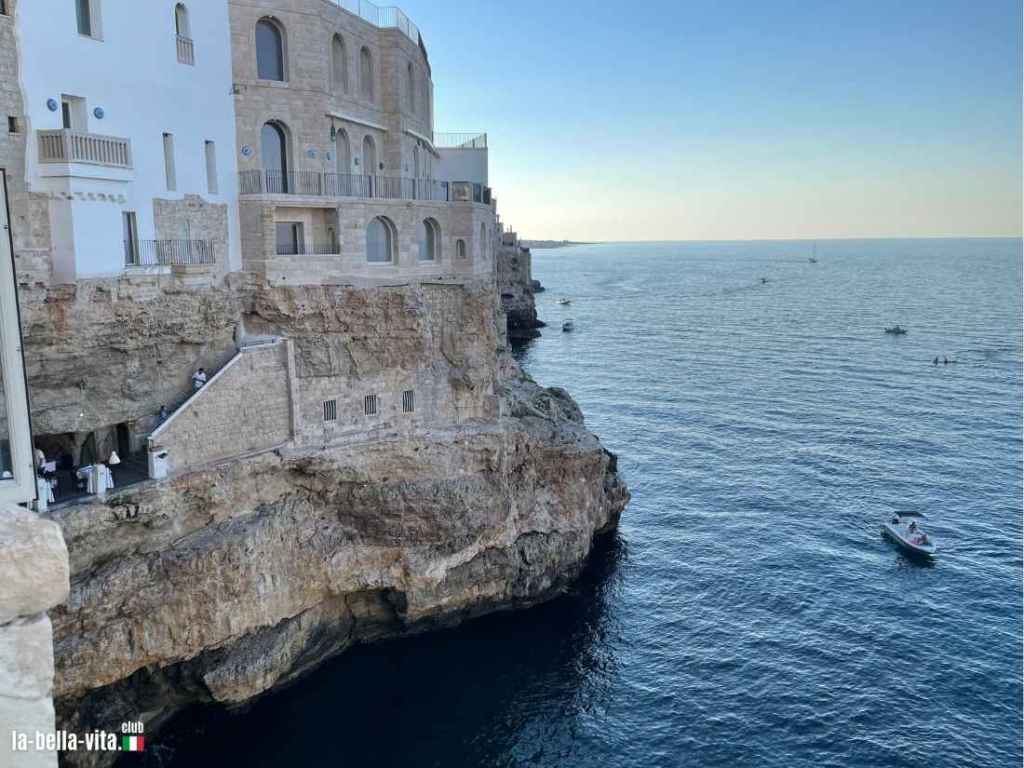
The architecture is not just "picturesque", but strategically brilliant - and a little foolhardy. Many houses were built directly on the cliffs, which are up to 24 metres high, some so close to the abyss that balconies practically float above the water. This is no metaphor: if you eat breakfast here, you can hear the waves right under your cutlery. The light refracts off the cliffs, seagulls circle and the thought of simply staying is suddenly completely natural.
Underworld with water access
What is spectacular above becomes mysterious below. Over 70 sea caves and grottos criss-cross the limestone beneath the city. The most famous: the Grotta Palazzese - a half-open cave with a high-priced restaurant that has been welcoming guests since the 18th century. Those who dine here are not served a menu, but a show. However, most of the grottos can only be reached by boat.
- Insider tip! Why only 2,000 people a year are allowed to visit Montecristo
- "Cani di quartiere": Italy's street dogs with official toleration
Lama Monachile - the most famous pebble beach in Italy
The small town beach with the strange name (named after the monk seal) is one of the most photographed motifs in the country today. A narrow bay, framed by rocks, crystal-clear water, the Roman bridge above - a backdrop like a painting. And yet it is real. Crowded in high summer, but almost surreally peaceful in the low season.
Modugno & "Volare"
Domenico Modugno, son of the city, wrote in 1958 with "Nel blu dipinto di blu" Music history. The statue that stands on the coast today is not an obligatory tourist attraction, but a gesture. With his arms spread wide, the singer gazes out to sea as if to embrace the sky. And it does - every day, photographed thousands of times.
Ad
🇮🇹☀️ Perfect for your beach day in Italy: this super large one, sand-free Beach blanket (210 × 200 cm) from SKYREH. ➔ [Discover here at Amazon]
City of steps, city of sentences
A detail that many overlook, but hardly anyone forgets: in Polignano, the city writes back. Poetic inscriptions can be found on steps, door frames and walls - sometimes melancholic, sometimes ironic, sometimes simply beautiful. "Chi ama, vola" reads: "He who loves, flies." It is no coincidence that this is the same city from which Volare originates. Poetry is part of the infrastructure here.
What's on the table is no coincidence
The cuisine of Puglia is down-to-earth, but not banal: Squid with potatoes, orecchiette with cime di rapa, deep-fried panzerotti, focaccia from Bari, raw seafood for the brave. To go with it: white wine that tastes like hours of sunshine. Many restaurants are located directly above the cliffs - eating with a view is not an extra here, but almost standard. The restaurants around the bay tend to be high-priced for tourists, but offer the most beautiful views.
Old town without haste
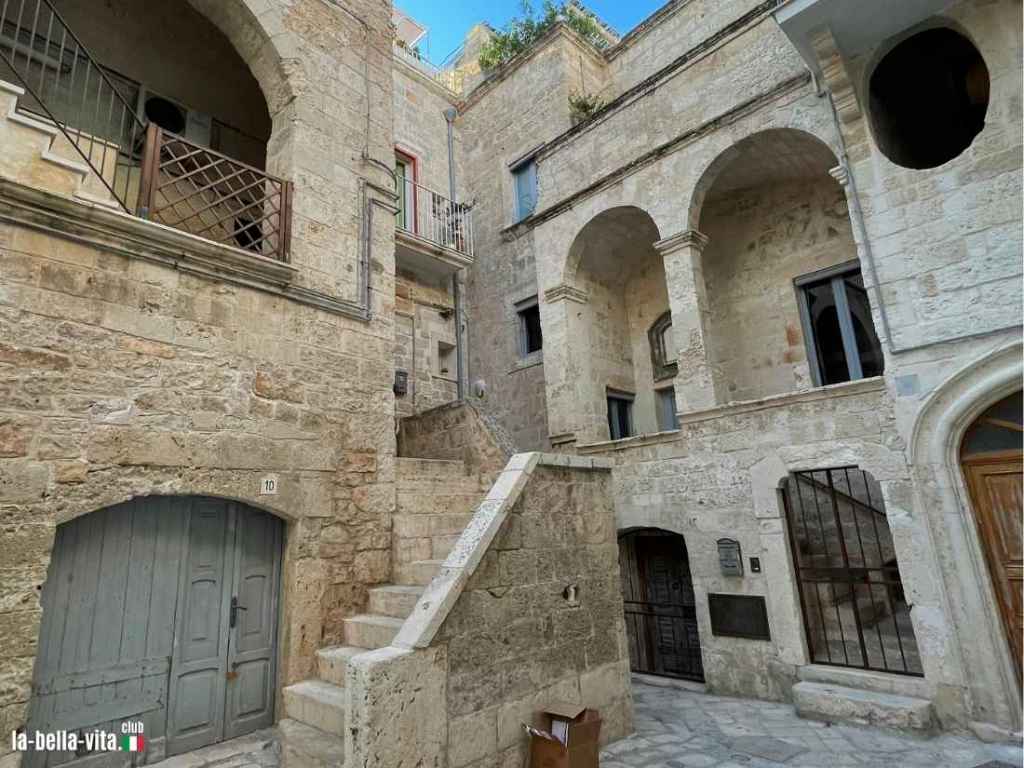
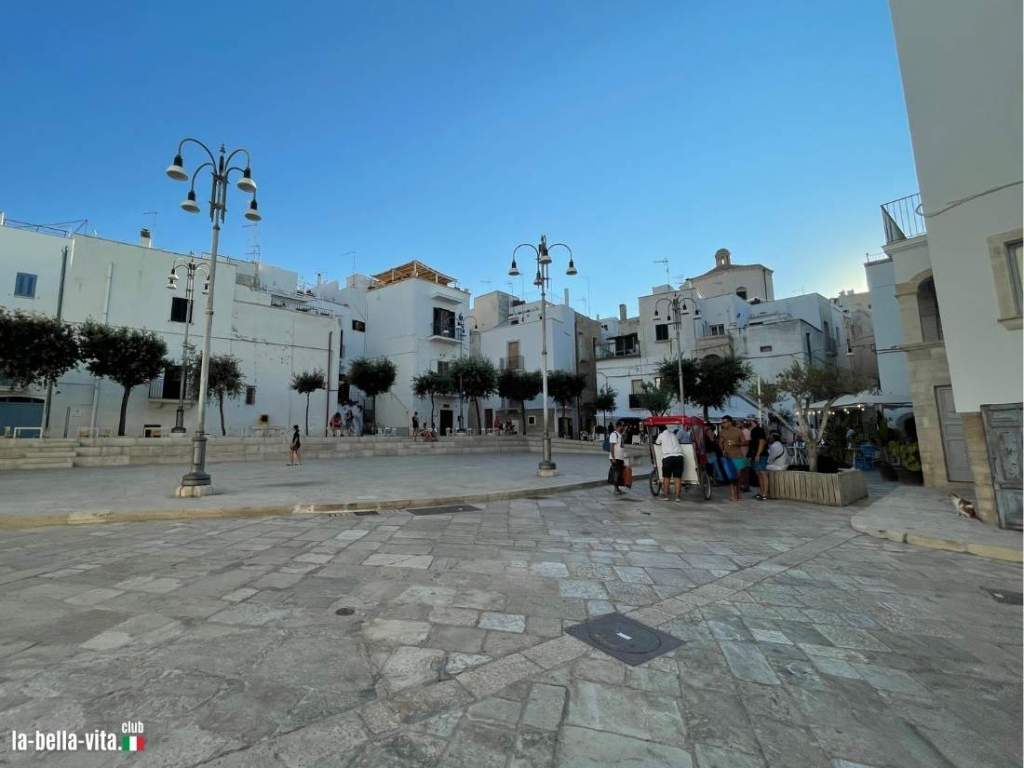
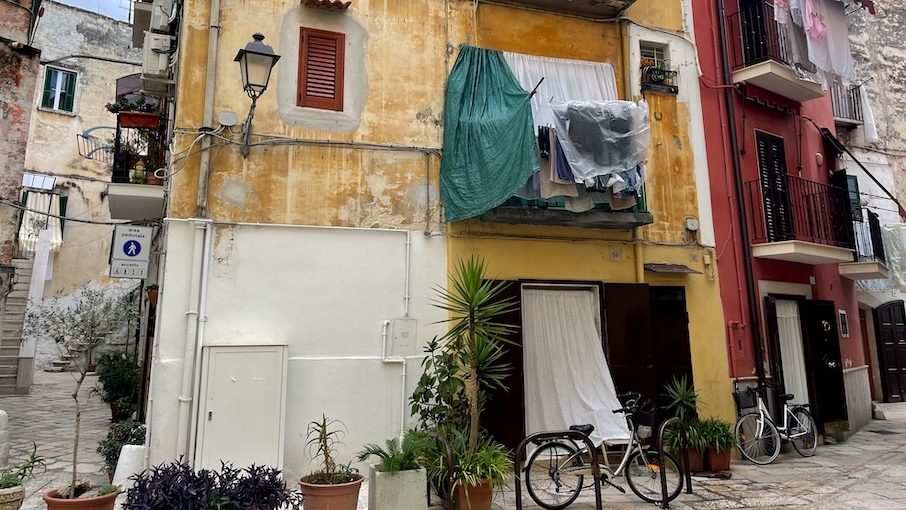
The old town is small, winding and car-free. Anyone walking through here is bound to walk slowly - not just because of the inclines, but because it's worth taking a look: white façades, green shutters, washing lines, flower pots. And again and again: the view of the sea. Everything softens in the evening. The lanterns come on, the pavement glistens. People speak more quietly, drink longer, stay later. Polignano a Mare is not an undiscovered village, but neither is it a tourist castle in the air. If you look, you will see a place that is aware of its history, geologically spectacular and poetic in its details.
Ad
🇮🇹☕ What would a real espresso be without the right cup? Get that bar feeling right at home! ➔ [Discover here at Amazon]
The most important sights
- The Modugno seafront promenadeFrom the "Scogliera del Lungomare Modugno" you can enjoy a spectacular view of the cliffs and the turquoise sea. The famous statue of the singer Domenico Modugno is also located here.
- Lama MonachileThe famous beach bay of Polignano a Mare, especially sensational at sunset and also quite crowded. The beach is right in the centre.
- Beach rock of the hermitAt the end of the promenade, 10 metres off the coast, is a rock that is said to have been inhabited by a missionary. On his return from the Holy Land, he wanted to proselytise in Polignano, but was so impressed by the beauty of the coast that he decided to spend the rest of his life there.
A tour through beautiful Puglia
You are currently viewing a placeholder content from YouTube. To access the actual content, click the button below. Please note that doing so will share data with third-party providers.
More Information- The old townThe historic old town is a winding labyrinth of narrow alleyways, white houses and small squares located directly on the cliffs. As you stroll around, you will discover poetry on the walls, enchanting terraces and spectacular sea views time and again
- Lama Monachile BridgeThe old bridge from the Bourbon era spans the bay of Lama Monachile and offers one of the most famous views of the city. With its panorama of cliffs and beach, it is a favourite photo spot for visitors.
- House of the clockThe "Palazzo dell'Orologio" with its eye-catching clock tower is located in the heart of the old town centre directly on Piazza Vittorio Emanuele II. Until the 19th century, the tower clock showed the time via a sundial, which was replaced by a real rarity: a public cable clock from the 19th century. The building has had various functions over the years - warehouse, prison, even university.