
The Amalfitana
Ten roads in Italy where nobody asks how much longer it’ll take.
Wer im Navi „schnellste Route“ eingibt, verpasst in Italien häufig was. Was sich gerade noch wie ein unnötiger Umweg anfühlte, kann schnell zur unverhofften Panoramatour werden. Die interessantesten Straßen sind fast nie die kürzesten. Hier die 9 spektakulärsten Strecken durchs Bel Paese – große Augen garantiert.
The most popular sunsets on Instagram
9. Campo Imperatore (SS17bis), Abruzzo

The route: The SS17bis runs across the Campo Imperatore plateau in the Gran Sasso massif. Because of its barren landscape, the region is often referred to as „Little Tibet“. The highest peak, the Corno Grande, stands at 2,912 metres and is the highest point in the Apennines.
What you can see: Vast plateaus, hardly any trees, flocks of sheep and an endless mountain panorama.
10 Tuscan villages off the beaten track
8. Strada Panoramica della Costa del Sud (SP71), Sardinia

The route: The SP71 runs between Chia and Teulada on the south coast of Sardinia; it was built in the 1960s and is approximately 20 kilometres long. Most of this stretch of coastline lies within a protected landscape area and remains largely undeveloped to this day.
What you can see: Sandy coves, turquoise water and Mediterranean scrub such as rosemary and broom.


7. State Road 18 (SS18), Lower Tyrrhenian Coast, Basilicata
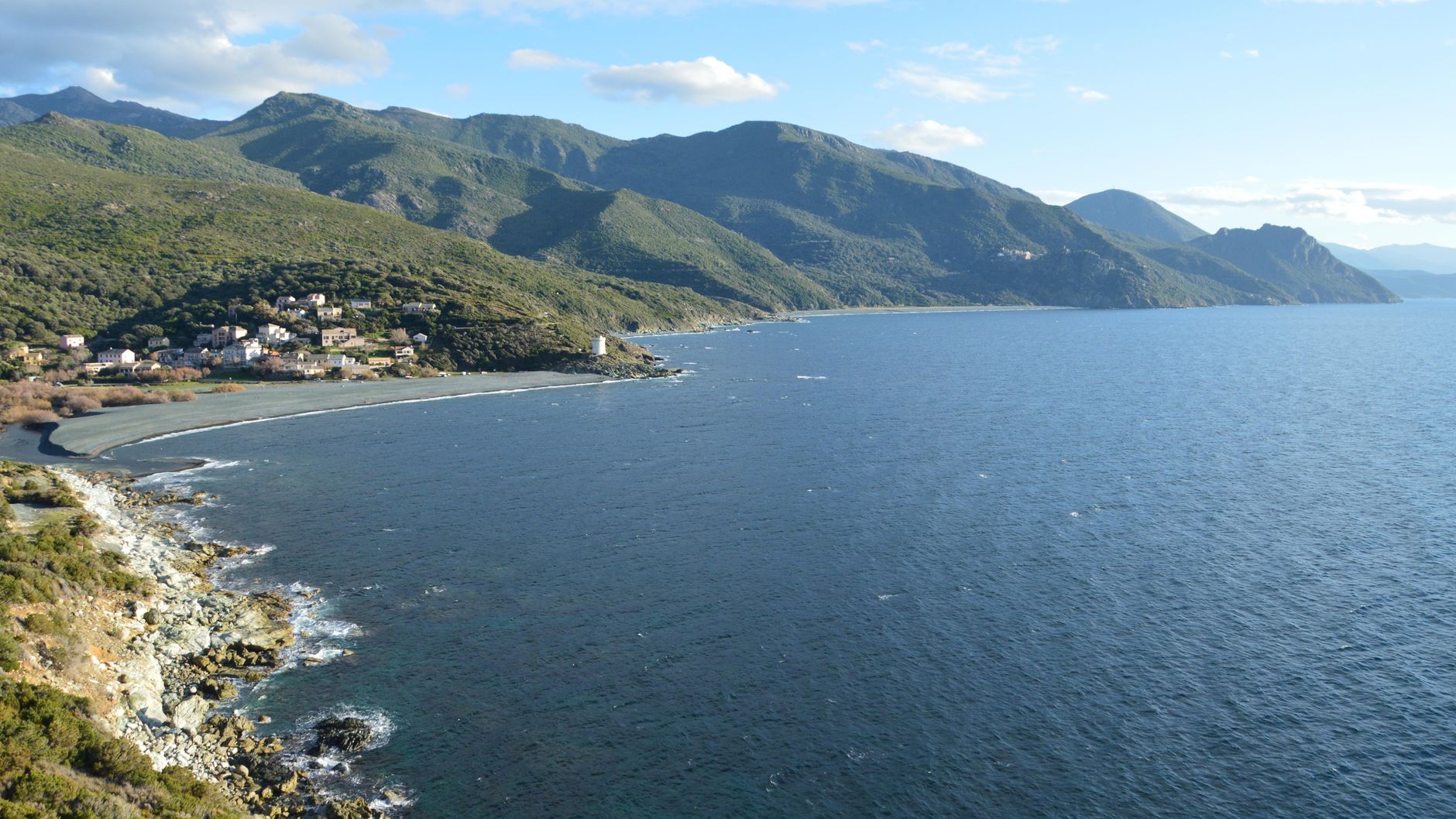
The route: The SS18 follows the coastline of Maratea – the region’s only access to the sea – which is only about 30 km long, and is the quieter alternative to the Amalfi Coast. Near Maratea stands the 21.3-metre-high Christo Redentore statue (completed in 1965), the second-largest statue of Christ in the world after the one in Rio de Janeiro.
What you can see: Cliffs, bridges, small coves and the statue of Christ overlooking Maratea, visible from afar.
6. Salento Coastal Road (SP358), Apulia

The route: The road runs along the east coast of Salento to the southern tip of the Italian ‘boot’, passing the historic watchtowers built in the 16th century to defend against pirate raids. Otranto, with its cathedral (12th century, home to Europe’s largest floor mosaic), is one of the highlights. Santa Maria di Leuca is the southernmost point of Apulia, where the Adriatic and Ionian Seas meet.
What you can see: Limestone cliffs, ancient watchtowers, small coves, Otranto and Santa Maria di Leuca.
5. The Great Dolomite Road (SS48), South Tyrol / Trentino / Veneto

The route: 182,1 Kilometer zwischen Auer in Südtirol und Auronzo di Cadore in Venetien. Auf der Strecke passiert man den Sellajoch (2.218 m), den Pordoijoch (2.239 m) und den Falzaregopass (2.105 m).
What you can see: Mountains, mountains, mountains – the Pordoi and Falzarego passes, the Sella massif and the Marmolada, the highest peak in the Dolomites.
These hiking areas are insider tips


4. Strada del Val d’Orcia (SP146), Toskana
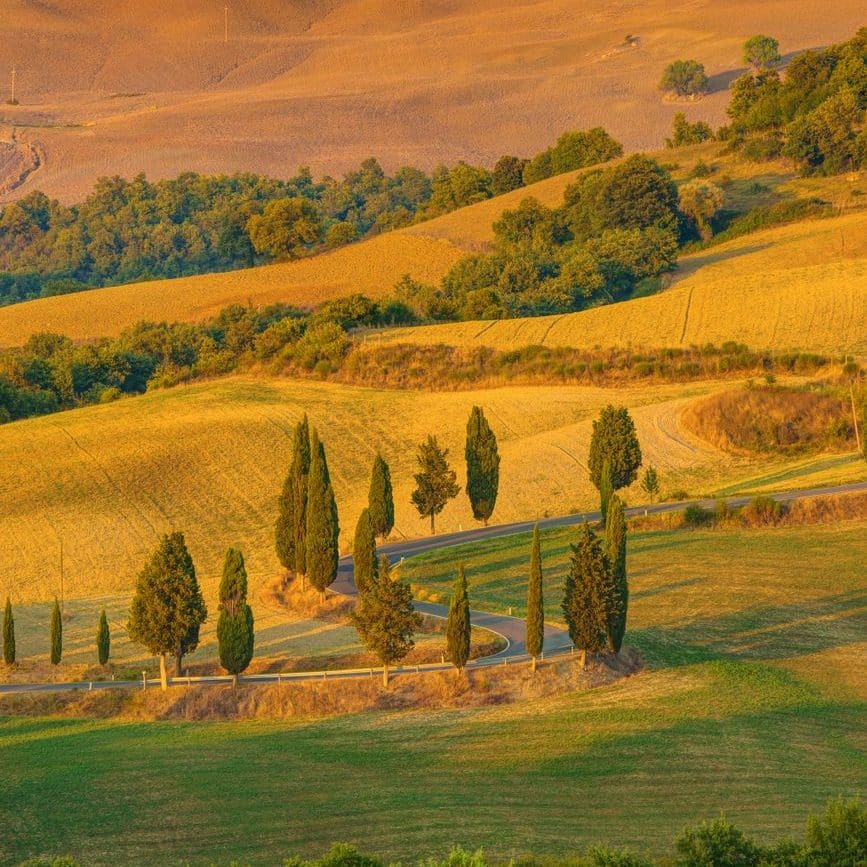
The route: Das Tal wurde 2004 von der UNESCO zum Weltkulturerbe erklärt – als „Sinnbild für die Schönheit gut gepflegter Agrarlandschaften der Renaissance“. Die Route verbindet Pienza, San Quirico d’Orcia und Montalcino auf wenig befahrenen Provinzstraßen durch Ton- und Kalkhügel, die seit dem Mittelalter kaum verändert wurden.
What you can see: Cypress trees, vineyards and hills, and places such as Pienza, San Quirico d’Orcia and Montalcino.
3. Stelvio Pass / Passo dello Stelvio (SS38), South Tyrol
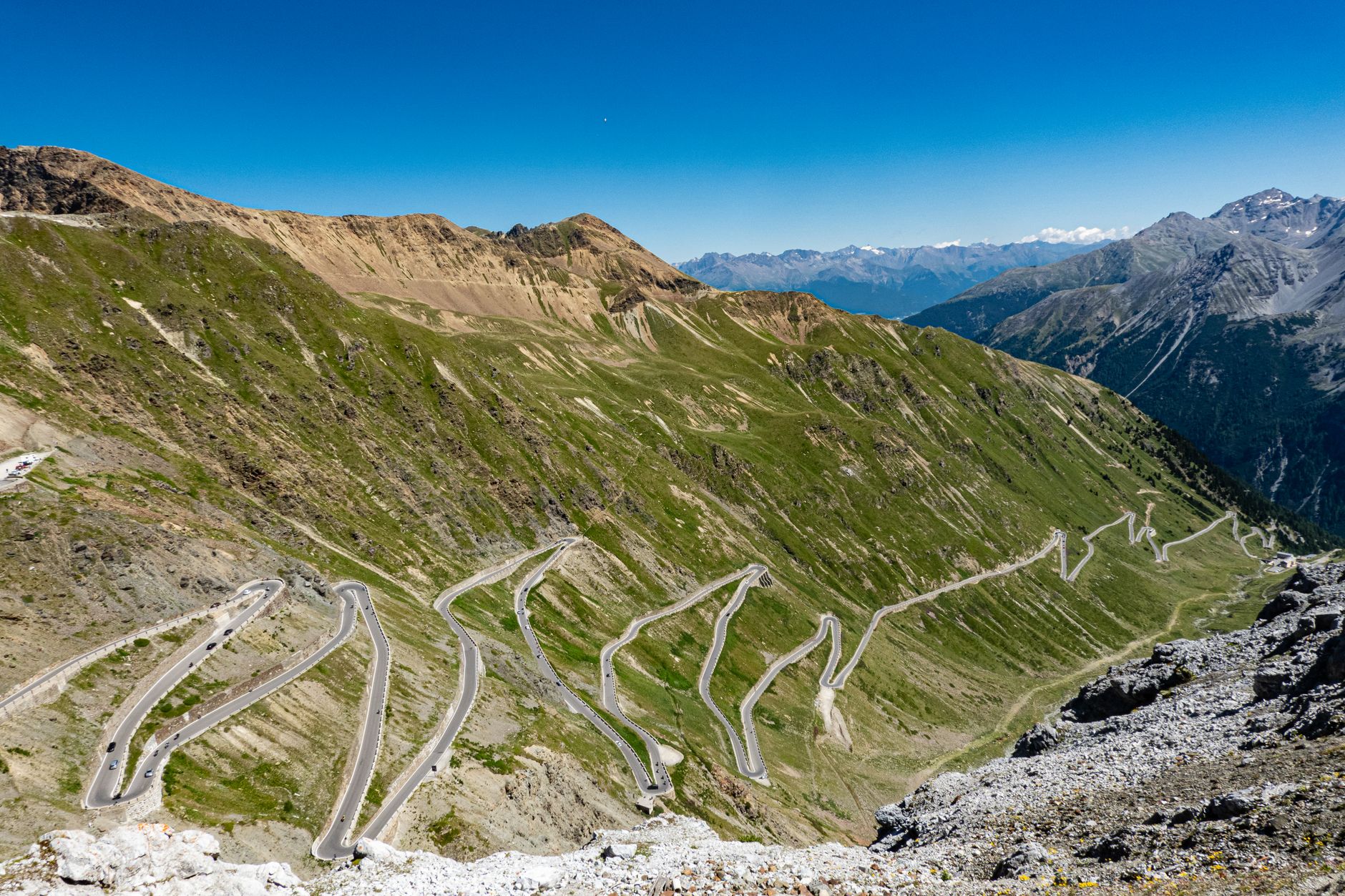
The route: 2.758 Meter Passhöhe, 48 durchnummerierte Kehren allein auf der Nordrampe von Prad aus – jede mit eigenem Kilometerstein. Auf gut 24 Kilometern werden dabei über 1.800 Höhenmeter überwunden. Zweithöchster asphaltierter Alpenpass nach dem Col de l’Iseran.
What you can see: Glaciers and rugged cliffs – a breathtaking Alpine panorama.
The best webcams from Florence
2. Strada della Forra (SP38), Lake Garda

The route: The road winds its way through the narrow Brasa Gorge up to Tremosine, high above Lake Garda. Winston Churchill once described it as the „eighth wonder of the world“. It was built between 1908 and 1913 under the supervision of Arturo Cozzaglio, a self-taught engineer, hydrologist and geologist from Tremosine. Just under 6 kilometres long, it climbs a height difference of around 200 metres, featuring several tunnels hewn into the rock. In 2008, it served as the backdrop for the car chase in „James Bond – Quantum of Solace“.
What you can see: Tunnels carved into the rock, steep gorge walls and vantage points overlooking Lake Garda.
1. The Amalfitana (SS163), Campania
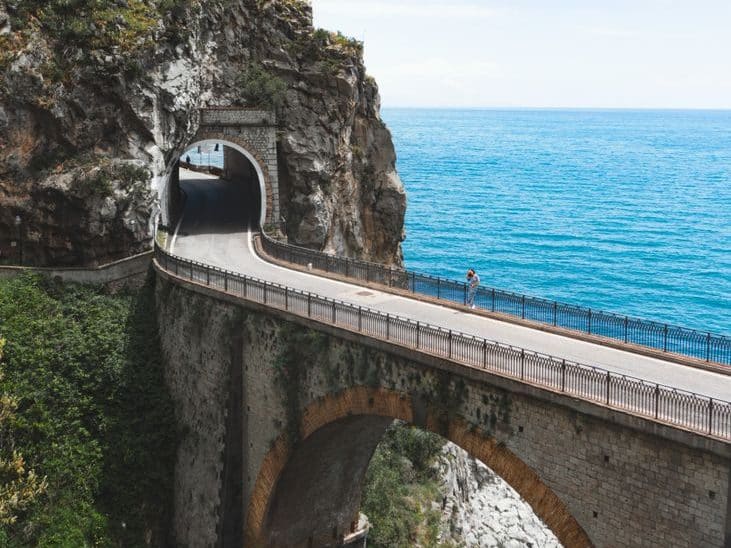
The route: The SS163 runs for around 50 kilometres along the Amalfi Coast between Vietri sul Mare and Positano – high above the Tyrrhenian Sea and right up against the sheer cliff face. Construction work took 20 years and was completed on 26 April 1850. The Amalfitana had to be carved entirely out of the rock. Previously, there were only narrow paths here for pedestrians, donkeys and mules – ships were the main means of transport along the coast. It is one of the most famous roads in the world and therefore ranks number 1.
What you can see: Go and see for yourself – it looks even more spectacular in real life than in the photos – steep coastlines, steeply terraced slopes, lemon groves and the blue sea. It’s so beautiful that you don’t even notice the traffic jam.