

From our editorial team
Campania is the land in the south of Italy that has it all. Unofficially the best food in the world in Naples, with the Amalfi Coast one of the most beautiful coasts in the world, Pompeii, one of the most exciting archaeological sites in the world.
While the island of Capri and Margherita pizza are international stars, there are still many almost unspoilt corners to discover in Campania.
- Snapshots from Campania
- Campania's eventful past
- Campania's landscapes: more than just the Amalfi Coast
- Unofficially the best food in Italy
- The climate in Campania: The best weather for travelling
- Where nature meets culture: Unesco World Heritage Site
The region around Naples is not only the most densely populated in Italy, but also a unique melting pot of history, nature, culture and cuisine. Campania lies on the lower shin of the boot and is home to almost 6 million people. Most of them live in the greater Naples area. And towering 1,281 metres above it all is Mount Vesuvius, a symbol of the uncontrollable power of nature to this day.
Snapshots from Campania


Campania's eventful past
Campania has a long history. Affectionately called "Campania felix" - the happy countryside - by the ancient Romans.
The region has an eventful past that dates back to the ancient times of the Oscans. Campania was fertile and rich in fish, with plenty of water and a strategic location on the Mediterranean, and many foreign rulers were happy to settle here. The Greeks stayed for several centuries. From 500 BC, they began to build Neapolis, the new city that developed into a prosperous city on the Mediterranean.
Until the foundation of the Kingdom of Italy in 1861, Campania was repeatedly conquered by foreign rulers: the list is long - the ancient Romans drove out the Greeks, then came the Odoacians, the Ostrogoths, the Byzantines, the Lombards, the Normans and then the Stauffers. Then came the Spanish Habsburgs, the Austrian Habsburgs and the Bonapartists, among others. All these peoples have left their mark on Campania.
The Hohenstaufen King Frederick II, for example, founded the University of Naples, the first state university in Europe at the time. The ruins of Pompeii and Herculaneum offer a fascinating insight into life in antiquity, while the magnificent palace of Caserta is a testament to the Bourbons.

Campania's landscape


From rugged coastlines to sandy beaches, from fertile valleys to barren mountains: Campania is extremely diverse.
From forests with wolves to the Amalfi Coast
The Apennines in northern Campania are hardly developed for tourism. The "Parco Regionale del Matese" in the mountain massif is home to wolves and golden eagles. The Matese massif has a varied fauna, from alpine meadows to mixed forests, and the wildlife is correspondingly diverse. To the south lies the plain of Naples, where there are particularly fertile soils thanks to the explosive past of Mount Vesuvius, as well as steaming craters and hot springs in the Phlegraean Fields. The slopes of Mount Vesuvius offer ideal conditions for growing wine, olives, tomatoes and other agricultural products.
The situation is completely different on the world-famous Amalfi Coast further south, where the dark blue of the Tyrrhenian Sea meets spectacular cliffs. Terraced towns such as Amalfi or Positano, which are so crowded in summer that the influx has to be regulated by the authorities - but which show a completely different face in winter. The Sorrento hinterland is characterised by green plains with olive groves and vineyards.
Authentic Campania in the very south
Authentic Campania begins south of Salerno: almost no foreign tourists, almost no "tourist prices". The Cilento National Park is one of the last insider tips in southern Campania: beautiful beaches such as Palinuro or Marina de Camerota, olive groves, densely wooded mountains with many streams, plus ancient sites such as Paestum and Velia. The coastal road to Acqua Fredda is just as spectacular as the one in Amalfi, with a maximum of two per cent of visitors. The Campania plain, especially the provinces of Caserta and Salerno, are known for their lush pastures and humid climate, ideal for keeping water buffalo.
Unofficially the best food in Italy


A visit to Campania requires extensive tasting sessions of the local cuisine.
The Campania region has made pizza a world-famous dish. The word "pizza" is one of the few words that is understood in every country in the world. Neapolitan pizza is even a UNESCO cultural heritage site. But Campania's cuisine is actually much more than just pizza: thanks to its location between the mountains and the sea, it offers the full "monte e mare" programme.
The region's fertile soil provides an abundance of fresh produce, from juicy tomatoes to first-class olive oil. Viticulture also has a long tradition here. Wines from Campania, such as Taurasi or Greco di Tufo, are export hits. One of the most popular cheeses in the world also comes from Campania: buffalo mozzarella, or mozzarella di bufalla. Fish and seafood lovers will get their money's worth in Campania.
In addition to pizza, classic dishes from the Queen of the South include spaghetti alle vongole (spaghetti with clams) or parmigiana di melanzane (aubergine casserole with tomatoes, parmesan and mozzarella). There is an almost endless selection of sweets in all variations. A typical pastry from Naples is the sfogliatella, a crispy puff pastry croissant filled with sweet ricotta and candied fruit.

The climate in Campania: The best weather for travelling
Campania has a typical Mediterranean climate with mild, wet winters and hot, dry summers.
In spring (March to May), temperatures range between 15 and 22 degrees Celsius. This time of year is ideal for sightseeing, hiking and enjoying the blossoming lemon trees. On the Amalfi Coast and the Sorrento Peninsula in particular, the scent of lemon blossom is everywhere. The big tourist crowds have not yet arrived.

Photo by Leander Joseph on Pexels.com
In summer, temperatures rise to more than 30 degrees, especially on the coast and in the lowlands, and in recent years have been significantly higher in July and August. These months in Campania are particularly popular with beach holidaymakers and water sports enthusiasts. The Amalfi Coast and Capri are then travelled to by the international jet set - usually by yacht. In the hinterland, festivals are held almost daily in many villages, especially in August.
In autumn (September to November), temperatures are mild, usually between 18 and 25 degrees Celsius, ideal for sightseeing and other outdoor activities. The sea is usually still warm enough to swim at least until October. In autumn there are wine festivals, especially in the countryside, and you can experience the olive harvest.
In winter (December to February), the coastal regions remain relatively mild with temperatures between 8 and 15 degrees Celsius, while it gets cooler in the mountains and snow can even fall. There is a lot of rainfall in November and December in particular. This is a good time to visit Naples with its museums, churches and catacombs. Ischia, which is generally less crowded then, is also a weatherproof destination. However, winters have recently been so mild that
World Heritage Site: Nature with culture in Campania


Campania is known for its historical sites and spectacular landscapes. Unesco has designated six places in the region as "World Heritage Sites":
- Historic centre of Naples (1995): Due to its location on the Gulf of Naples, the city has had a major influence on the rest of Europe for thousands of years and was already an important centre for the ancient Greeks and Romans. From the Neapolis, founded by Greek settlers in 470 BC, to the city it is today, Naples has retained the influence of successive civilisations that have emerged in Europe and the Mediterranean. This makes the city a unique place with a wealth of outstanding monuments.
- Archaeological sites of Pompeii, Herculaneum and Torre Annunziata (1997): When Mount Vesuvius erupted on 24 August 79 AD, it buried the two flourishing Roman towns of Pompeii and Herculaneum and other settlements in the surrounding area. These have been gradually excavated and made accessible to the public since the middle of the 18th century. The vast expanse of the trading town of Pompeii contrasts with the smaller but better preserved holiday resort of Herculaneum, "Ercolano" in Italian. In the former Roman town of Torre Annunziata, the opulent lifestyle of the Villa Oplontis is particularly impressive. According to legend, this Roman villa, also known as the "Villa di Poppea", belonged to Poppaea Sabina, the second wife of Emperor Nero.

- Amalfi Coast (1997): The Amalfi Coast is located on the southern coast of the Sorrentine Peninsula and is world-famous thanks to its extraordinary landscape. On steep cliffs in front of the blue sea, people have built wherever they could find space, resulting in today's unique architecture. The coast is characterised by rocks, but also forests and shrubs, as well as lemon groves and vineyards.
- Caserta Palace and park with the associated Vanvitelli aqueduct and the San Leucio complex (1997): The monumental complex in Caserta, with which the Bourbon King Charles III wanted to compete with Versailles in the mid-18th century, combines a palace with park and gardens, natural forest, hunting lodges and a silk factory, the San Leucio complex. Here, King Ferdinand IV of Bourbon attempted to create an idealistic working-class community with housing, schools, a health centre and more. A symbolic society based on the values of labour and equality. Everything was supplied by its own 38-kilometre-long water pipeline. 529 metres of it are perfectly preserved.
- Cilento and Vallo di Diano National Park with the archaeological sites of Paestum and Velia and the Carthusian monastery in Padula (1998): The national park is a mountainous region criss-crossed by several river valleys that slopes down to the Tyrrhenian Sea. Cilento was the border between the Greek colonies of Magna Graecia and the indigenous peoples. Construction of the Certosa di San Lorenzo in Padula began in 1306 and took 450 years: the baroque complex covers an impressive 250,000 square metres.
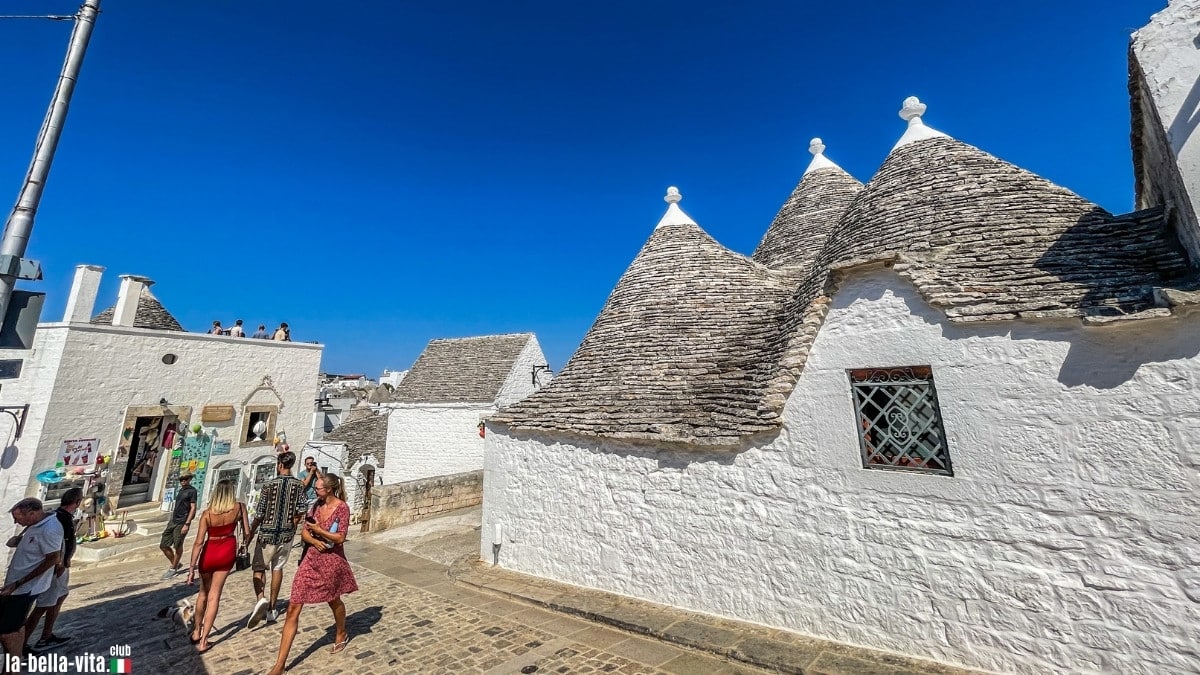
A second jewel in the south is Puglia, which offers 2,500 hours of sunshine a year and more than 60 million olive trees - but much more besides. Masses of Tourists can only be found at selected hotspots. If you like fresh produce from the sea, you should definitely go.


More stories from Italy




Title - Collage: Production by la-bella-vita.club & FabioSeda/Getty Images, Nicholas Nace/Getty Images, THEPALMER/Getty Images Signature via canva.com


