
No foodie whispers. No truffle fuss. But rather: Panini, polenta, pasta e passione. Steaming street kitchens in Naples, the cappuccino code in Rome and the question of how to recognise a really good Italian - whether in Milan or on the village square.

Hard, harder, Cantuccini! The secret of Italy's cult biscuits
They look harmless until you bite into them.



Es ist ein Fehler aufgetreten. Bitte aktualisiere die Seite und/oder versuche es erneut.
Simple and honest: the soul of Italian food culture
Anyone who has ever eaten in Italy knows that eating there is not just about food - it is a ritual, a social anchor, an act of love.
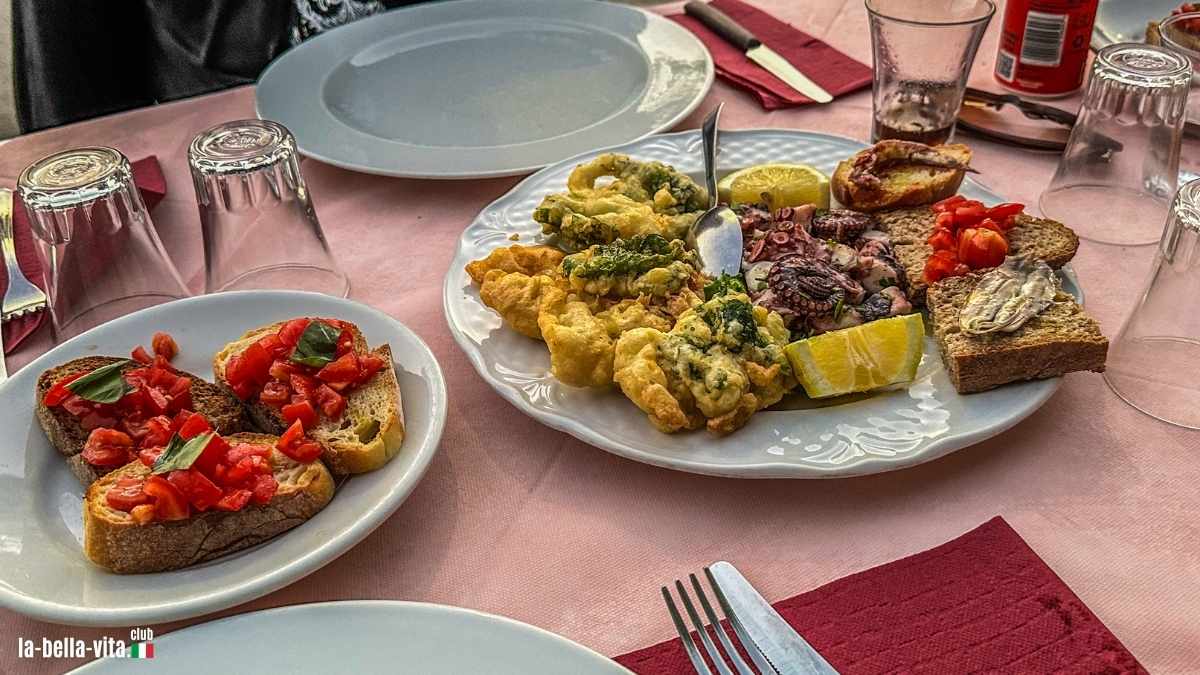
Whether it's a steaming plate of pasta in a small trattoria, bread with olive oil in the countryside or Nonna's Sunday menu - in Italy, cuisine is rooted in everyday life and the country's self-image: Food as an attitude. You don't need extravagant ingredients or elaborate preparations to make people happy. The true art of cookery lies in simplicity. A portion of pasta al pomodoro - with good tomatoes, olive oil and a little basil - can be a real treat.
*Ad Rustic olive wood pizza board € 79.99 / Amazon

Italian cuisine dispenses with frills. It does not want to impress. Its art lies in honesty. It is about giving the ingredients space, not covering them up, but making them speak. This turns even supposedly unspectacular dishes into small masterpieces.
From north to south: how to eat in Italy
The beauty of poverty - La cucina povera
Many of today's favourite Italian dishes originally come from the cucina poverathe "kitchen of the poor". What is now a regional highlight on menus used to be a makeshift solution. People cooked with what was available - leftovers, simple vegetables, pulses, stale bread. Instead of complaining, people improvised creatively.

Dishes such as ribollita from Tuscany - a peasant soup made from stale bread, beans and vegetables -, pasta e ceci (pasta with chickpeas) or polenta with braised vegetables show how the simplest of ingredients can be turned into what is now known as "soul food". Today, these dishes are often considered a delicacy, served in chic restaurants that celebrate the once humble with vintage chic.
10 reasons why you'll fall in love with southern Italy
Our categories:
Cooking with dedication - and heart
Anyone who has ever watched an Italian grandmother cook knows that in the kitchen, the heart counts more than the recipe. Quantities are guidelines, not laws. Feeling, experience and attention to detail rule over grammes. You can recognise a good tomato sauce not by the label on the tin, but by how long it has been simmered over a low heat.
*Advertisement National Geographic Italy 45 € / Amazon
Family recipes are not a secret, but a heritage. And so Italian cuisine lives from a deep connection with its origins and history. Every region, indeed often every village, has its own specialities, preparation methods and preferences. And these are usually celebrated at least once a year.

The social element - enjoying together
In Italy, people rarely eat alone. Eating is a reason to get together, to talk, to laugh. The laid table is a place of encounter. Even in stressful times, people take their time. Anyone who eats with Italians quickly realises that dialogue is part of the meal. Celebrations such as la domenica a pranzo - the traditional Sunday dinner with the family - are still sacred in many regions. But it's not necessary to serve up a big meal. A good pasta, a glass of wine, a salad - and you've got yourself an experience.
Why Italians talk with their hands

Regionality and seasonality - not trends, but a matter of course
What is often marketed as a "food trend" in large German cities is normality in Italy. Those who shop there naturally choose seasonal produce from the local area. Tomatoes are available in summer, artichokes in spring, chestnuts in autumn. That's it. The weekly market is a stage for everyday observations and a place to discuss varieties, recipes and prices.
Why Florence goes to the heart
Italian food culture is very local. People cook differently in Puglia than in Piedmont, in Sicily than in Emilia-Romagna. Food is diverse and offers an enormous range of flavours from north to south - from malloreddus, Sardinian gnocchi, to Ligurian pesto and Roman coda alla vaccinara, oxtail ragout.
Slow food as a basic attitude
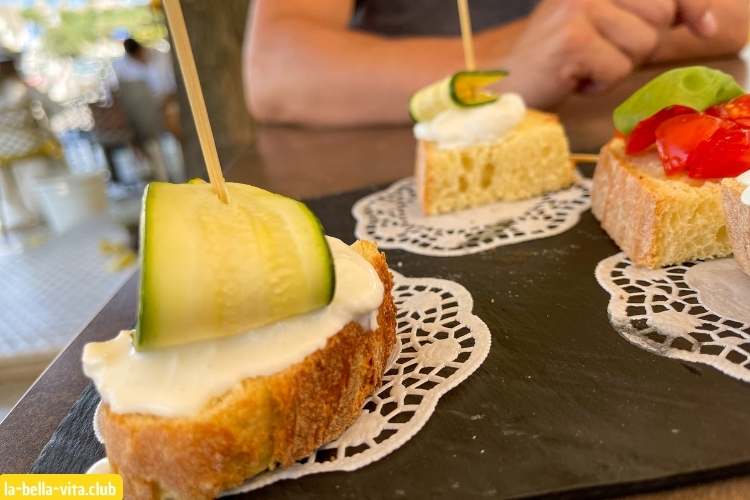
The international slow food movement was founded in Italy in 1986 as a counterpoint to the emerging fast food boom. The approach: good, clean and fair food for everyone. This has been practised in Italian cuisine for centuries anyway.
Between operas and gladiators: this is Verona
From the field to the plate - short distances, full of flavour
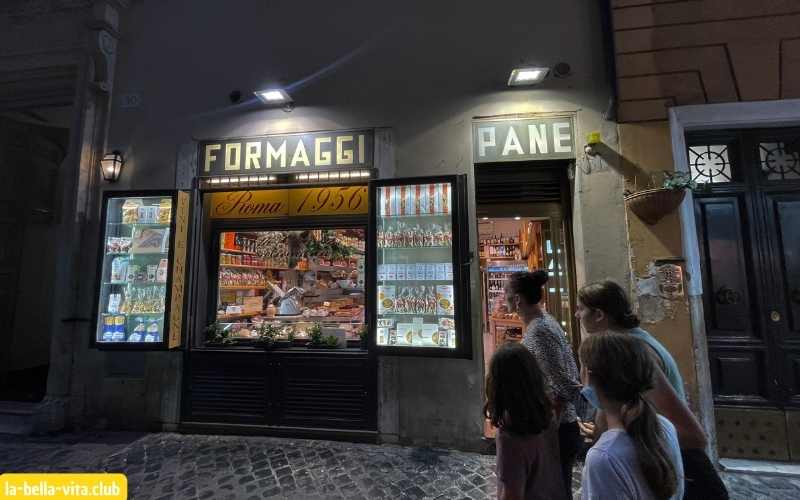
In many Italian households, what is served on the table comes directly from the garden, the farm or the small grocery shop around the corner. Tomatoes are canned, mushrooms are picked, olives are harvested and pasta is sometimes still homemade. Even in cities, there is a close connection to the original: The butcher knows the family by name, the baker knows when the dough is ripe. This closeness to the producers creates trust - and ensures a food culture in which origin and quality go hand in hand.
*Advertisement 3 Italy adapters € 8.99 / Amazon


*Advertisement Sand-free XL beach blanket € 15.99 / Amazon


Es ist ein Fehler aufgetreten. Bitte aktualisiere die Seite und/oder versuche es erneut.


Es ist ein Fehler aufgetreten. Bitte aktualisiere die Seite und/oder versuche es erneut.


