

This gesture exists worldwide - Italy is different Photo: stock.adobe.com/oliviaelisa92
From our editorial team
Speaking in Italy requires full physical effort. No other country in the world is so famous for its gestures.
Italians are professionals in non-verbal communication. Their hand movements do not (temperamentally) emphasise what is being said - on the contrary: they have their own meaning and can give the conversation a completely different direction. More than 250 hand movements have been scientifically analysed. There are two theories as to why Italy speaks with its hands:
- Gestures as a secret language: For several centuries, Italy was occupied by foreign rulers. With gestures, the locals were able to communicate secretly.
- Attention: Especially in the south of Italy, settlement used to be so tight that people had to come up with something to get - and keep - their voices heard.
7 Italian words that instantly put sunshine in your head

Photo by SHVETS production on Pexels.com
Five things that Italians do differently when eating out
The espresso hand movement
While most strangers have inhibitions about talking at the top of their lungs, gestures are a second mother tongue for people from Italy: gestures have their own meaning. They are more than an accent. Look at an Italian in the bar ordering an espresso - without saying a single word (a little index finger, a little wrist rotation with up-and-down movement, a little head nodding).

Photo by Andrea Piacquadio on Pexels.com
What Italian cuisine is really about
Theory 1: Gestures as a secret language
According to this theory, the strong gestures can be traced back to the period of foreign colonisation of Italy. Over the centuries, Italians developed gestures as a kind of alternative form of communication - a kind of secret language towards their Austrian, French and Spanish feudal lords.
Why you talk to your mum on the phone every day in Italy

Photo by Matilda Wormwood on Pexels.com
Theory 2: Gestures for attention
According to a study by the University of Rome, there are at least 250 Italian gestures. Professor Isabella Poggi has researched the topic in the field of psychology. According to her, gesticulation dates back to the time of the Greek colonisation of the south.
MAMMA MIA! - The most beautiful Italian phrases
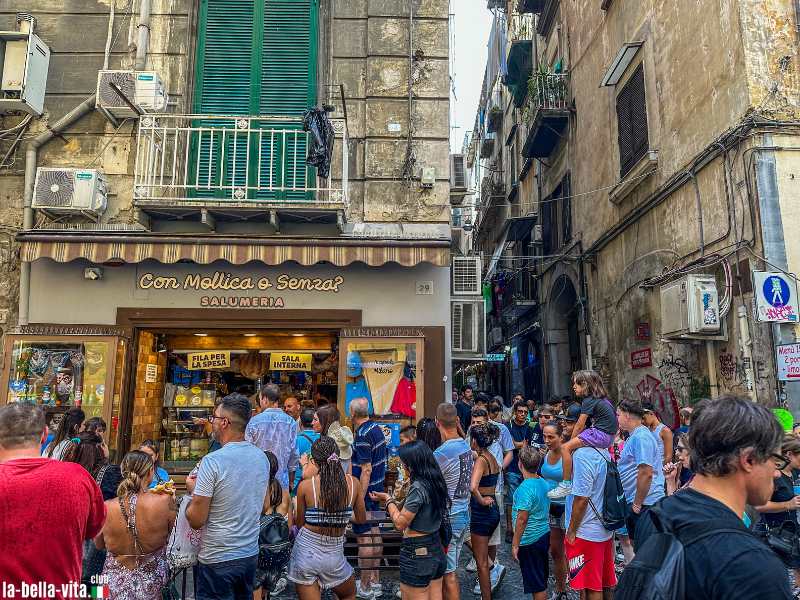
In those days, cities were so narrow and densely populated that you had to somehow stand out in the mass of people. If your fellow human being was to listen intently, you had to draw attention to yourself.
By the way: Italian director Luca Vollu (documentary film "La voce del corpo", the language of the body) has even been offering workshops on gesture language at universities between England and Australia for several years. He has also taught at the National Theatre in London - mamma mia!
Maradona and Naples: an undying love


