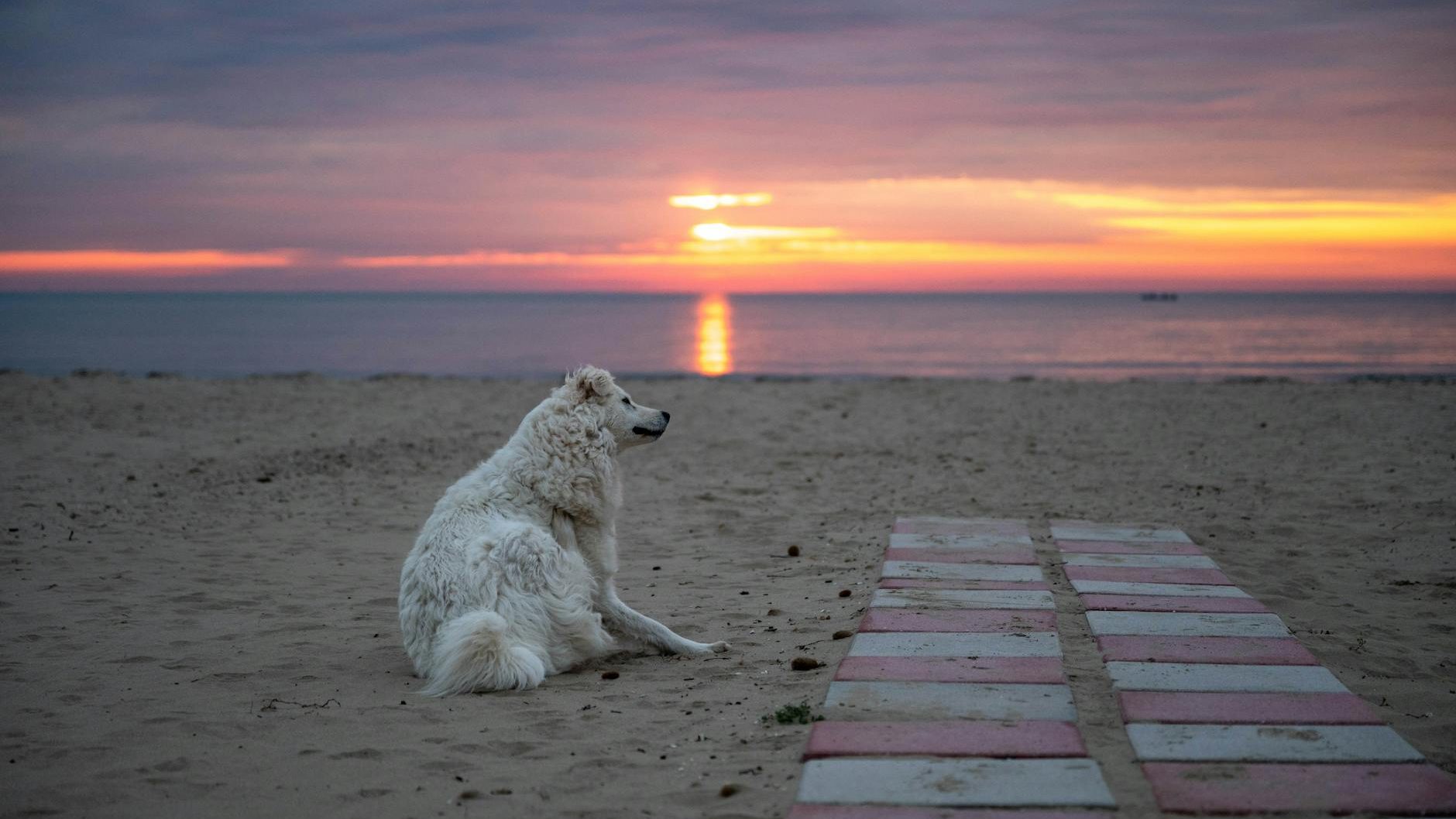
Sunset on the beach of Manfredonia - with dog Photo by Markus Eymann on Pexels.com
From our editorial team
They belong to no one - and to everyone at the same time.
In many towns and villages in Italy, especially in the south, they are as much a part of the street scene as espresso bars and pine trees: Dogs that roam the alleyways seemingly without a master, rest in market squares or accompany people on their way to school. What sometimes surprises tourists is actually a socially and legally anchored model: the "cane di quartiere", the "neighbourhood dogs" that are part of the local community.
What are "Cani di quartiere"?
"Cani di quartiere" are free-roaming dogs that are officially cared for by local citizens, animal welfare organisations or public institutions. They live on the street, but receive medical care, are neutered, microchipped and entered into the municipal dog register with a volunteer carer.
These dogs show no aggressive behaviour and are considered socially acceptable. The aim of the model is to give these dogs a free life - controlled, but not caged. The legal basis for the "neighbourhood dog" model was created in 2001 by a ministerial decree. The costs of medical care and administration are covered by the public health service, while daily care - food, water, shelter, veterinary checks - is provided by volunteers. A collar is often used to distinguish strays from those that are not being cared for.
- Montecristo insider tip: Why only 2000 are allowed to go every year
- Italy and the Etruscans: an almost forgotten civilisation

Photo by Ben Prater on Pexels.com
Between empathy and administrative practice
The legend among the Italian neighbourhood dogs is the Maremmno mix Henry from Bari. The entire Apulian capital virtually adopted him. His favourite spot was in the piazza, he was officially registered, had his own Facebook group and was regularly visited by the vet. He even had to put him on a diet in the meantime when Henry reached 75 kilos. When the shepherd dog died of natural causes on 10 July 2022, many people in his home town were saddened. He was honoured with a huge painting on the wall of a house: the shepherd dog accompanied by a fisherman on a boat.
- Italy without a car: the 5 most beautiful train routes
- Insider tip Trieste: between coffee house and coast
Ad
🏖️💶 Travelling safely on the beach: Looks like sun cream, but is a clever hiding place for keys, cash or small valuables! ➔ [Discover the beach safe on Amazon here]
A model with economic added value
The approach is not only interesting from an animal welfare perspective - it is also economically relevant. After all, each dog in an animal shelter costs the public purse an average of around 7,000 euros per year. Extrapolated to thousands of animals, the annual costs run into millions. According to estimates, unregistered dogs running loose alone cost municipalities and regions between 80 and 100 million euros a year.
Most cani di quartiere, 49.4 per cent, are found in northern Italy (Piedmont, Lombardy, VenetoFriuli-Venezia Giulia), followed by southern Italy and the islands with 42.5 per cent and only about 8 per cent in central Italy (Tuscany, Umbria, Lazio). The three Italian municipalities with the most registered neighbourhood dogs are Nardò in Apulia with 193 dogs and a population of 30,000, San Pietro Apostolo in Calabria with 122 dogs and just under 1500 inhabitants and Oristano on Sardinia with 120 dogs and a population of around 30,000.

Photo by Vito Giaccari on Pexels.com
Successes and challenges
According to current figures, 9 out of 10 dogs caught in Italy were either returned to their owners, put up for adoption or - if suitable - released back into the wild as "cani di quartiere". The model helps to relieve the pressure on overcrowded animal shelters, but only works where there is commitment, organisation and social cohesion.
Ad
🇮🇹☕ What would a real espresso be without the right cup? Get that bar feeling right at home! ➔ [Discover here at Amazon]