
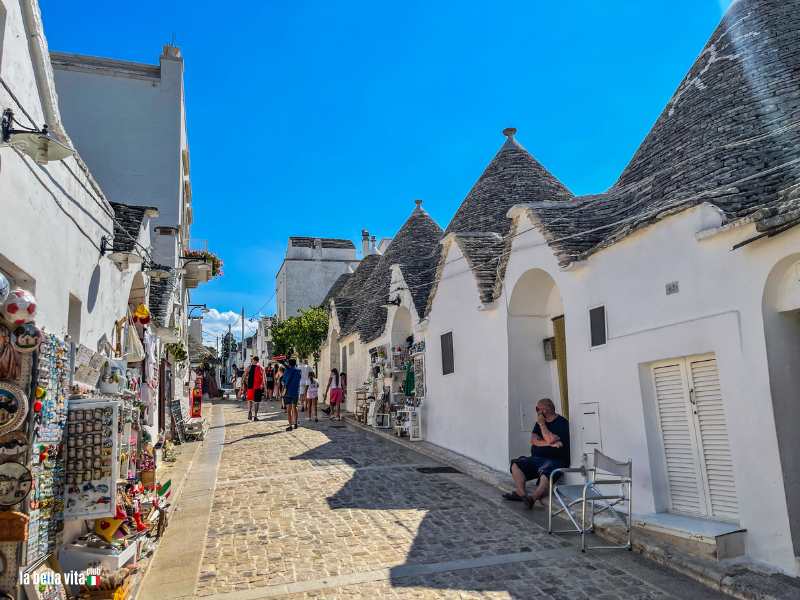
They look like the houses of dwarves or hobbits. 1,500 white round buildings with grey conical roofs huddle together in the heart of Puglia. But Alberobello is no fairytale forest. The trulli are the result of harsh rural reality - and an ingenious loophole in the law.
Anyone strolling through the alleyways of Alberobello today will see a UNESCO World Heritage Site. What looks like cute folklore was originally purely a survival strategy. In the 17th century, the feudal lords, the Counts of Acquaviva, forbade farmers from building permanent houses. The reason: taxes had to be paid to the King of Naples for „settlements“.




The solution: building without mortar
The farmers in the Valle d'Itria (Itria Valley) became inventive. They stacked the local limestone dry - without cement or mortar. When the royal tax inspectors approached, the roofs of the trulli (singular: trullo) could literally be torn down overnight. What remained were piles of stones that were not taxable. After the inspectors left, the families simply rebuilt their houses. This „dry construction method“ continues to this day. The thick stone walls are the best air conditioning in the Apulian summer: sweltering heat outside, pleasantly cool inside.

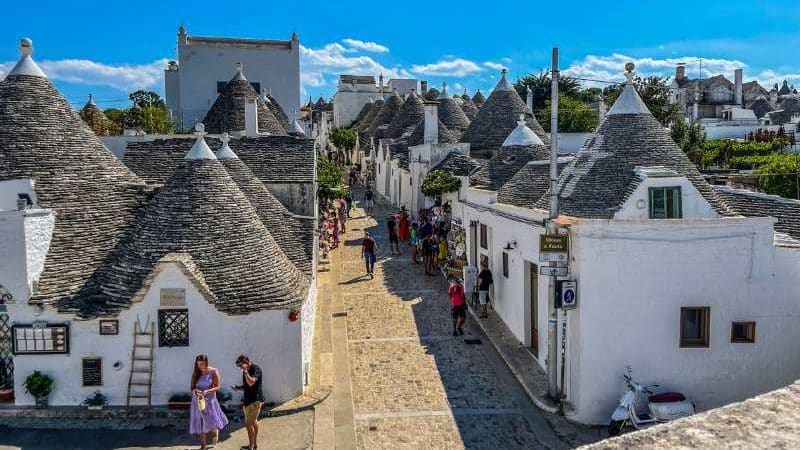
Two neighbourhoods, two worlds
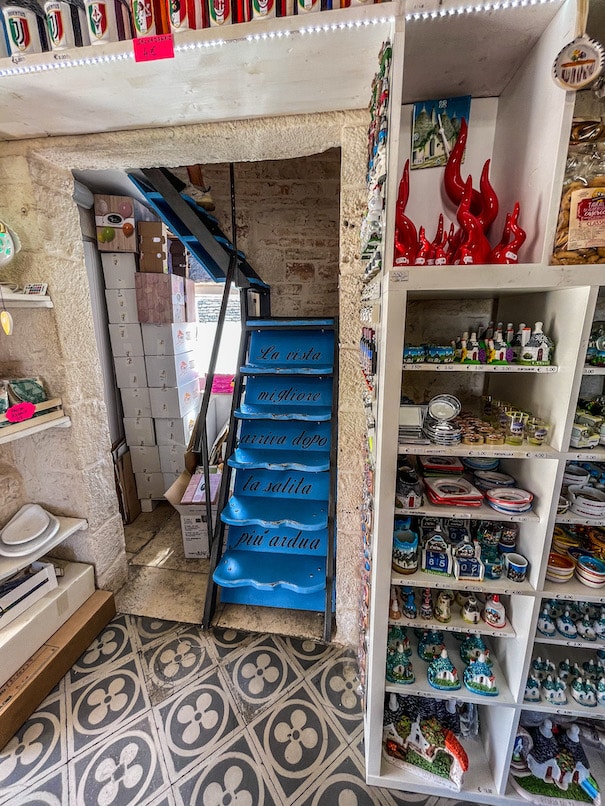
Alberobello is divided into two zones. Rione Monti is the tourist hotspot. Over 1,000 trulli are lined up here, almost all of which are now souvenir shops, bars or small hotels. It's crowded, loud and commercial. If you're looking for the perfect photo for Instagram, you'll find it here - but you'll have to share the narrow alleyway with coaches.
The authentic side is opposite: Rione Aia Piccola. Real people still live here. No magnets, no T-shirts, just washing lines and parked Fiats in front of the low doors. If you want to understand how people live in a round space without corners, you have to walk through here. Respect is required, it is not an open-air museum, but a living space.
Symbols and mysticism
White symbols are emblazoned on many of the grey conical roofs. Sometimes Christian crosses, sometimes astrological signs or primitive shapes. They were intended to ward off misfortune or invoke a blessing. The keystones on the top (Pinnacoli) are the signature of the master builder - each one is shaped differently.
Spend the night in a monument
A day trip is often enough to see Alberobello, but a night makes all the difference. When the day tourists get on their buses, the magic returns. Many trulli are now holiday homes. Sleeping in one of these stone caves, under a vault that has survived centuries without a drop of glue, is an experience that no luxury hotel can offer.
- More about the Aosta ValleyWhere French is spoken in Italy and pizza is not a standard dish.
- More about CampaniaWhere temperament meets the Amalfi Coast, unforgettable Naples and the drama of Pompeii. Fantastic food at mostly fantastic prices (with the exception of Amalfi, of course).
- More about TuscanyThe Germans' eternal place of longing - cypress avenues, orange sunsets, vineyards.