
From our editorial team
When you hear Portofino, you think of yachts, champagne and designer shops. There is more behind the glamorous façade.
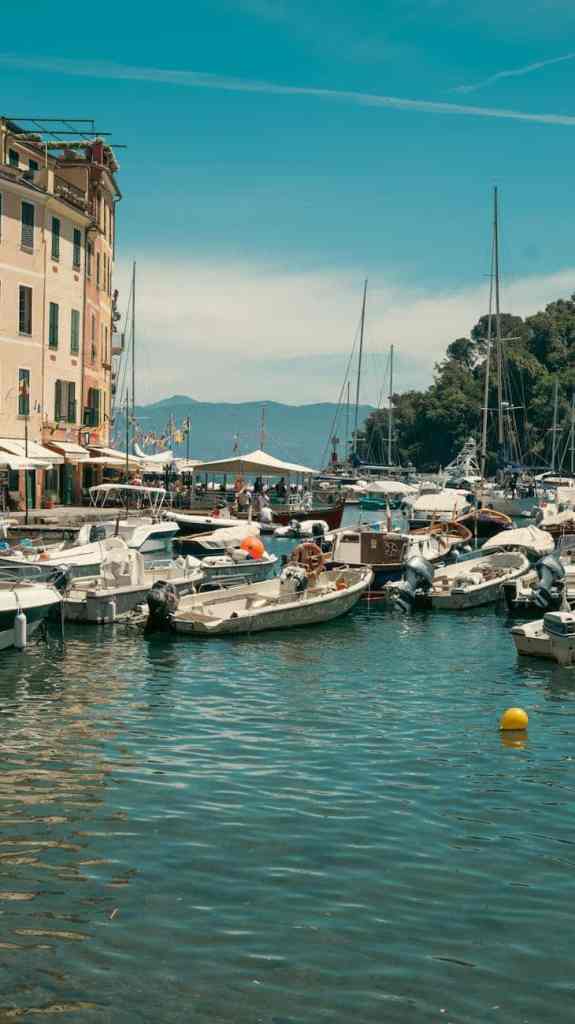
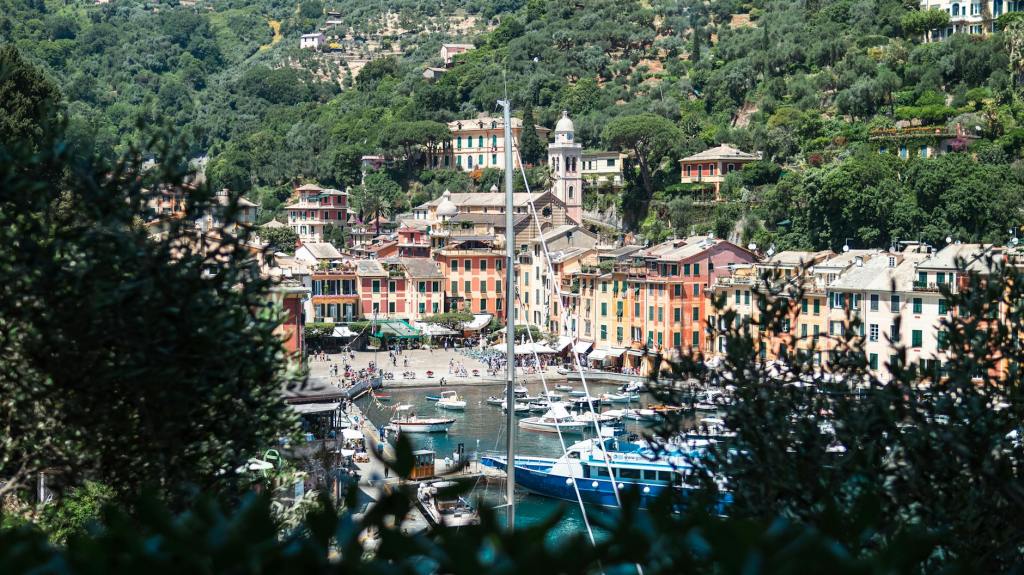
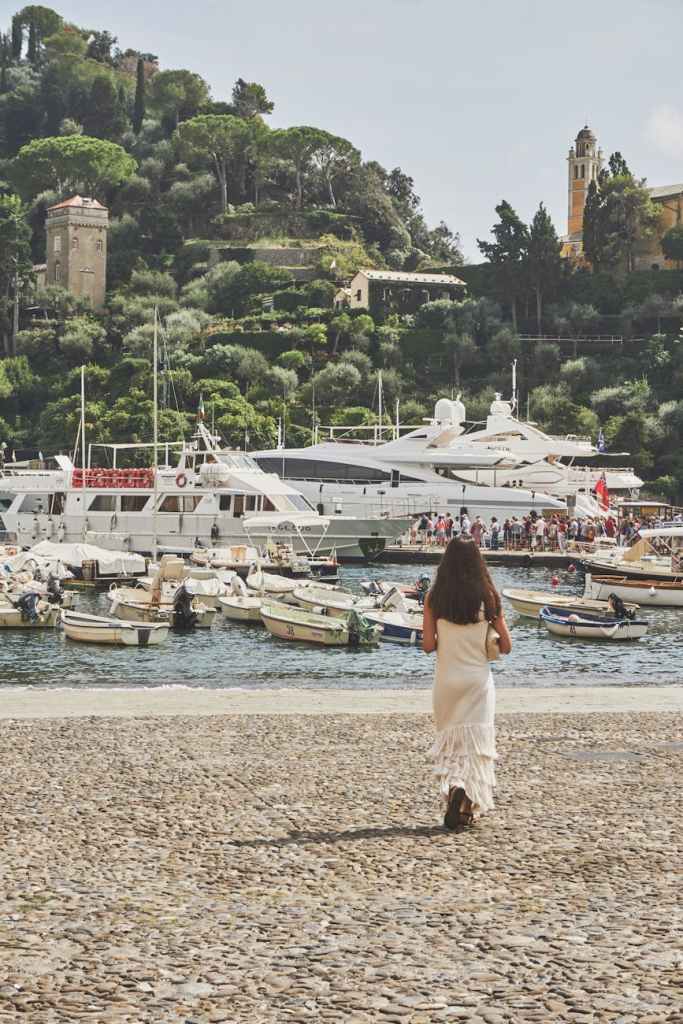
Italy's most famous fishing village is more than just a picturesque backdrop for superyachts. Portofino is a village of 358 inhabitants with thousands of years of history that is currently trying to preserve its soul. Even the ancient Romans knew of "Portus Delphini" - the "harbour of the dolphins". The animals can still be seen occasionally in the Gulf of Tigullio. Like old friends showing themselves.
Portofino to click through

Photo by Rachel Claire on Pexels.com 
Photo by Simone Venturini on Pexels.com Photo by Simone Venturini on Pexels.com 
Photo by Simone Venturini on Pexels.com 
Photo by Chiara Caldarola on Pexels.com Photo by Chiara Caldarola on Pexels.com 
Photo by Ciro Palomba on Pexels.com 
Photo by Lucy Palazzolo on Pexels.com



The smallest village in the province
With an area of barely three square kilometres, Portofino is the smallest municipality in the province of Genoa - a village in the literal sense of the word. And yet it played a role in the region's power structure for centuries. In 986, Adelheid of Burgundy donated the village to the Abbey of San Fruttuoso, 5 kilometres away. The abbey itself is still only accessible on foot or by boat, nestled in a bay. Throughout its history, it has been a Benedictine monastery, pirate hideout and aristocratic residence. Today, it belongs to the Italian Heritage Fund FAI - and is a place of tranquillity in the midst of spectacular nature.
You are currently viewing a placeholder content from YouTube. To access the actual content, click the button below. Please note that doing so will share data with third-party providers.
More InformationAd
🏖️💶 Travelling safely on the beach: Looks like sun cream, but is a clever hiding place for keys, cash or small valuables! ➔ [Discover the beach safe on Amazon here]
Safe harbour in the Middle Ages
In the Middle Ages, Genoese merchant ships used Portofino as a sheltered harbour. This is no coincidence: the semi-circular bay not only offers a marvellous backdrop, but also one of the safest anchorages on the Riviera. Portofino has changed hands many times over the centuries: from Genoa to Florence, then back again. Noble families such as the Spinola, Fieschi, Adorno and Doria families made history here - long before Madonna and Clooney appeared in the alleyways.
Nature conservation today
The village is located in the centre of the Portofino Nature Park - a protected area full of holm oaks, wild olive trees and spectacular coastal paths. If you go hiking, you'll see: Portofino can also be quiet, green and deserted. Portofino has been part of the marine reserve of the same name since 1999. Particularly famous: the bronze statue of Christ "Cristo degli Abissi" (Christ of the Abysses), which stands 17 metres deep on the seabed in the bay of San Fruttuoso - a popular destination for divers and a silent guardian of what remains hidden.
Ad
🇮🇹☀️ Perfect for your beach day in Italy: this super large one, sand-free Beach blanket (210 × 200 cm) from SKYREH accompanies you relaxed to the sea. ➔ [Discover here at Amazon]
Colours that tell a story
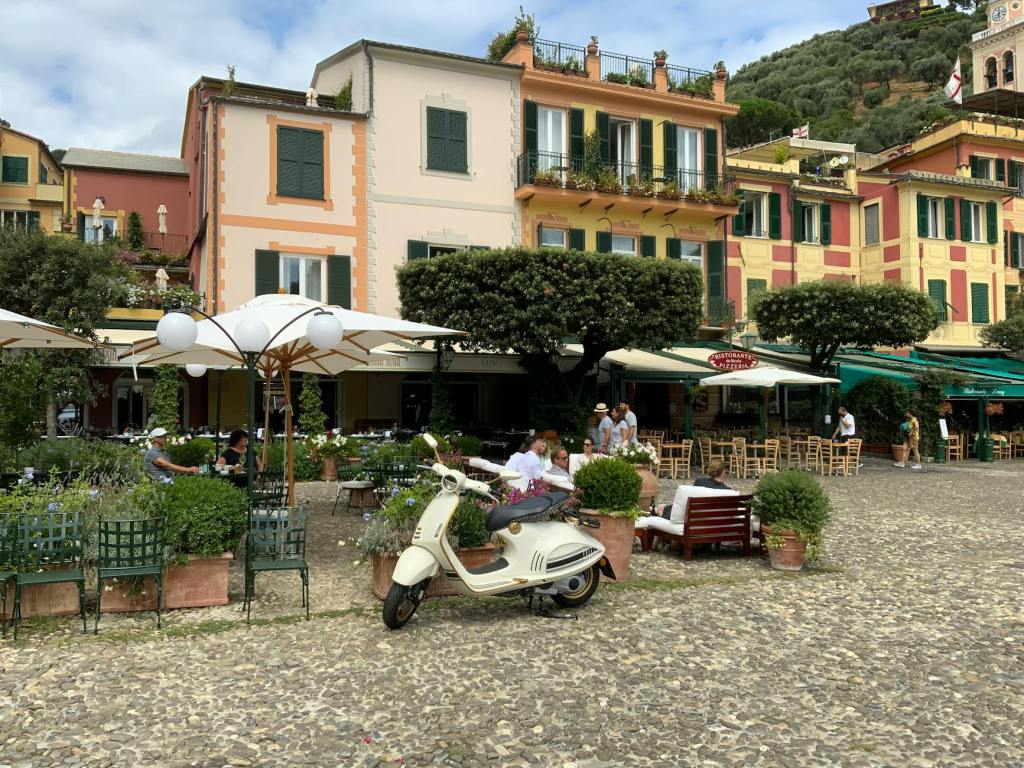
The famous pastel-coloured houses along the bay are not just an Instagram dream, but part of the maritime tradition: fishermen were able to recognise their homes from the sea. The Castello Brown towers over the harbour - once a fortress, today a museum with one of the best views in Liguria. The small church of San Giorgio preserves the relics of St George - and is celebrated every year with a patron saint's festival. Music, lights, decorated houses.
How tourism began
The British ambassador to Genau, Sir Montague Yeats Brown, was a tourism pioneer. He bought the Castello di San Giorgio in 1867 and had it comfortably remodelled. Later, the German champagne baron and diplomat Alfons Mumm von Schwarzenstein made headlines when he had a holiday villa built in Portofino in 1911. The novella "Enchanted April" by British author Elizabeth von Arnim, written in 1922 at Castello Brown, and the song "Love in Portofino" by Fred Buscaglione and Leo Chiosso (1958) were famous boosters. The super hype began in the 1990s. The international jet set was there - and with it came the onlookers.
The legendary song about Portofino
You are currently viewing a placeholder content from YouTube. To access the actual content, click the button below. Please note that doing so will share data with third-party providers.
More InformationWhy prices have exploded
The village itself has never made itself a stage and in recent years the onslaught has become too much for many. In April 2023, the current mayor Matteo Viacava signed an official "Ordinanza per la regolamentazione dei flussi turistici". This ordinance establishes so-called "red zones" in which standing still is prohibited - in the piazzetta, the harbour area and narrow passages. Violations are punishable by fines of up to 275 euros. In July 2023, cruise ships were therefore banned from docking and no new hotels may be built - since then, prices on the property market have exploded.
- The big pasta quiz: Can you recognise all the pasta?
- 10 basics so you don't stand out in the restaurant
Ad
🇮🇹☀️ Perfect for your beach day in Italy: this super large one, sand-free Beach blanket (210 × 200 cm) from SKYREH accompanies you relaxed to the sea. ➔ [Discover here at Amazon]