

Cover picture / Montage - Photo: David Cruz Asenjo/Pexels, rabbit75_cuz via canva.com
From our editorial team
Every fight could be the last. But gladiators were the superstars of their time. To this day, the fascination for the fighters of Ancient Rome remains unbroken.
"Once it ruled over everything, the government, the offices and the legions. But now, in order to be satisfied, the people only want two things: bread and games."
Juvenal, Roman poet
Fighting and hunting exotic animals such as lions or elephants in the mornings, mass slaughter of convicted criminals and prisoners of war at lunchtime, and the royal class in the evenings: gladiator fights. A normal day in the Colosseum in ancient Rome. The Colosseum was just one of around 200 arenas in the entire Roman Empire.

Photo by Maximilian K on Pexels.com
What reads as bloody and cruel had a purpose for the planners of the programme: Rome's virtues as a world power were to be illustrated. The exotic animals stood for the greatness of the empire, the slain prisoners symbolised the destruction of Rome's enemies and the gladiators the bravery and courage of the Roman legions. The spectacles were extremely popular with the people.
"The Godfather": Words that wrote world history
Women also fight as gladiators
The public expected a high-quality fight from the fighters, for which the gladiators were trained in private barracks. Initially, it was mainly male slaves who became professional fighters, but from the 2nd century onwards there were an increasing number of voluntary men and women. The arena was an opportunity to become rich and famous even without a particular background.
The attitude to life, that everyone wants
In contrast to the Hollywood blockbusters, according to research, the real gladiators did not have a washboard stomach or a muscular, wiry body. As they mainly fed on porridge made from grain and beans, they were bulky and fleshy. Those who fought particularly bravely and valiantly could survive despite defeat and leave the arena alive. But only if the emperor (or alternatively the person in charge of the games) gave them the thumbs up - encouraged by cries and shouts from the audience. A thumbs down meant death.
Who sits where in the Colosseum
50,000 people could fit into the Colosseum in ancient times. The seating arrangement in the amphitheatre reflected the Roman Empire in miniature. The senators sat on the lower tiers near the (imperial) box of honour, with the Roman priests and priestesses above them. A little higher up were the horsemen, followed by the free citizens. The higher you sat, the lower your social rank.
Why the world knows Vespa today
The battles in the Colosseum were just as opulent as the ancient Romans lived. There were even water battles with ships, for which the arena was flooded. When Emperor Trajan (†117 AD) won against the Dacians, the victory celebration in the Colosseum is said to have lasted 123 days. In the end, 10,000 people and 11,000 animals were dead.
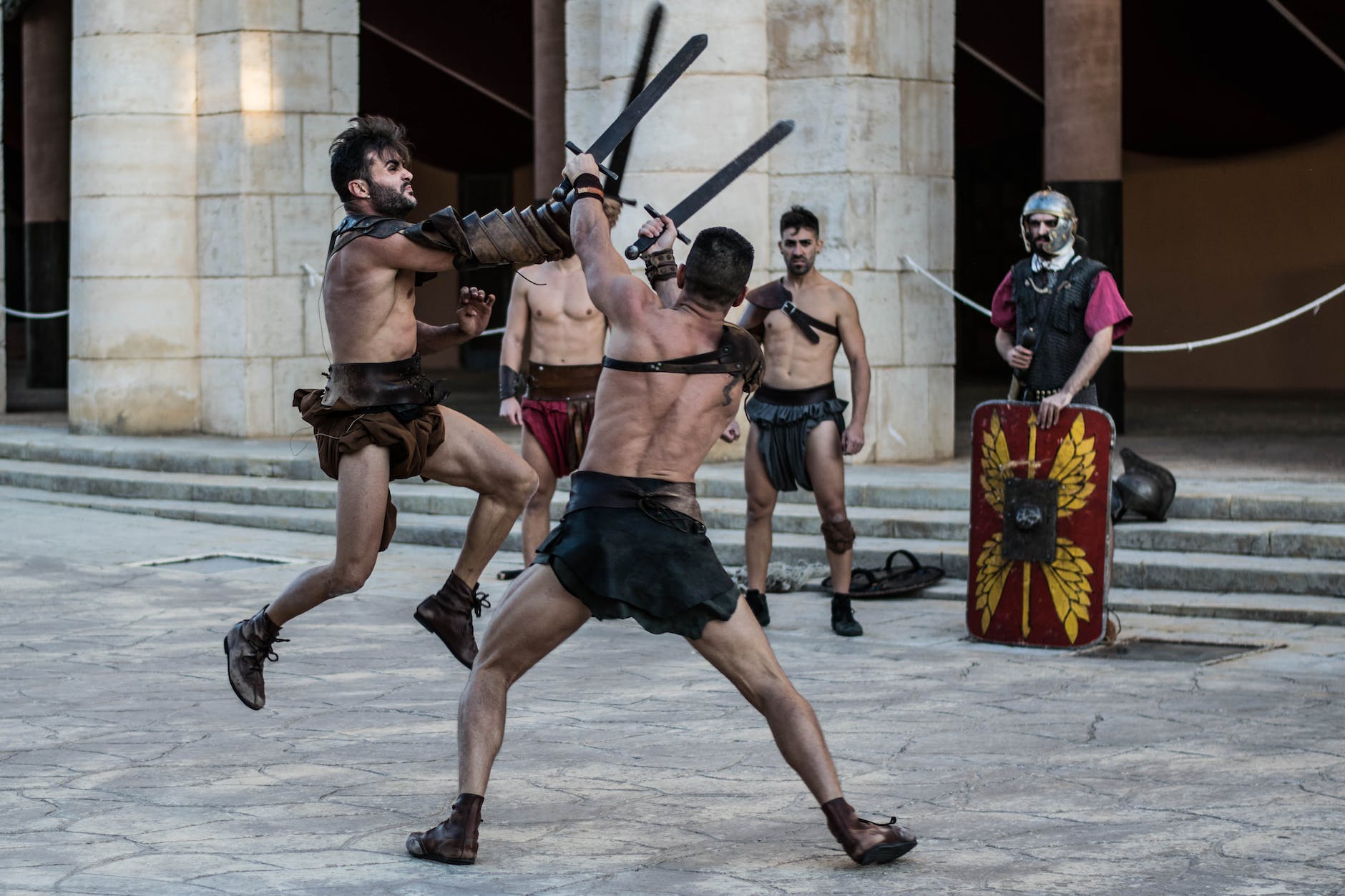
Photo by David Cruz asenjo on Pexels.com
No matter how glorious and brave a gladiator was, high society in Rome never recognised him as one of their own. The stigma of the arena remained. Nevertheless, even emperors trained in gladiator schools. And many a rich Roman woman (and many a rich Roman) is said to have kept a fighter as a lover.
The longing for Tuscany: What is really behind it
Colosseum as a monument against the death penalty
According to tradition, the last fight with animals took place in the Colosseum in Rome in 535 AD. With the fall of the Roman Empire and increasing Christianisation, the bloody slaughter of humans was no longer in keeping with the times.
Since 1999, the Colosseum has served as a monument against the death penalty. Whenever a death sentence is suspended or a country in the world abolishes the death penalty, the Colosseum is illuminated in bright colours for 48 hours.
More on gladiators: Leoni Hellmayr: "Gladiatoren", Reclam Verlag, 100 pages - *Advertisement: here at Amazon
- "The Godfather": The best quotes from the mafia film
- Latest news from Italy
- Travel tips for Italy: Look here...
Current stories

The wild soul of Tuscany: travelling in the Maremma
Tuscany beyond the cypress avenues.

Short holiday with a hot spring: 7 spas in northern Italy for cold days
Heat that comes from outside.

Why Abruzzo will be one of Italy's dream regions in 2026
Slow travel instead of a tick list.

The Amalfi Coast for the first time: what you should know before you set off
Spectacular and world-famous, but not uncomplicated.
- The Richest Women of Italy
- Politics & Society in Italy
- Cities quiz: Is that Rome, Milan or Florence?
- Social Media in Italy: Stars & Trends
- Basic quiz: How well do you know Italy?
*Advertising - Practical table hoover at Amazon - only €10.99


