

Photo by Michael Giugliano on Pexels.com
From our editorial team
Capri is an island where the light falls differently - where even shadows have a decorative effect. No other island stands for longing and beauty like this - why is that?
Capri is a myth of light, limestone, bougainvillea and history. Since ancient times, it has seduced emperors, artists and cinema stars with its aura - somewhere between dramatic nature, Mediterranean lightness and cosmopolitan aura Campania. What makes this island in the Gulf of Naples really off?
Capri to click through

Photo by Michael Giugliano on Pexels.com 
Photo by Studio Voyager on Pexels.com 
Photo by Tetyana Kovyrina on Pexels.com 
Photo by Giacomo Guerrini on Pexels.com 
Photo by Matt Hardy on Pexels.com Photo by Michael Giugliano on Pexels.com Photo by Cecilia on Pexels.com Photo by Jala Pishyari on Pexels.com 
Photo by C1 Superstar on Pexels.com






1. the Blue Grotto: entry into the unreal
It's a paradoxical spectacle: you duck through a tiny hole in the rock and end up in what is probably the most expensive and beautiful dark blue in Europe. The "Grotta Azzurra" is not just a cave: it is a legend - even among the ancient Romans. The international breakthrough came in the 19th century when the German painter August Kopisch captured the blue grotto on canvas. The flow of tourists has grown steadily since then. Yes, it is overcrowded. And yes, it's kitschy. But it is also magnificent.
Boat trip to the Blue Grotto currently from 24 € at getyouguide / Ad
2. tiberius was there first
Capri was more than just a retreat. It was the seat of government for the Roman emperor Tiberius. Between 27 and 37 AD, he is said to have had up to twelve villas built here, including the Villa Jovis, which sits impressively on a rocky plateau in the east of the island. It is considered one of the best-preserved Roman buildings in southern Italy. Tiberius ruled the Roman Empire from here - far removed from the intrigues and power games in Rome. The ruins tell of baths, cisterns and palace halls.
Kayak tour on Capri currently from 42 € at getyourguide/ Ad


3. the Faraglioni, the famous rocks
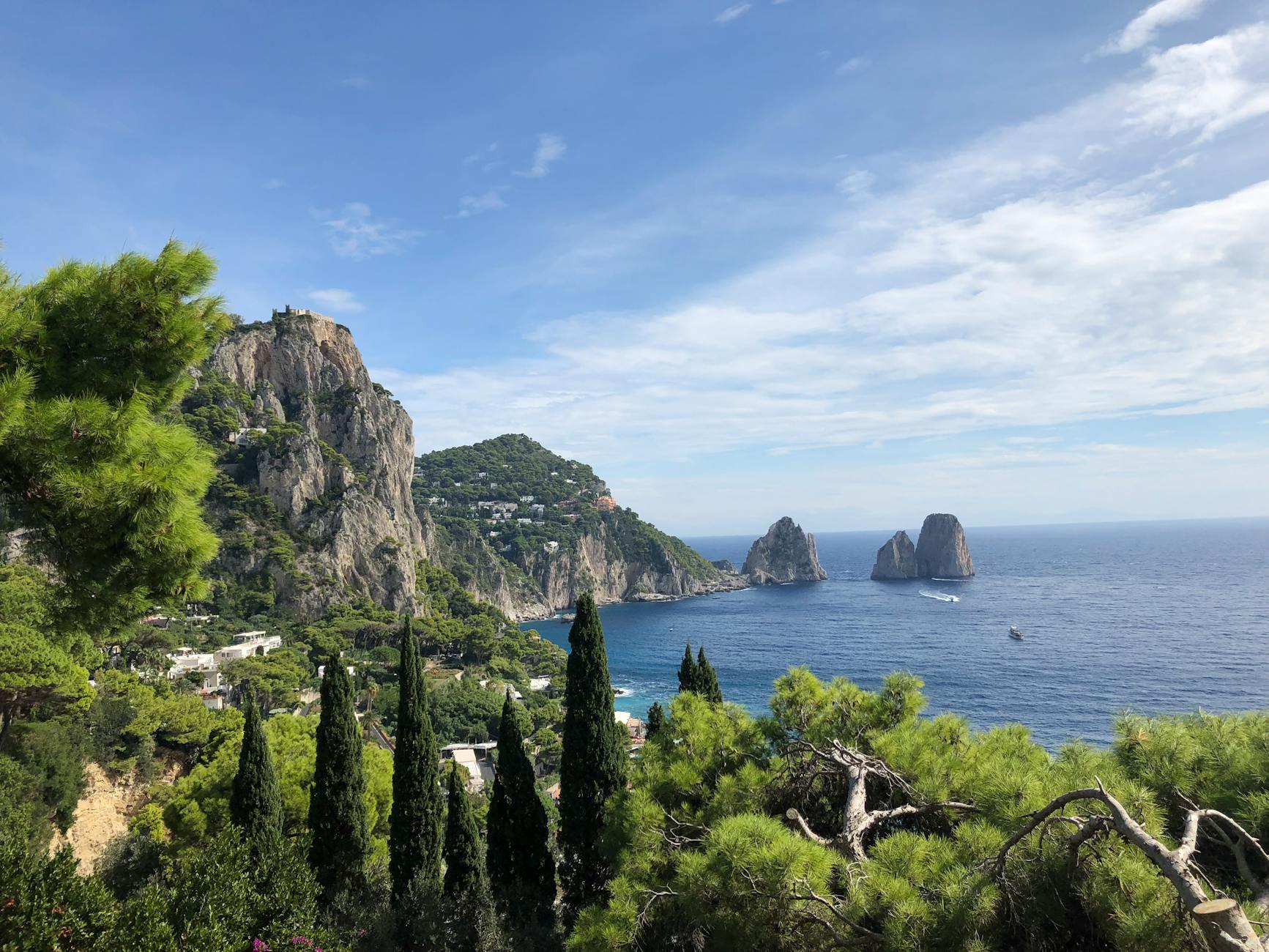
Photo by Linda Cooper on Pexels.com
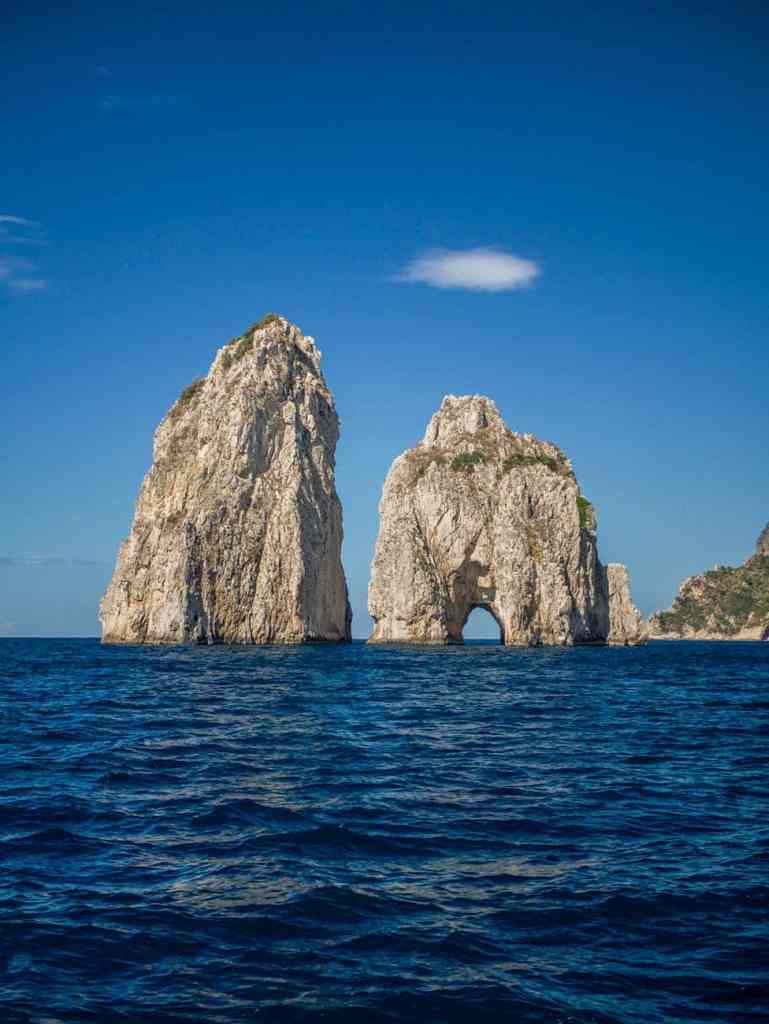
The high rock needles off the coast are called "faraglione", which means lighthouse (derived from the Greek word pharos = beacon). In ancient times, exposed rocks were often lit by fire to help sailors find their way.
At 109 metres, the largest rock is called "Faraglione di Terra", which means "lighthouse facing the island" or "Stella", star. The middle rock is called Faraglione di Mezzo (mezzo = centre). It has a 60 metre long tunnel at sea level that can be crossed by small boats. The outer rock, "Faraglione di Fuori" is also called "Scolopolo", cliff. The trio are limestone sculptures formed by erosion.
Capri: Boat tour with swimming from 58 € with getyourguide/ Ad
Amalfi Coast unfiltered
You are currently viewing a placeholder content from YouTube. To access the actual content, click the button below. Please note that doing so will share data with third-party providers.
More Information4. artists, eccentrics and great works
Capri has always been a magnet for people who either had a lot to say - or simply wanted peace and quiet. Painters, writers and bohemians settled here as early as the 19th century. The British author Norman Douglas (†1952) wrote his best-known novel "South Wind" here. The eccentric writer Curzio Malaparte (†1957) built Casa Malaparte above the cliffs of Punta Masullo - despite an official building ban.
Rainer Maria Rilke ("Song of the Sea") was also inspired by Capri, and the writer Monika Mann lived here with a fisherman. From 1907 to 1913, the writer Maxim Gorky devoted himself to his Russian and revolutionary studies on Capri (he also wrote "A Confession" here). In 1951, Jean-Paul Sartre also travelled to the island of longing on a trip to Italy ("Queen Albemarle or The Last Tourist") - as did many other great artists.
Ad
🇮🇹☀️ Perfect for your beach day in Italy: this super large one, sand-free Beach blanket (210 × 200 cm) from SKYREH accompanies you relaxed to the sea. ➔ [Discover here at Amazon]
5 The landscape is the stage
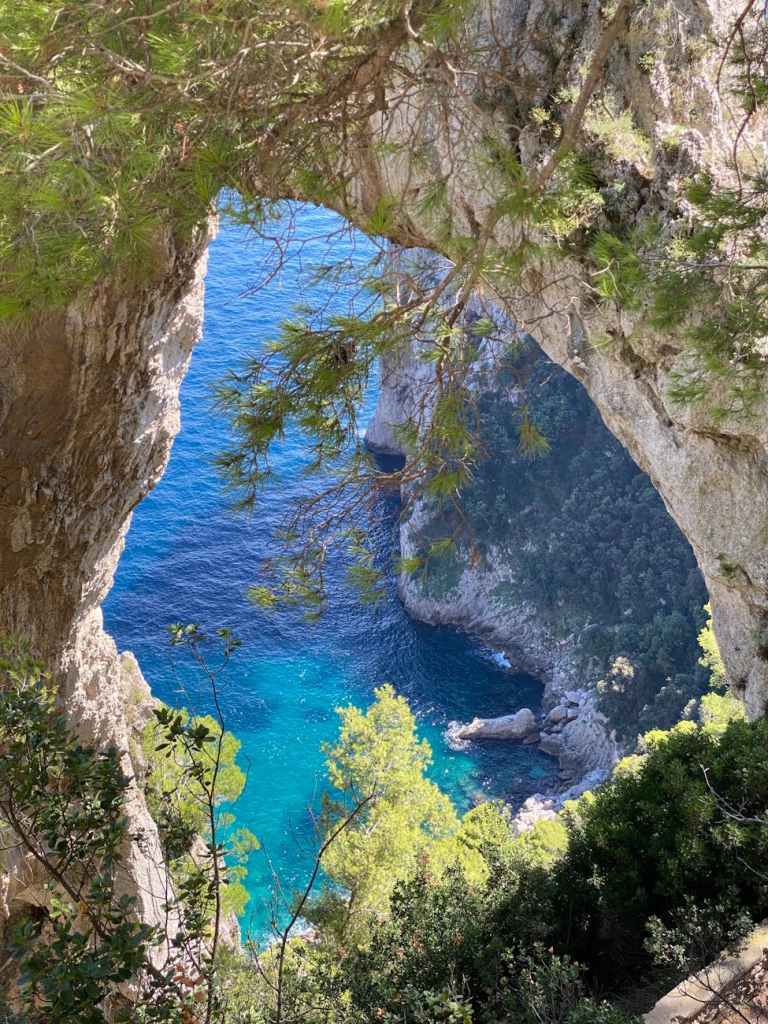
Capri's nature is not just a backdrop - it is a stage. Steep cliffs, covered in agaves, pines and oleanders, fall vertically into the sea in places. Anyone travelling up to Monte Solaro - by chairlift or on foot - will be rewarded with a breathtaking view over the island and the mainland. The Arco Naturale, a natural stone arch on the east coast, bears witness to the geological forces that formed Capri. Away from the tourist trails, you can discover the wilder side of the island on old mule tracks.
Chairlift tour Capri currently from 80 € with getyourguide/Ad
6. the Piazzetta - espresso with a view of everything
The Piazzetta, officially known as "Piazza Umberto I", is the heart of Capri town - and also its most famous meeting place. The Piazzetta is Capri's living room, shop window and catwalk all in one. The backdrop: small bars with silver trays, a time-honoured church and a view of the alleyways. Nothing happens here - and that is precisely the event.
- Favourite place Tuscany - and what's really behind it
- The 60-second quiz: How quickly can you recognise Italy?
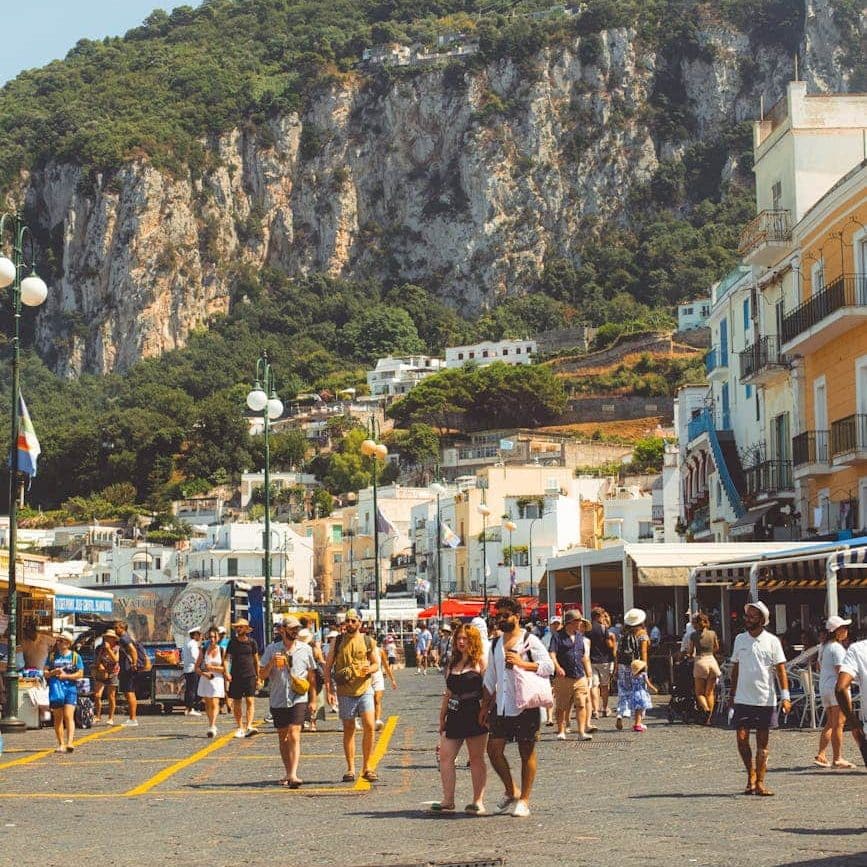
Photo by Ekam Juneja on Pexels.com
7 Glamour - not only in retrospect
Capri was jet set when the word was still written on a typewriter. Liz Taylor (†2011), Brigitte Bardot, Sophia Loren - they all came and stayed a little longer. The magic has remained. Jennifer Lopez is one of the stylish regulars in summer.
- The big pasta quiz: Can you recognise all the pasta?
- 10 basics so you don't stand out in the restaurant
Ad
🇮🇹☕ What would a real espresso be without the right cup? Get that bar feeling right at home! ➔ [Discover here at Amazon]


