

The sunset in Apulia
A bit of sport, a bit of food, a bit of culture - Italy has a bit of everything. And it's really good. From the Alps to Sicily, from Dante to Dolce Vita: anyone who loves Italy knows that there is much more to pasta and palazzi.
But how well do you really know the "Bel Paese"? Test your knowledge of the history, cuisine, geography and peculiarities with our short and sweet Italy quiz. Ten quick questions - how many can you manage without the help of Google?


The most important facts about Italy
Italy is not just pasta, fashion and the sea - it is a country full of records, contrasts and geographical superlatives. The capital? Rome, of course - eternal city, world heritage site and seat of government all in one. The longest river in Italy is called the Po and meanders almost 650 kilometres through the north. And the largest islands? No surprise: Sicily and Sardinia - both with their very own identity and a great deal of pride in their specialities.

More than 150 nature parks
If you love nature, Italy is the right place for you anyway: the highest peak is the Mont Blanc de Courmayeur at an impressive 4,748 metres - even though it is shared with France. Speaking of sharing: Italy is also sociable when it comes to borders. It borders France, Switzerland, Austria and Slovenia - and with San Marino and the Vatican City, it has two states completely enclosed within itself. Italy also protects its nature in an impressive 24 national parks and 134 regional parks - from the Alps to the Sicilian coast.

Export size and service provider
The country also has a lot to show economically. Italy is the Eighth largest export nation in the world and delivered goods with a value of around 610 billion US dollars abroad. While only around 3.6 % of the labour force work in agriculture, 25.6 % work in industry and a full 70.8 % in the service sector - from fashion and tourism to high technology. On average, a single person earns around 24,000 euros per yearfor families, the net income is somewhat higher.
And what about food? Of course, in Italy this is not only important culturally, but also economically: private households spend more than 147 billion euros for food from. Buon appetito - also economically.
The History of Italy
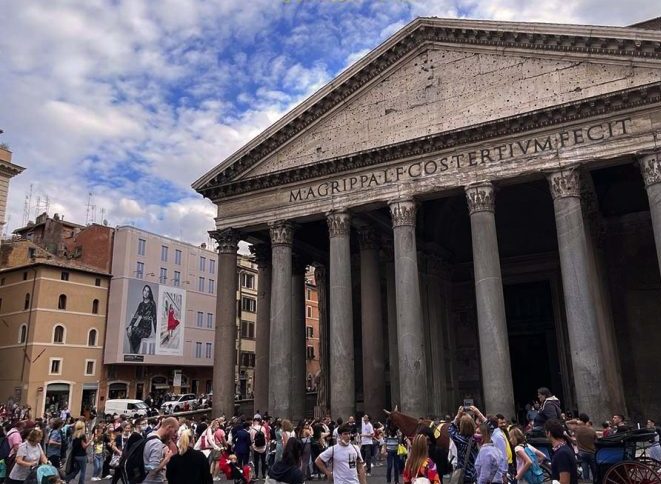
The history of Italy begins - at least according to legend - with a mythical date: 753 before Christ Rome is said to have been founded. What once began with shepherds and huts developed over centuries into the centre of power of the ancient world. The Roman Empire shaped Europe, North Africa and the Middle East - until it finally split in two.
The end of the Roman Empire
476 AD marks the fall of the Western Roman Empire. With the deposition of the last Western Roman emperor, an era came to an end - while the Eastern Roman Empire continued to exist under the name Byzantium and survived for almost a thousand years.

When Italy became a nation state
After centuries of city states, foreign rule and regional fragmentation, Italy only became a nation state in 1861 - at that time still as a constitutional monarchy under King Victor Emmanuel II. But even this unity was not permanent.
The rule of the fascists
In 1922, the fascists under Benito Mussolini took power and established an authoritarian dictatorship that left a deep mark on the country. During the Second World War, Italy initially fought alongside Nazi Germany, but switched sides in 1943 after Mussolini was overthrown.



The birth of the Italian Republic
1946 saw the birth of today's Italian Republic. In a referendum, the Italians decided against the monarchy - and in favour of a democratic form of government that still exists today.
Our mission: more Bella Vita for all
You are currently viewing a placeholder content from YouTube. To access the actual content, click the button below. Please note that doing so will share data with third-party providers.
More Information


