

The Piazza del Campo in Siena Collage: Getty Images/Occhetto & Nectarina via canva.com
From our editorial team
What at first glance appears to be a folkloristic festival is actually a centuries-old, fierce competition between the neighbourhoods.
Imagine you are standing in a medieval square, closely surrounded by 60,000 other people, making the air vibrate. Then a jolt, a shout, a wild race begins - bareback, without compromise, without mercy. Welcome to the Palio di Siena, one of Italy's most traditional spectacles. As early as the 13th century, races were held here through the city in honour of the Madonna. As this got out of hand over the centuries, the course was moved to the Piazza del Campo. The first documented race took place here in 1656.
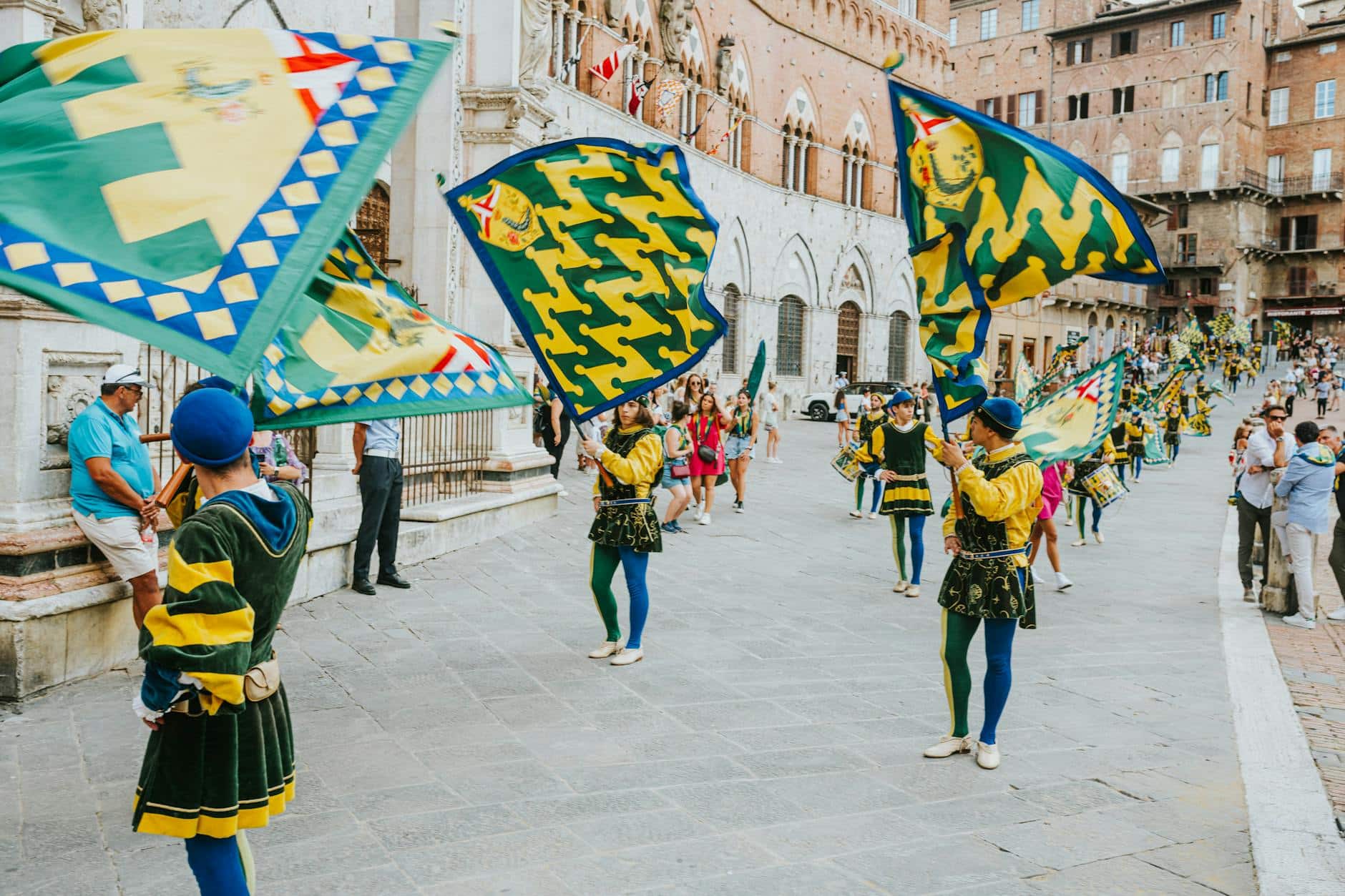
Photo by Helena Jankovičová Kováčová on Pexels.com
1 What is the Palio?
The Palio di Siena is no ordinary horse race. Twice a year - on 2 July and 16 August - the Piazza del Campo in the heart of Siena is transformed into an oval arena. Ten of the 17 districts of Siena compete against each other.
The actual race lasts just 100 seconds, but the preparations and emotions last for weeks. The goal: to win the "Palio" - an elaborately designed silk banner with religious and heraldic motifs.
2 Where does the name come from?
"Palio" is derived from the Latin pallium - a cloth or cloak, later also a standard. And that is exactly what the prize is: a magnificent flag that is redesigned every year. It is not only presented as a trophy, but also honoured as a sacred treasure and kept in the parish hall of the victorious contrada.

Photo by ClickerHappy on Pexels.com
3. the Contraden - more than just neighbourhoods
In Siena, you're not just a resident - you're contradaiolo. And for life. The 17 contrade are neighbourhoods with their own church, museum, colours and coats of arms - from the "oca" (goose) to the "tartuca" (turtle), from the "leocorno" (unicorn) to the "selva" (forest). Some of these contrade are enemies - centuries-old rivalries that flare up anew at the Palio.
4. who is allowed to race?
Ten contractors are allowed to compete in each race at the Palio: Seven who had to take a break the previous year and three more by lot. This creates a rotation - and a real incentive to give it your all. Because a so-called "Cappotto", i.e. two victories in the same year, is the crowning glory. Since 1933, there have only been 17 such double victories - the last one in 2016 by the "Lupa".
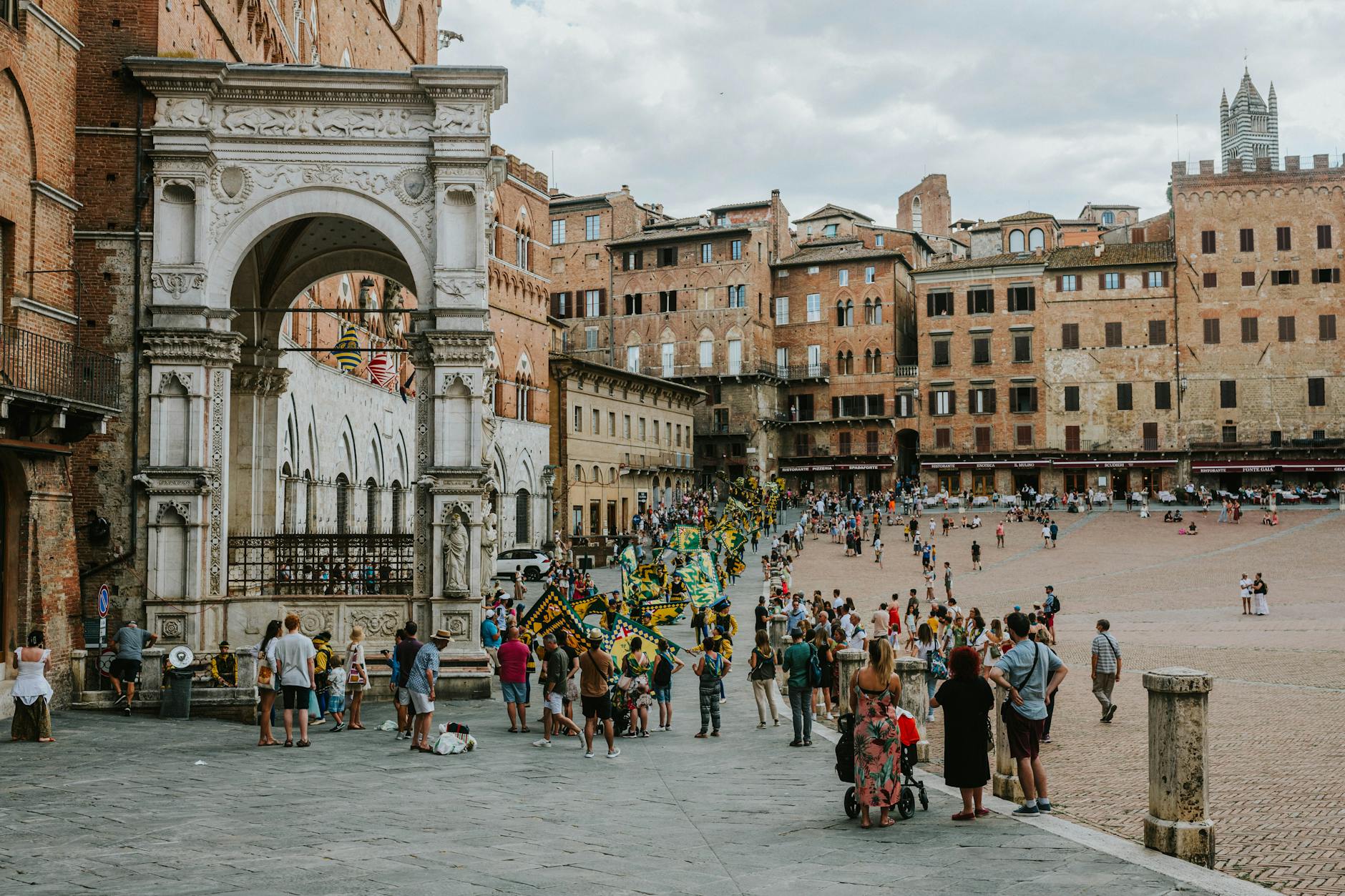
Photo by Helena Jankovičová Kováčová on Pexels.com
5. the horses - loved, loved, feared
The horses - so-called barberi, mostly half-breeds - do not belong to any contrada. A commission selects 10 of around 60 horses after several test races (batterie). Who gets which horse is decided by lot - which drives the noise level at the "Tratta" to immeasurable levels. Good horse? Ecstasy. Bad lot? Tears. Each animal is then guarded round the clock by a groom (barbaresco) and blessed before the race.
6. the jockeys - hired, not loved
Even the fantini, the riders, do not belong to any contrada. They are hired - sometimes for horrendous sums of money. But that also means: intrigues, bribes, betrayal - anything is possible. Sometimes it is more important to block an arch-rival than to win.


7 The rules - or their creative interpretation
The course: a 300 metre circuit on the Piazza del Campo. Three laps, just over a minute. Riders are allowed to hit each other, maltreat each other with the bullwhip (nerbo), block each other, slow each other down. Everything is allowed - except actively pulling down. But it happens anyway. The winner is the horse, not the rider - even a "scosso" (horse without a rider) can win, provided it does not lose the diadem of the contrade.
A tour of Florence
You are currently viewing a placeholder content from YouTube. To access the actual content, click the button below. Please note that doing so will share data with third-party providers.
More Information8. the entry - more theatre than sport
Before it starts, there is an elaborate parade: the "Passeggiata Storica". Medieval costumes, drummers, flag-wavers - a feast for the eyes and ears. The highlight: the procession of the participating contractors, their horses and riders. A carriage with oxen brings the Palio to the square. Shortly afterwards: absolute silence before the start - a moment of electric tension.
- Comeback of the Adriatic diva: How Rimini is reinventing itself
- The quiz for city travellers: Can you recognise Italy's beauties?
9. victory and defeat - a question of honour
After the race? A state of emergency. The winner is celebrated like a saint, often for days. The Palio is carried through the streets, the contrada cheers. And the loser? The runner-up is considered the real loser, worse than the last. A logic that only works in Siena - and that is precisely what makes it so appealing.
10 A spectacle with a dark side
As rich in tradition as the Palio is, it is also criticised. Animal rights activists criticise the fact that around 50 horses have died since 1970. The tight bends, the speed, the hard ground - a dangerous mixture. Although some safety measures such as padded walls are now in place, the debate remains.


Glossary for the Palio di Siena: the most important terms briefly explained
- Contrada: a district of Siena - with its own colours, symbols, rivalries and centuries of history. Today there are a total of 17 active districts.
- Contradaiolo / -aA member of a contrada. You are born into it or accepted by "baptism" and remain part of this community for the rest of your life.
- Palio: denotes both the entire race and the standard to be won - an ornate silk banner with religious and heraldic motifs.
Puglia's wild coasts
You are currently viewing a placeholder content from YouTube. To access the actual content, click the button below. Please note that doing so will share data with third-party providers.
More Information- BarberoThe participating racehorse of a contrada. It is blessed in the church before the race and guarded around the clock.
- Barbaresco: the groom who looks after the barbero, protects it and leads it to the entrance.
- FantinoThe jockey - usually professionally engaged, often with a dubious reputation. Fantini are under great pressure and are occasionally bribed.
- Tratta: the draw to decide which horse will be drawn to which Contrada - an emotional highlight in the run-up to the event.

Photo by Helena Jankovičová Kováčová on Pexels.com
- Mossa: the starting area. The race may only start when all horses are correctly lined up in the mossa. This often causes endless delays and false starts.
- Canapo: the starting rope, which falls backwards as soon as the tenth rider enters the start zone - only then does the race begin.
- ScossoA riding horse that has lost its rider. It can still win - as long as it still wears the headband of its contrada.
- Cappotto: a rare double victory - when a Contrada wins both the July and August races. Considered a legendary triumph.
- Nerbo: the bullwhip that the Fantini are allowed to use in the race - against horses and opponents. Not pretty, but allowed.


