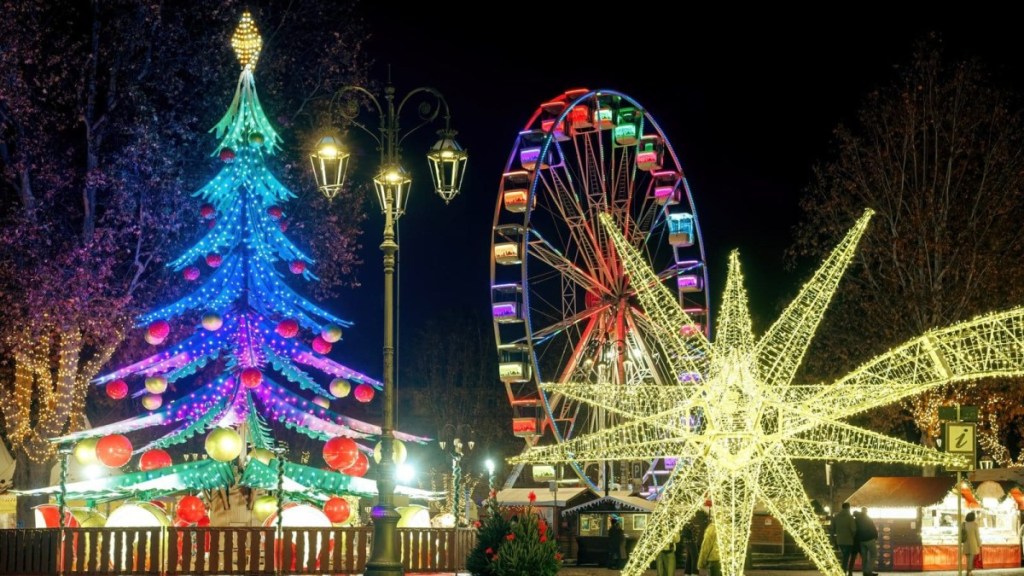

This is how panettone cools down. Photo: Officina Giotto/Wikimedia Commons, CC BY 2.0
From our EDITORIAL TEAM
Panettone is Italy’s best-known Christmas export. Before it ends up on your plate, however, it is first skewered.
Fresh from the oven, it hangs upside down in the bakery on two long skewers, with the dome facing downwards. In the run-up to Christmas, you can see thousands of panettone hanging like this in Italian bakeries, row upon row. This is essential for achieving that tall, fluffy look.
Cross and Dome
The high dome is prepared right from the shaping stage. The pastry chef rolls the ball of dough with both hands across the work surface until the surface is taut. This process is called „pirlatura“. If the skin remains loose, the panettone will tend to spread outwards rather than rise upwards later on.
Just before baking, he cuts a cross into the surface and places a knob of butter in the centre. This prevents the crust from sealing over before it sets, allowing the dough room to rise.
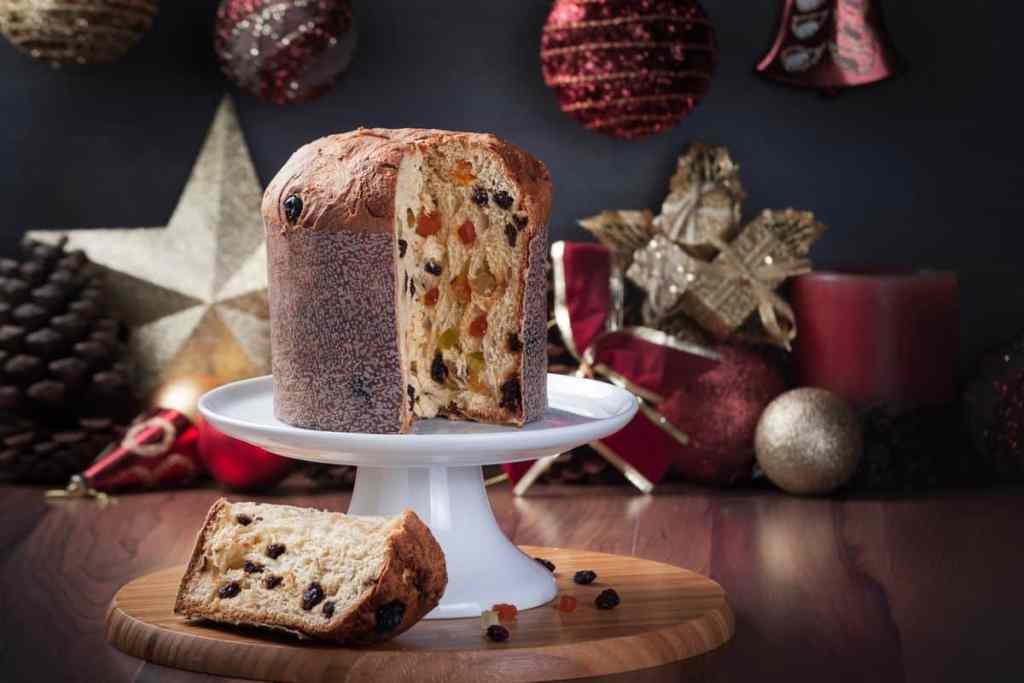
Photo: Marcelo Verfe/Pexels
Just cooked through
Take the panettone out of the oven as soon as it is just cooked through in the centre. The more moisture that remains in the dough, the longer it will stay soft. At this stage, however, it is as delicate as a freshly baked soufflé.
Soft adhesive
Whilst still hot, the dough cannot yet support its own weight. The gluten in the flour, which holds the many air pockets together, is still soft. On top of that, the raisins and candied orange peel pull the dough downwards. If the panettone were left to stand, the dome would collapse, and the light, airy crumb would turn into a damp, compact lump.
If it is hung upside down, its weight stretches the dough outwards rather than pressing it together. This ensures that the dome and air pockets remain intact until the gluten has set.
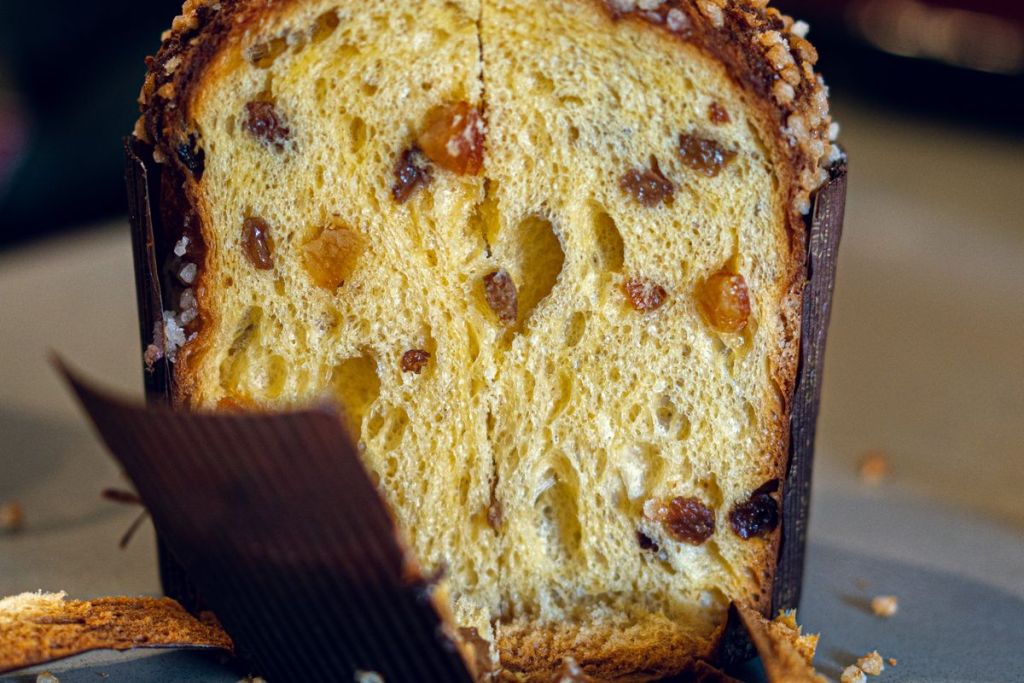
Photo: MikeGz/Pexels

Two steel needles
As soon as it comes out of the oven, the baker inserts two long steel needles horizontally through the cake, just above the base, side by side and from one side to the other, so that the ends protrude on the left and right. He then hangs the panettone upside down between two rails by these ends. If you’re baking at home, you can use the backs of two chairs or a large saucepan instead. You can see the pricks later on almost every panettone at the bottom of the side, even on those from the supermarket.
The paper version
Whilst the panettone is cooling, the moisture rises. Because it is hanging upside down, the moisture ends up at the bottom, where the paper case holds it in place. That is why it retains its shape even when on sale in the shop.

A night on the needles
Pastry chefs leave the panettone to rest for about half a day, usually overnight. They are only packed once the crumb has set. If you pack them too soon, moisture will build up in the bag and the cake will go mouldy more quickly.
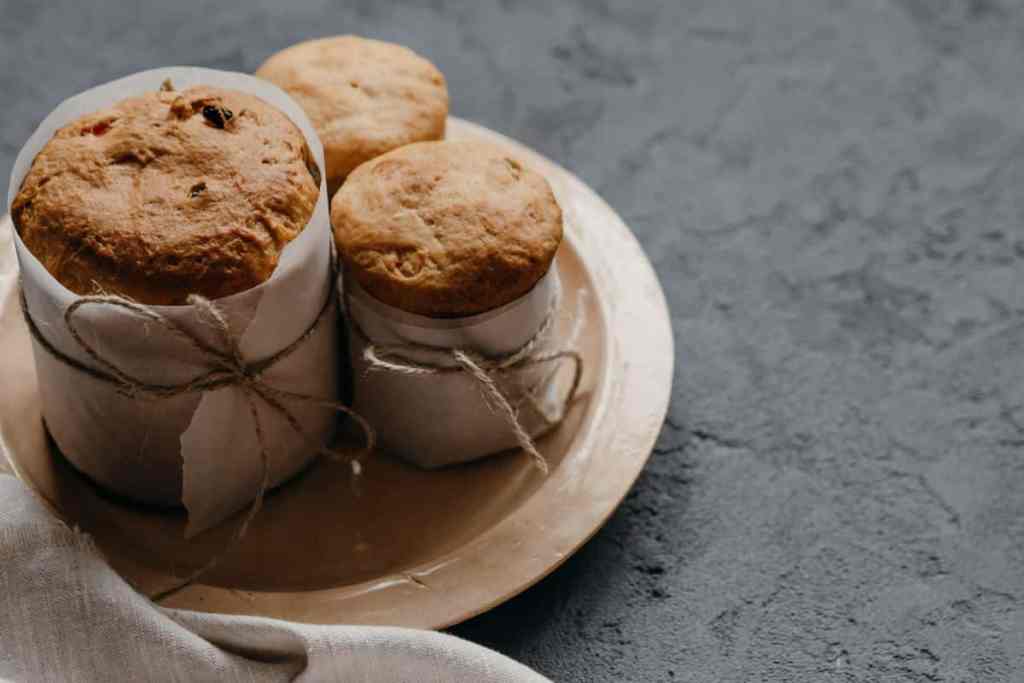
Photo: Polina/Pexels

Mini panettone and colomba
Mini panettones are too small for the skewers. The bakers therefore leave them in the oven a little longer so that they come out drier and firmer. The colomba, the dove-shaped Easter cake, on the other hand, is hung upside down after baking, just like a large panettone.