

The necropolis of Cerveteri Photo: stock.adobe.com/Massimo
From our editorial team
Everyone talks about the Romans, but the Etruscans built the first developed civilisation on Italian soil.
Anyone travelling to Italy thinks of Roman triumphal arches, Renaissance paintings or Baroque basilicas. But before Rome became the centre of the ancient world, central Italy was home to a people who prepared the cultural ground for its later glory: the Etruscans. From the Tuscany from Umbria to Lazio, they shaped the landscape, language and architecture - and left their mark that is still felt today.
- Favourite place Tuscany - and what's really behind it
- The 60-second quiz: How quickly can you recognise Italy?
The first developed civilisation in Italy
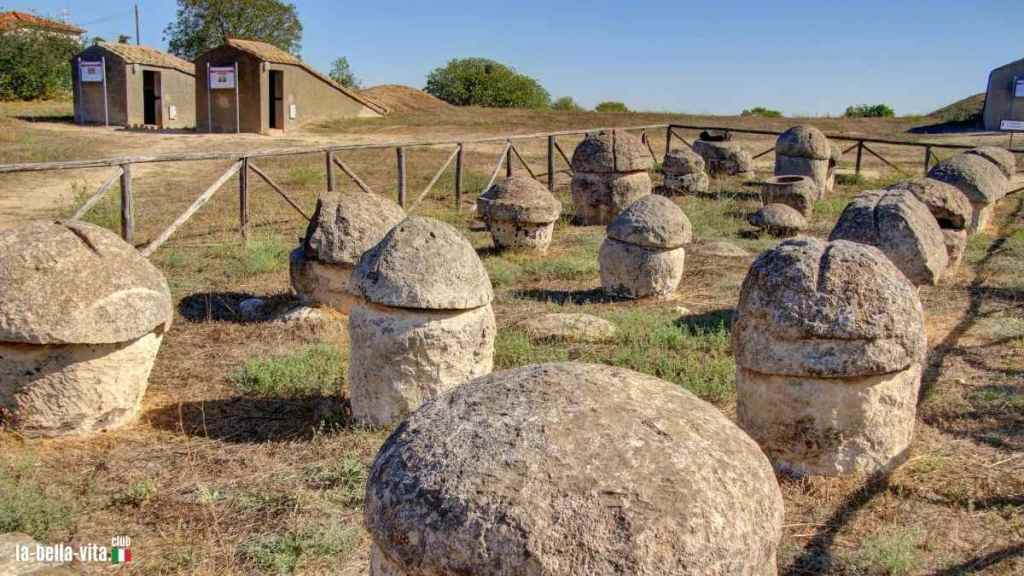
The Etruscans were not a wild tribal community, but the first developed civilisation on Italian soil. What is referred to as an advanced civilisation can be seen in many ways: they built structured cities with temples, residential districts and water pipes and had a differentiated social system with an urban upper class.
The Etruscans traded widely as far as Greece and North Africa, developed their own script and distinctive religious rituals - and left behind artistically designed tombs that are still preserved today. Their culture was therefore not local or rural, but urban, organised and widely networked.
Panoramic drive through Tuscany
You are currently viewing a placeholder content from YouTube. To access the actual content, click the button below. Please note that doing so will share data with third-party providers.
More InformationAn empire of 12 cities
Between the 10th and 1st centuries BC, the Etruscans developed a flourishing civilisation that shaped large parts of central Italy. The so-called League of Twelve Cities linked important centres such as Veji (near Rome), Tarquinia, Cerveteri and Vulci in Latiumas well as Chiusi and Cortona, Arezzo and Volterra in the Tuscany and Perugia in Umbria. Many of these places still exist today - archaeologically rich, but often far removed from mass tourism.
What Italy owes to the Etruscans
Last but not least Rome owes more to the Etruscans than many people realise: the first Roman kings were of Etruscan origin, religious rituals such as bird watching or the oracle system come directly from their world view. Even symbols of power - such as the purple royal cloak or the lictor bundles (fasces) - can be traced back to Etruscan origins.
They also left behind a rich legacy of art and craftsmanship: fine bronze statues, geometric ceramics, richly painted tombs. The so-called Bucchero pottery - deep black, shiny, thin-walled - is a hallmark of Etruscan craftsmanship. Their own language has only been partially deciphered to this day, is not related to Latin and makes it clear how much of this culture still lies in the penumbra.
Ad
🇮🇹☀️ Perfect for your beach day in Italy: this super large one, sand-free Beach blanket (210 × 200 cm) from SKYREH accompanies you relaxed to the sea. ➔ [Discover here at Amazon]
The fall of the Etruscans and their traces
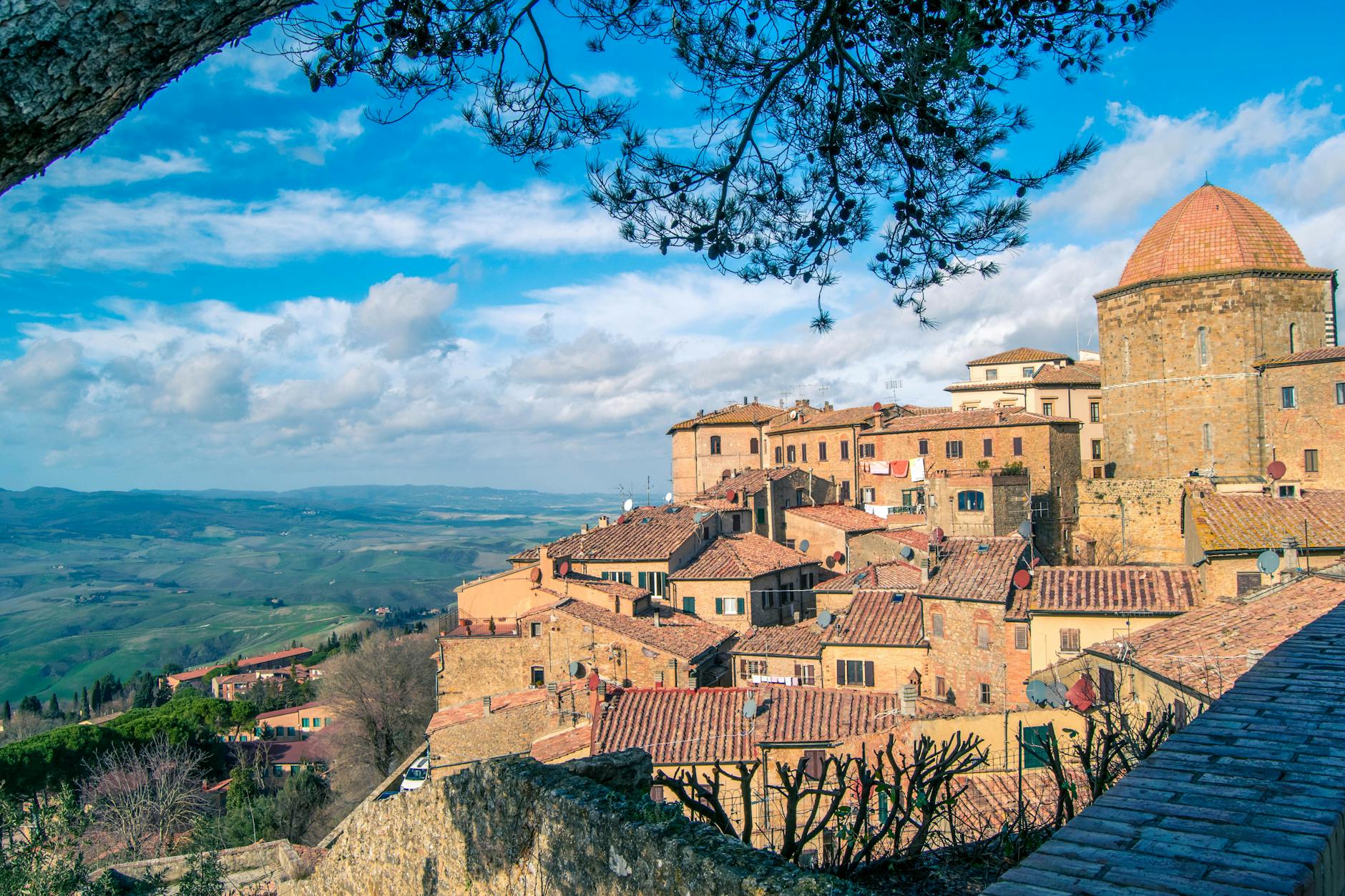
Photo by Maria Doina Mareggini on Pexels.com
The decline did not come through sudden conquest, but through gradual integration into the expanding Rome. Many Etruscan cities were Romanised, the language disappeared, but the cultural imprints remained - and became part of what would later become Italian identity.
Where you can see the Etruscans in Italy today
Anyone walking through Arezzo, Perugia, Tarquinia or Volterra today is walking on the soil of this ancient culture. And if you look closely, you will see: The history of Italy did not begin in Rome - but a little further north, in Etruria.
- The big pasta quiz: Can you recognise all the pasta?
- 10 basics so you don't stand out in the restaurant

The heart of Etruria: two necropolises full of history
If you are interested in the fascinating world of the Etruscans, there are two places you cannot miss: Tarquinia and Cerveteri. Both archaeological sites are UNESCO World Heritage Sites - and provide an impressive insight into a lost culture that was once ahead of Rome.
- The necropolis of Tarquinia, located around 90 kilometres northwest of Rome, is primarily known for its colourful wall paintings. Over 200 rock tombs have been uncovered here - many of them with detailed frescoes depicting scenes from everyday life, religious rituals or festive feasts. Particularly impressive: the Tomba dei Leopardi and the Tomba della Caccia e Pesca. The visit is complemented by the Museo Nazionale Tarquiniense, which presents important artefacts from the region in Palazzo Vitelleschi.
- Only around 40 kilometres north-west of Rome lies Cerveteri with the Necropolis della Banditaccia - an extensive necropolis with monumental round tombs, known as tumuli. The structure resembles a labyrinth of alleyways, chambers and funerary architecture - an accessible testimony to Etruscan burial culture. Some of the tombs are accessible from the inside and provide an amazingly direct journey into the past.
Ad
🎒🔐 Safe travelling - with the anti-theft backpack from travelite!
Zip fastening on the back, hidden compartments and a padded laptop compartment up to 15.6 inches: lightweight, clever and stylish - your new Favourite backpack for travelling! ➔ [Discover here at Amazon]
Archaeological Park of Vulci
The archaeological site of Vulci, once one of the most important cities of the Etruscan Empire, is somewhat less well known but no less impressive. Today, visitors can stroll through the ruins of an ancient metropolis - with well-preserved city walls, temple remains, cobbled streets and monumental tombs.
The extensive complex provides a vivid picture of urban Etruscan life. The visit is complemented by the Archaeological Museum in the Castello dell'Abbadia, which displays precious finds from the region - including artistically painted ceramics, bronze objects and jewellery. Parco Naturalistico Archeologico di Vulci is nestled in a charming landscape between rocky gorges and river courses in Lazio, around 100 kilometres north-west of Rome and around 20 kilometres from the coast.
- The big Mangiare quiz: How good is your Italian flavour?
- Five Italian everyday rituals that make life better
Ad
🧳☁️ Huge in space, super light in weight - the XL hard-shell case from NOWI!
With a volume of 102 litres, 8 smooth-running 360° wheels, combination lock and a sturdy telescopic handle, this suitcase is your perfect travel companion. ➔ [Discover now at Amazon]
The Etruscans in Volterra
Volterra also bears the legacy of the Etruscans deep in its cityscape. Situated high above the hills of Tuscany, south of Pisa and between Florence and the coast, the city can look back on over 3,000 years of history. Particularly impressive are the preserved ancient city walls and the monumental city gate Porta all'Arco - one of the few completely preserved Etruscan city gates.
The Museo Etrusco Guarnacci, one of the oldest archaeological museums in Italy, has an outstanding collection: over 600 artistically decorated urns, filigree bronze statues and burial objects bear witness to the cultural and technical sophistication of the Etruscans. As you stroll through Volterra, you will realise that history is not only visible here, but literally carved in stone.


