
The Costa dei Trabocchi in Abruzzo Photo: stock.adobe.com/Maresol
Italy's Adriatic coast is famous for its lidos and endless beaches. Most people don't recognise the mysterious stilt houses from the south. Welcome to the Costa dei Trabocchi.
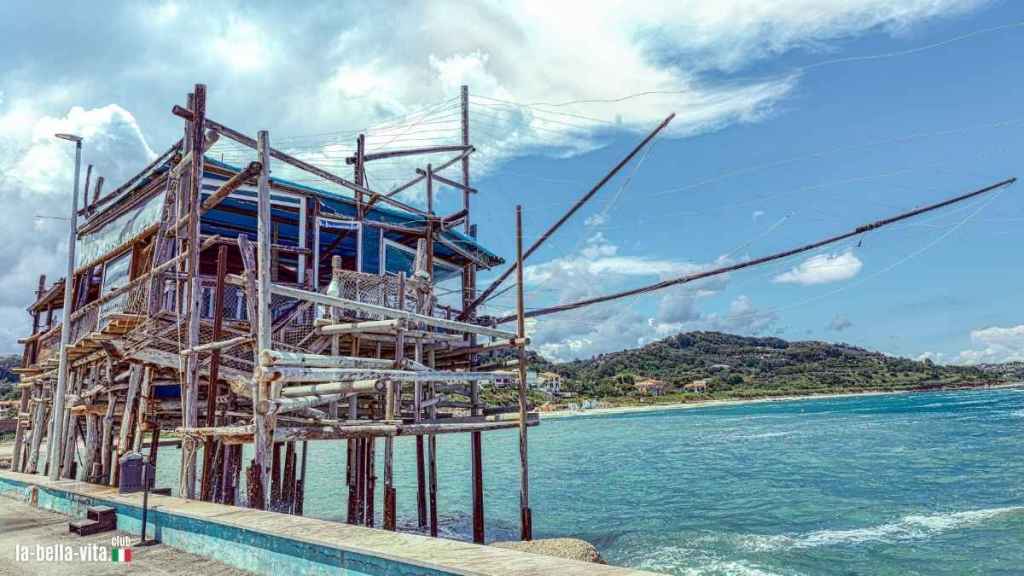
South of Pescara, the Adriatic also shows its rugged, unspoilt side. Along the approximately 60-kilometre-long "Costa dei Trabocchi", wooden platforms on delicate stilts protrude into the sea - technically simple, aesthetically fascinating. What looks like oversized spiders in the sea is called Trabocchi, the symbol of this largely underrated stretch of coast in Abruzzo
A unique form of fishing
These unusual structures were once used for fishing. The wooden houses were built on the coastal strip where the current caused schools of fish to swim right past. The large drop net - called a "trabocchetto" - was lowered into the water on long lever arms using a cable winch and retrieved when a school of fish emerged. The result was a unique form of fishing - without a boat, directly from land.
Ad
📱💦 Swim safely - with your mobile phone! This waterproof Mobile phone case from Lamicall protects your smartphone up to 7.5 inches - with two compartments. ➔ [Discover now at Amazon]
Originally, chestnut and robinia wood was used to build the jetties, as it is very resilient and also resistant to moisture and pests. In the past, all timbers were fastened exclusively with ropes and cords, as this allowed the construction to yield elastically to wind and waves. Nowadays, the Trabucchi are generally reinforced with steel stakes and rivets.
The origin is unclear
The exact origin of the stilt houses is unclear: some suspect their origins go back thousands of years to the Phoenicians. Others believe that the jetties were invented because people did not want to expose themselves to the dangers of the open sea, or alternatively because there was a shortage of boats. Still others speculate that farmers and shepherds in the Middle Ages, who were inexperienced in fishing, wanted to get fish this way.

Most of the houses are in Abruzzo
There are still around 50 trabocchi today, most of which - around 30 - are scattered along the Costa dei Trabocchi. There are also a few stilt houses in Molise and northern Puglia. Today, the trabocchi no longer play a role in fishing and only a few are still in regular use. Some now house fish restaurants with spectacular views, freshly caught cuisine and the sound of the sea as a backdrop. The Costa dei Trabocchi is not a classic tourist destination. Anyone travelling here is looking for tranquillity and authenticity.
The most beautiful route along the coast
The ideal place to start exploring the Costa dei Trabocchi is in Vasto. From there, follow the SS16 state road northwards towards Ortona. The route is almost 50 kilometres long and runs past bays such as Trave, Casarza and Cungarelle and always offers views of the traditional stilt houses. The Trabocco Turchino below San Vito Chietino is one of the most famous constructions on the coast. The last highlight of the route is Ortona. The small town lies high above the water and offers a promenade, the "Passeggiata Orientale", with uninterrupted views as far as the coast of Molise.
Puglia's wild coast
You are currently viewing a placeholder content from YouTube. To access the actual content, click the button below. Please note that doing so will share data with third-party providers.
More InformationAd
🇮🇹☕ What would a real espresso be without the right cup? Get that bar feeling right at home! ➔ [Discover here at Amazon]