
The consequences of the persistent heat and drought in northern Italy are becoming more and more dramatic. And the driest months are still to come. The head of civil protection expects a state of emergency for the whole country at the beginning of July.
We are currently working at full speed on a national emergency plan for the water supply," said Fabrizio Curcio. A nationwide state of emergency could be declared as early as the beginning of July. The heat wave is not expected to end until 5 July at the earliest.
"In some areas, it is not impossible that water - which has to be rationed - is sometimes turned off during the day."
Fabrizio Curcio, Chief of the Italian Civil Protection

Drought, heat, forest fires. Northern Italy is suffering from the most extreme drought in 70 years. The country's longest river, the Po, now carries only 20 percent of its water volume. Temperatures of up to 36 degrees.
The harvests are drying up. According to the Italian farmers' association, half the harvest is threatened. In the case of sugar beet, even more than 70 percent.
- Main problem at present: agriculture
- Forest fires: 30 per cent of the Tuscany harvest destroyed
- The causes of the record drought
- The outlook until 2050: with climate change bleak
- Gallipoli - The beautiful city that dances on the sea
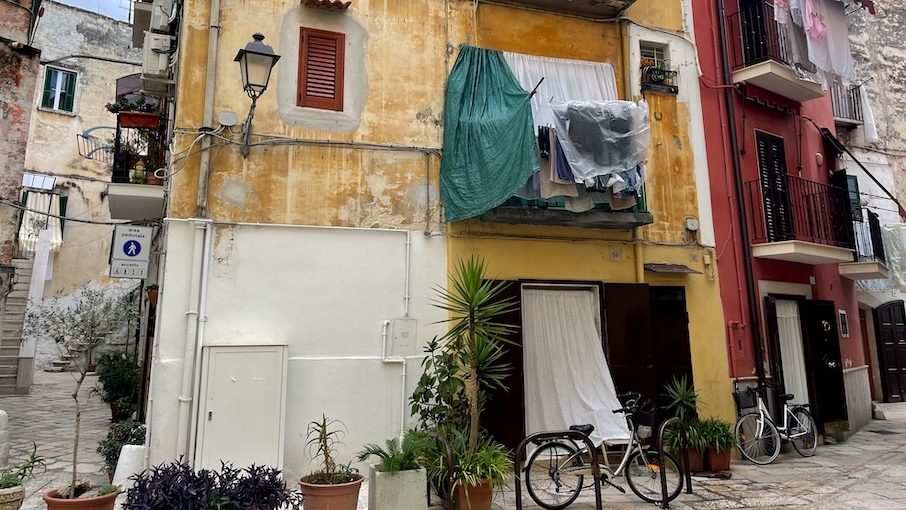
- Bari in Apulia: an old town that smells of fresh laundry
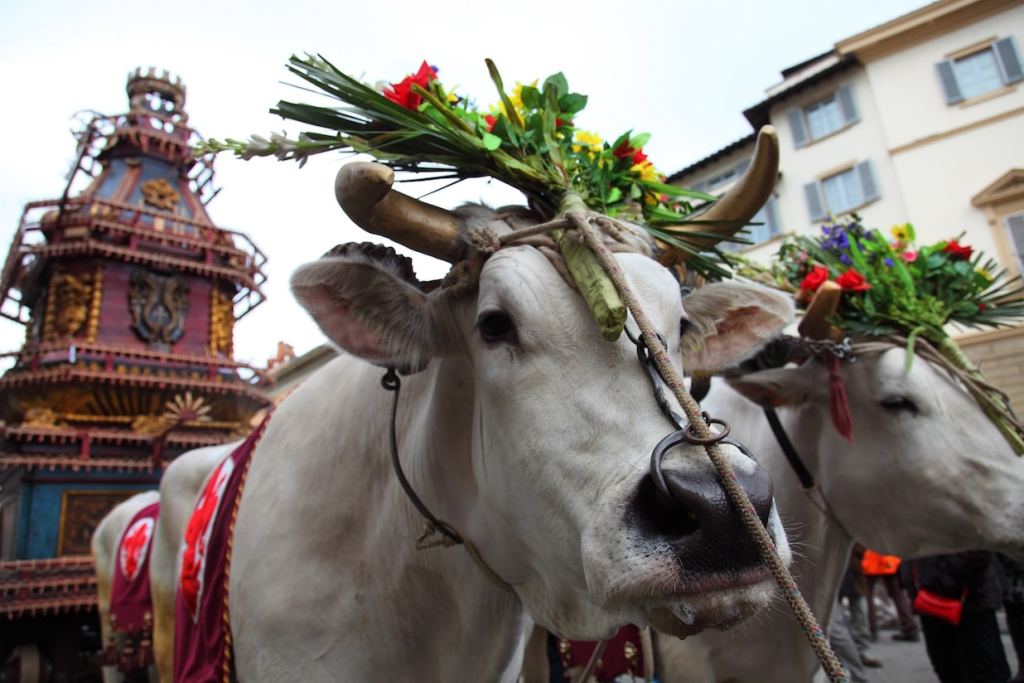
- Easter in Italy. The most beautiful processions and traditions
Main problem at present: agriculture
The Po Valley is the most important agricultural region in Italy. Agriculture consumes more than half of the water in the Po Valley. A large part of the water-intensive European rice harvest comes from northern Italy. For decades, the amount of water was not a problem.
In Italy, of all places, where the Romans once revolutionised the water supply with equaducts, up to 70 percent of the water is currently lost - through leaking pipes. Renovations are underway, but they are taking time. Italy's Prime Minister Mario Draghi (74) has declared water a top priority.
On average, a person in Italy uses 215 litres of water per day. Across Europe, the figure is only 125 litres. The calculation includes per capita water consumption from agriculture, industry and electricity production.
A third of the Tuscany harvest burnt

Already in the second half of June, the fire brigades in Italy had to go out to more than 1000 forest fires. Agriculture was particularly affected again. According to the Coldiretti farmers' association, a third of the harvest has already been destroyed.
- Easter in Italy. The most beautiful processions and traditions
- Five things that Italians do differently when eating out

The causes of the record drought
The levels in the rivers were already much lower than usual before the heat wave.
- Since the beginning of the year, less than half the usual amount of rain has fallen in northern Italy.
- In winter there was a third less snow in the mountains. Accordingly, less meltwater flowed into the valley.
The outlook until 2050: With climate change gloomy
The impact of climate change on northern Italy: the subject of a recent study by researchers from the Universities of Turin, Pisa and Rennes (France).
The results of this study are dramatic:
- Up to now, rainfall in the foothills of the Alps and in the Po Valley was mainly distributed in late winter and spring. Climate change means that it rains less, but much more heavily. The soil cannot absorb the amount of water.
- According to model calculations, the temperature in the Alps is rising more than elsewhere. By the end of the century, up to 90 percent of the mountains have melted. The amount of water flowing into Italy is significantly reduced. Since many soils are sealed anyway, there will be a further, increased drying out of the soil. Until now, wheat, wine, vegetables could grow without irrigation, but the rain will not be enough in the future.
- The researchers expect that the droughts will not occur more frequently, but more intensively. And then not only in northern Italy, but also in other regions.
The government now wants to invest billions in the water supply. Too late for the current situation in northern Italy.
Very topical
- Gallipoli - The beautiful city that dances on the sea
 A feeling like being on a stage.
 - Bari in Apulia: an old town that smells of fresh laundry
 Fresh laundry every day.
 - Easter in Italy. The most beautiful processions and traditions
 Holy Week as an exceptional experience.
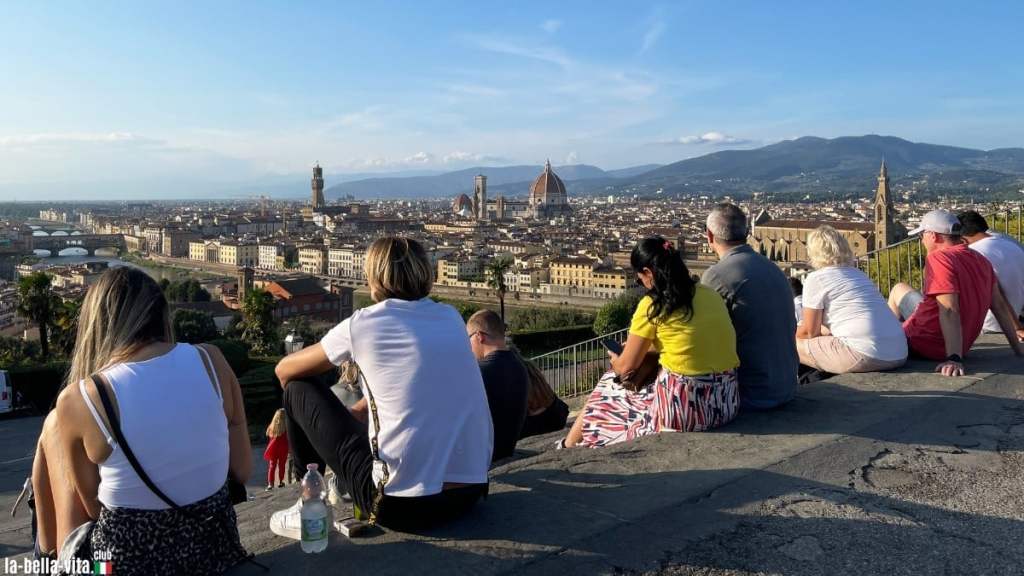
 - The most beautiful view of Florence: why a 20-minute walk is worthwhile
 Masterpiece in the open air.
 - The sacrament standing up: Sixty seconds of Italian eternity
 The short ritual prayer.
 - The finger of Milan - and what it has to do with the stock marketMilan is fashion, Milan is money and also middle fingers.



Cover photo/Montage - Symbol photo: dmytro gilitukha/Getty Images via.canva.com
Sources: own research; Nationalgeographic.de/ Marius Rautenberg: "Dürre in Italien: Katastrophe mit Ansage"; Tagesschau.de/Elisabeth Pongartz: "Extreme Wetterverhältnisse - Hitzerekorde und Wassermangel in Italien"; FAZ.de/Mathias Rüb: "Die Dürre vernichtet die Ernten" (The drought is destroying the harvests)