
Photo: Mirko Vitali - stock.adobe.com
From our editorial team
The Italian Christmas classic has long since found its way into German supermarkets. Panettone is probably the most famous Christmas cake in the world. Mysterious legends surround its invention.
Culinary researchers are only sure of one thing: panettone was once invented in northern Italy. However, there are several versions as to who invented it and why. One of them tells of an imaginative kitchen boy at the court of Ludovico Sforza, known as "il Moro".
Panettone when the dessert was charred
According to legend, the Prince of Milan had invited all the aristocrats of the region to a grand Christmas dinner. There was a big alarm in the kitchen. Nevertheless, the chef had a disaster: according to the story, he had the dessert charred on this important evening of all nights. Instead of a crowning finale, the disgrace would go down in history.
Then the kitchen boy called Toni intervened. He had already conjured up a cake from the leftover ingredients - flour, butter, sugar, eggs, candied fruit and sultanas. Better that than nothing at all. The fine company was delighted and is said to have asked the chef for his secret. His answer: "It's Toni's bread", or "pan del Toni" in Italian. Over the centuries, this became the word "panettone".
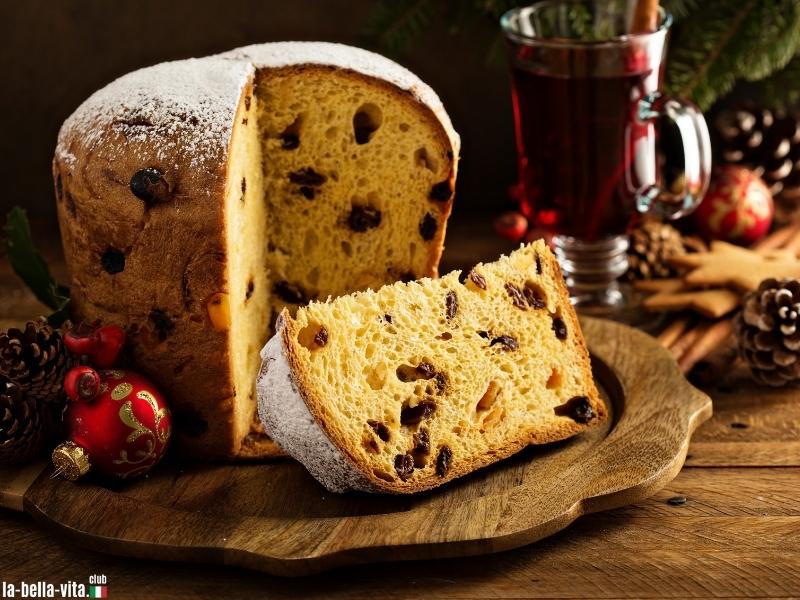

Panettone, a story of passion
The second legend also revolves around the court of Duke Ludovico Sforza. This time, however, it has to do with Amore. Sforza's falconer Ugo is said to have been in love with the beautiful daughter of baker Toni. As Toni was struggling to survive with his bakery, marriage was out of the question. According to the story, Ugo traded two of his master's falcons for butter.
According to legend, he secretly mixed the butter into the baker's bread dough - and the customers are said to have been delighted. Toni added sultanas and candied fruit at Christmas and the sweet bread became a bestseller.
Panettone from the Middle Ages
The actual origins of panettone could go back much further and have existed since the Middle Ages. According to tradition, families in Lombardy are said to have enriched three special loaves of bread with sultanas and fruit at Christmas. "Panattun" is said to have been the name in dialect.
There is also a luxury version of this story with wheat flour. Back then, this was only affordable for the wealthy. Here, everyone was given a slice of panettone - and a slice was kept for the New Year. Even today, it is still customary for some Italians to eat a slice of panettone only on 3 February. For Catholics, this is the day of St Blaise, the patron saint against throat diseases.