
Trippa alla fiorentina: tripe from Florence Photo/collage: Getty Images/Vignali via canva.com
From our editorial team
Italy is world-famous for pizza, pasta and gelato - but there is also another, little-known side to Italian cuisine. Many regional specialities consist of dishes that at first glance seem to take some getting used to.
Many of these dishes originate from the traditional "cucina povera", the cuisine of the common people, who used every ingredient so as not to waste anything. Those who are brave enough to try them often discover unique flavours and a piece of Italian food culture. Here are ten Italian specialities that provide culinary adventures:
1. tripe Florentine style

Lampredotto: This street food from Florence consists of the fourth stomach of a cow, slow-cooked with tomatoes, onions, celery and herbs. Lampredotto is often served in a bread roll. The intense flavour and soft consistency make it a challenge for inexperienced palates.
However, if you get involved, you will discover a dish with deep roots in Tuscan working-class cuisine. Lampredotto used to be the food of ordinary people who could not afford expensive meat - today it is a local delicacy that is sold on almost every corner in Florence. It is typically served with a green "salsa verde" made from parsley, garlic, capers and vinegar, which gives the dish a fresh, spicy flavour.
2. cheese with live maggots

Casu Marzu in Sardinia: Probably the most extreme speciality in Italy. This Sardinian pecorino is deliberately colonised by fly larvae, which ferment the cheese. The maggots ensure a soft, creamy consistency - and are traditionally eaten alive. The cheese is officially banned, but is still secretly produced and sold in Sardinia.
Despite its off-putting reputation, casu marzu has a deep-rooted cultural significance for locals. It is seen as a symbol of traditional craftsmanship and is often served on special occasions. Connoisseurs appreciate the intense, almost pungent flavour that results from the fermentation process. Those who prefer not to eat the maggots can drive them away by lightly tapping the cheese - but die-hard fans claim that they are the real flavour. Attempts are now being made to produce a legal version of the cheese without live larvae

3. the pig's nose as a sausage

Musetto in Friuli-Venezia Giulia: This sausage made from pork nose, cheek and bacon is cooked and often served with polenta. The flavour is intense and the consistency is rather soft due to the high fat content. Perfect for lovers of savoury, hearty dishes.
Musetto comes from Friuli-Venezia Giulia and is a classic example of "cucina povera", in which everything from the animal is utilised. The sausage is traditionally eaten in the winter months, often as part of a rustic feast together with sauerkraut or beans. Its name is derived from the Italian word "muso" (mouth, snout), as it is precisely these parts of the pig that are utilised. While it may be a challenge for some, many locals swear by its strong, spicy flavour.
4. chocolate pudding with pork blood

Sanguinaccio Dolce in southern Italy: This traditional dessert is made from cocoa, sugar, spices - and pig's blood. Originally from Campania, sanguinaccio was once a popular way of utilising blood after slaughter. The flavour is sweet, but with a slight hint of iron.
In the past, sanguinaccio was mainly prepared at carnival time, when slaughtering took place and all parts of the animal had to be utilised. The creamy pudding is often flavoured with cinnamon and vanilla and traditionally served with crispy pastries such as "chiacchiere". Although the thought of blood in a dessert puts many off, it adds depth of flavour and a silky texture.
5. stew with veal head

Testina di vitella is the boneless meat from the calf's head, including the cheek, and is used to prepare a good stew with celery, carrots, onions and herbs. It is a rather fatty and "gelatinous" cut that is only appreciated by a few connoisseurs.
In northern Italy in particular, especially in Lombardy and Piedmont, testina di vitella is a traditional ingredient for hearty dishes such as "bollito misto", a stew with various types of meat. The slow braising process makes the meat incredibly tender, while the connective tissue gives it a creamy consistency. The flavour is intense and slightly sweet, which distinguishes it from ordinary muscle meat. Many connoisseurs swear by the special texture, but the soft, almost creamy consistency can be a challenge for inexperienced eaters.

6. raw sea urchin with lemon
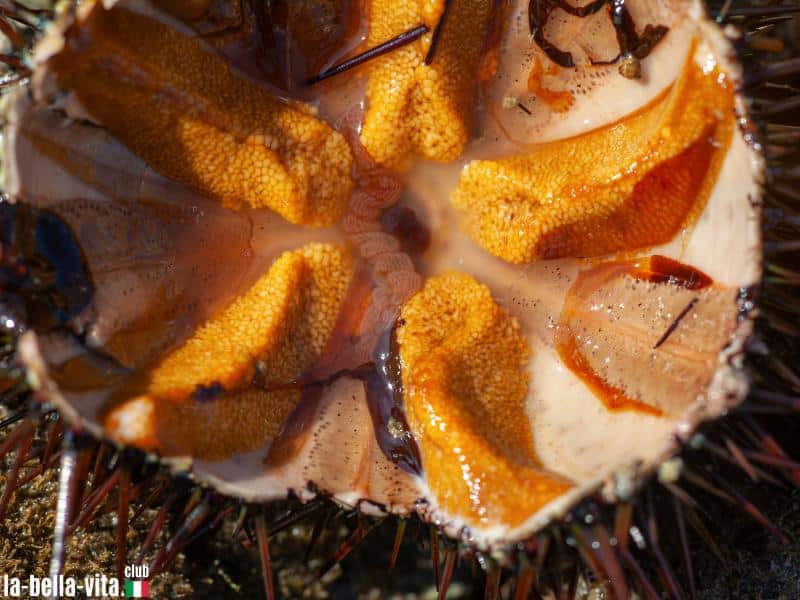
Ricci di mare are considered a delicacy, especially in Puglia, and are often eaten raw with a dash of lemon. They are reminiscent of oysters, but have a more intense flavour.
Especially in coastal towns such as Bari or Gallipoli, sea urchins are a firm favourite in the culinary repertoire. Here they are taken directly from the sea and served at small stalls or in harbour bars - often so fresh that they still move slightly. The essence of the sea tastes particularly concentrated in ricci di mare: slightly salty, with a delicate sweetness and an almost buttery finish. They are also traditionally served with spaghetti, with the creamy sea urchin mixture coating the pasta.
5. cibreo in Tuscany: an offal cream
This traditional dish from Florence consists of chicken combs, rooster combs, livers and hearts, which are processed into a thick, creamy custard. Cibreo has a long history and was once a dish for the aristocracy - today it is a dish for the brave.
Unlike many offal dishes of the "cucina povera", cibreo was considered a real delicacy and was refined with luxurious ingredients such as butter, egg yolk and nutmeg. The consistency is reminiscent of a thick ragù, which is traditionally served with polenta or toasted bread. It was one of the favourite dishes of Caterina de' Medici, who tried to bring it to France, but without lasting success.

8. cazzomarro from Apulia and Basilicata: stuffed lamb intestine
Cazzomarro is a hearty speciality from southern Italy in which lamb intestines are stuffed with lamb offal, herbs and cheese, then skewered and grilled. The result is an intense, spicy flavour that is considered a real delicacy in many rural regions.
This dish is particularly common in Apulia and Basilicata and was traditionally prepared by shepherds who used the whole animal. The name "cazzomarro" is said to derive from a dialect expression that alludes to the typical shape of the rolled-up intestine. The preparation varies depending on the region - sometimes bacon or garlic are added to make the flavour even more intense. Cazzomarro is usually served with bread or a side dish of vegetables to balance out the strong flavours. It is often grilled at family celebrations or village festivals.
9. pajata in Rome: calf intestine with natural sauce
A genuine Roman speciality: the intestines of young calves are processed without cleaning, so that the milk stomach inside forms a creamy, spicy sauce when cooked. Pajata is typically served with rigatoni as a pasta dish.
This dish is a relic from the era of "cucina povera", when butchers sold the more valuable cuts of meat and left the offal for the common people. Despite its humble origins, pajata has become a much sought-after delicacy served in traditional trattorias in Rome. The flavour is intense and slightly acidic, while the creamy consistency of the sauce harmonises perfectly with the al dente pasta.
10. coratella con carciofi in Lazio: offal with artichokes
A traditional dish from Rome and the surrounding area, consisting of lamb or goat offal (heart, lungs and liver) braised with fresh artichokes. The combination of savoury intensity and the slightly bitter note of the artichokes makes it a special taste experience.
Coratella con carciofi is particularly popular at Easter, when young lambs are slaughtered and fresh artichokes are in season. The preparation requires a delicate touch: the offal must be cooked in the correct order, as the heart and lungs have a different consistency to the tender liver. Traditionally, the dish is served with bread to soak up the flavoursome sauce.